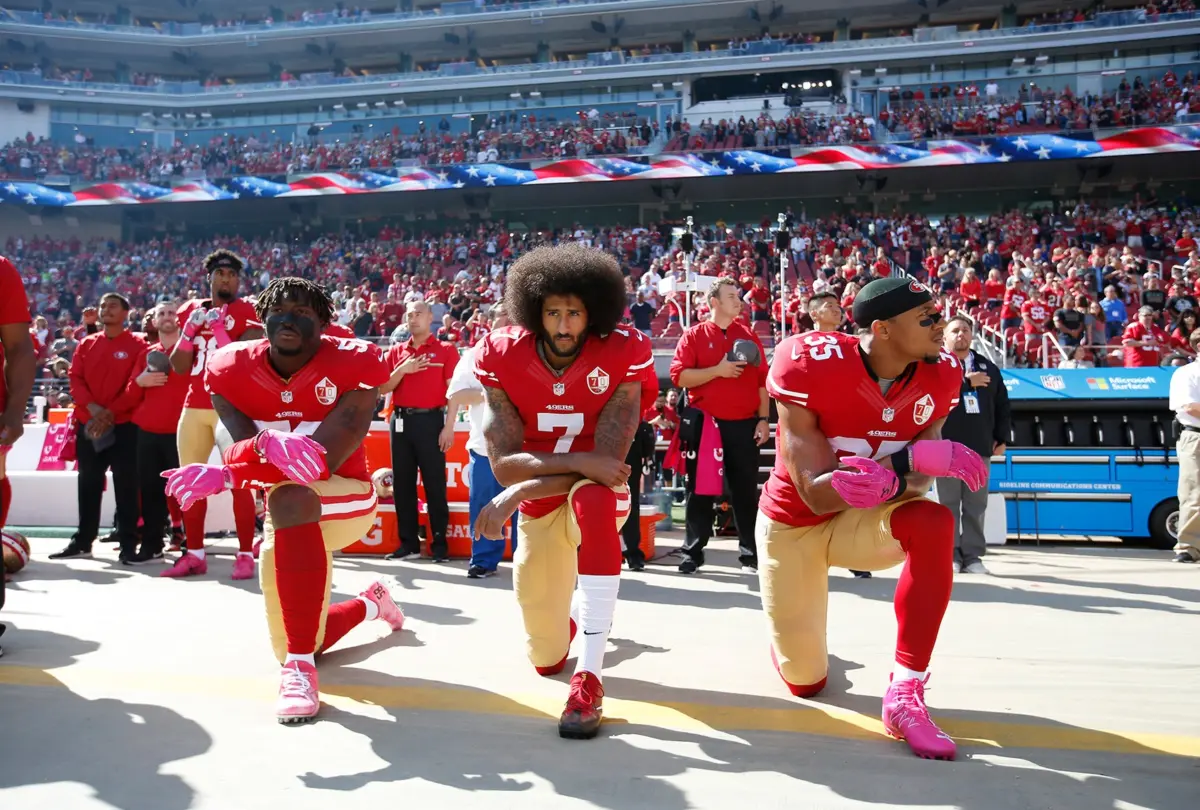
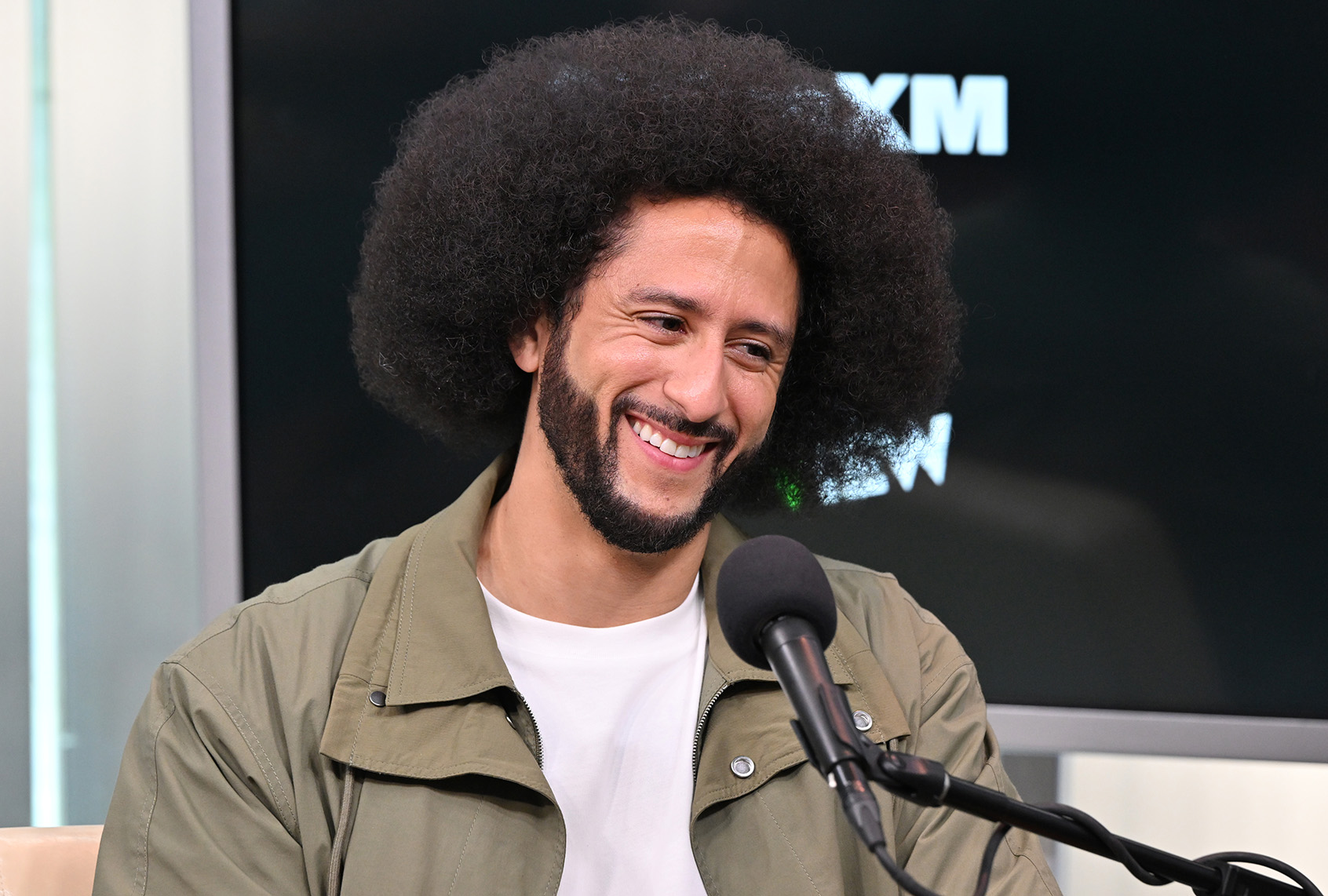
Nearly a decade after he first knelt during the national anthem before an NFL preseason game, Colin Kaepernick has re-emerged on the public stage not as a fallen athlete seeking reinstatement, but as an author, activist, and uncompromising intellectual. His new memoir, The Perilous Fight, serves as both a deeply personal coming-of-age account and a searing critique of American institutions, sports culture, and the complex ecosystem of racial politics in the United States.
When Kaepernick chose to sit—and subsequently kneel—on a football field in 2016, he did so with the full awareness that his career would likely be terminated. What he could not have fully anticipated, however, was the profound scope of the "whitelash," the institutional betrayal by league executives, or the calculated compromises made by cultural figures and even prominent Black leaders who chose proximity to power over solidarity with a movement.
Today, through The Perilous Fight and a rigorous media tour spanning major cultural platforms, Kaepernick is peeling back the curtain on the mechanics of athletic subjugation and systemic oppression. His message remains consistent and unyielding: fighting for Black liberation does not require permission from corporate masters, nor is it conditional on the comfort of white America. As Kaepernick reclaims his narrative from decades of media distortion, his work challenges the public to move past performative allyship and confront the foundational injustices embedded in American society.
Detailed Chronology: From the Gridiron to the Page
To understand the weight of Kaepernick’s current literary and activist renaissance, it is essential to trace the trajectory of his awakening, his historic protest, and the subsequent systemic retaliation he faced.
The Anatomy of an Awakening
Kaepernick’s memoir meticulously reconstructs the multi-faceted origins of his social consciousness. Growing up as a Black boy raised by white adoptive parents in a predominantly white environment presented unique psychological challenges. While he was loved by his family, navigating a world that sought to control Black bodies forced him into early confrontations with race. He recalls childhood microaggressions and overt racism—such as peers using racial slurs—alongside internalized expectations of compliance.
Yet, his intellectual awakening was catalyzed by self-education, deep reading of Black scholars and activists, and the stark reality of police brutality playing out on national television. The turning point arrived in December 2015, when Mario Woods was shot 20 times and killed by San Francisco police officers. Watching the body camera footage alongside his mother—who initially defaulted to blaming the victim—crystallized Kaepernick’s understanding of his own lifelong frustrations with racial dynamics.
The 2016 Protest and Banishment
By the start of the 2016 NFL season, the murders of Black men and women—including Alton Sterling, Philando Castile, and the lack of accountability in the death of Freddie Gray—compelled Kaepernick to act. His decision to sit during the "Star-Spangled Banner" was an intentional refusal to honor a nation that routinely oppressed people of color with impunity.
The immediate fallout reshaped professional sports:
The Banishment: Despite performing at a level superior to many starting quarterbacks in the league, Kaepernick was effectively blackballed by NFL owners, leading to a legal grievance against the league.
The Appropriation: As teammates like Eric Reid joined him in kneeling, the protest was systematically co-opted, watered down, and weaponized by politicians and league executives alike to shift the focus away from police brutality.
The Presidential Attack: Then-President Donald Trump publicly vilified protesting athletes using profane language, intensifying the national culture war.
Post-NFL Activism and the Birth of Infrastructure
Refusing to let his platform be reduced to a soundbite, Kaepernick channeled his resources into grassroots infrastructure. Alongside his partner, radio personality Nessa Diab, he founded the Know Your Rights Camp (KYRC) to empower Black and Brown youth, later launching the KYRC Autopsy Initiative to provide independent autopsies for families impacted by police violence and ICE detentions. The Perilous Fight documents these efforts not as side projects, but as necessary counterweights to the systemic failures of the state.
Supporting Context & Metrics: The Historical Roots of the Anthem and League Culture
Kaepernick’s critique extends far beyond modern policing into the historical symbols that undergird American nationalism.
The Racist Legacy of the "Star-Spangled Banner"
The book and surrounding discourse draw a direct line between the exclusionary nature of the national anthem and its author, Francis Scott Key. An unabashed racist, Key’s worldview heavily influenced his professional legacy. Furthermore, the lesser-known third verse of the anthem serves as a historical threat to African Americans who sought liberation—specifically targeting formerly enslaved individuals, known as the Merikins, who fought alongside the British during the War of 1812 in exchange for their freedom and land in Trinidad and Tobago. By highlighting these historical roots, Kaepernick exposes why forced patriotism rings hollow for marginalized communities.
The NFL’s Culture of Obedience
Within The Perilous Fight, Kaepernick offers an insider’s anthropological view of professional football, characterizing it as a mechanism designed to enforce total obedience:
"Football breeds a culture of obedience. On the field, these guys were major alpha males — the biggest, baddest, most dominant dudes on the planet. But once they stepped off the field, they were just employees waiting for the boss to tell them what to do."
This culture of compliance begins as early as the NFL Combine, where players are subjected to intense scrutiny regarding their intelligence and character. Kaepernick questions whether the skepticism he faced regarding his high Wonderlic test scores and academic record stemmed from genuine concern or entrenched racial stereotypes.
The Betrayal of "Skinfolk"
One of the most compelling and sobering dimensions of Kaepernick’s memoir is his examination of the betrayal he faced from unexpected quarters. The book lays bare how institutional power protects itself by deploying prominent Black figures to neutralize radical dissent:
Co-optation: Figures like Dr. Harry Edwards were brought into the San Francisco 49ers organization, and Ray Lewis was utilized by the Baltimore Ravens to manage player dissent.
Public Detractions: High-profile athletes and public figures—such as Michael Vick publicly suggesting Kaepernick alter his physical appearance to appease owners, and Jay-Z entering a partnership with the NFL—demonstrated that systemic assimilation often supersedes cross-movement solidarity.
As the memoir emphasizes: All skinfolk ain’t kinfolk. Kaepernick’s journey underscores the harsh reality that institutional white supremacy relies heavily on minority accommodation to maintain the status quo.
Official Statements & Public Discourse
The release of The Perilous Fight has ignited a fresh wave of media commentary, with Kaepernick appearing across major television and podcast networks to unpack the book’s central themes.
During his interview on SiriusXM’s Front Row with Karen Hunter, Kaepernick reflected on the emotional toll of his isolation and the necessity of documentation:
"I wanted to buttress my protests on the field with action on the ground, to build an infrastructure that could start effective change where it might make a difference . . . I didn’t want to look back on this time and agonize that I should have and could have done more."
Cultural critics have praised the memoir for its uncompromising refusal to pander to white comfort or offer sanitized narratives of "reconciliation." Unlike athletes who seek corporate rehabilitation through safe, performative charity work, Kaepernick’s activism remains inherently confrontational.
Media analysts note that the vitriol directed at Kaepernick over the years—ranging from accusations of being an "angry Black man" to coordinated media hit pieces—was designed to isolate him. Instead, these experiences forged an institutional fearlessness, positioning him alongside historical sports rebels like Curt Flood, who sacrificed their careers to challenge labor exploitation and civil rights abuses.
Future Outlook: A Clarion Call for the Next Generation
As The Perilous Fight reaches readers nationwide, Colin Kaepernick’s trajectory offers a profound blueprint for modern activism. Rather than dwelling on the vindictiveness of his detractors or the betrayal of former allies, the memoir pivots toward a future grounded in generational protection and collective responsibility.
In the book’s closing chapters, Kaepernick issues a clarion call regarding the welfare of children in America:
"Our children can’t develop to their full potential if they are constantly worried about what awaits them outside the doors of their home, or if they are on edge because of the fear of ICE agents invading their schoolyard or playground . . . What are we doing to our nation’s children when we are constantly undeserving their needs and sending them into schools that feel like war zones?"
This inquiry forces a deeper societal reckoning. While most citizens claim to want safety, opportunity, and prosperity for their own children, the structural abandonment of marginalized communities exposes a deep hypocrisy in our collective commitment to each other’s children.
Colin Kaepernick has chosen to move forward in hope, armed with the unwavering support of his family and the tangible impact of his grassroots organizations. His return to the public sphere is a timely reminder that true justice is never granted by institutional benevolent actors; it must be demanded, built, and protected from the bottom up. For a nation still grappling with its racial demons, The Perilous Fight is not just a memoir—it is an indictment of the past, an exposure of the present, and a demand for a radically more equitable future.