

Executive Overview
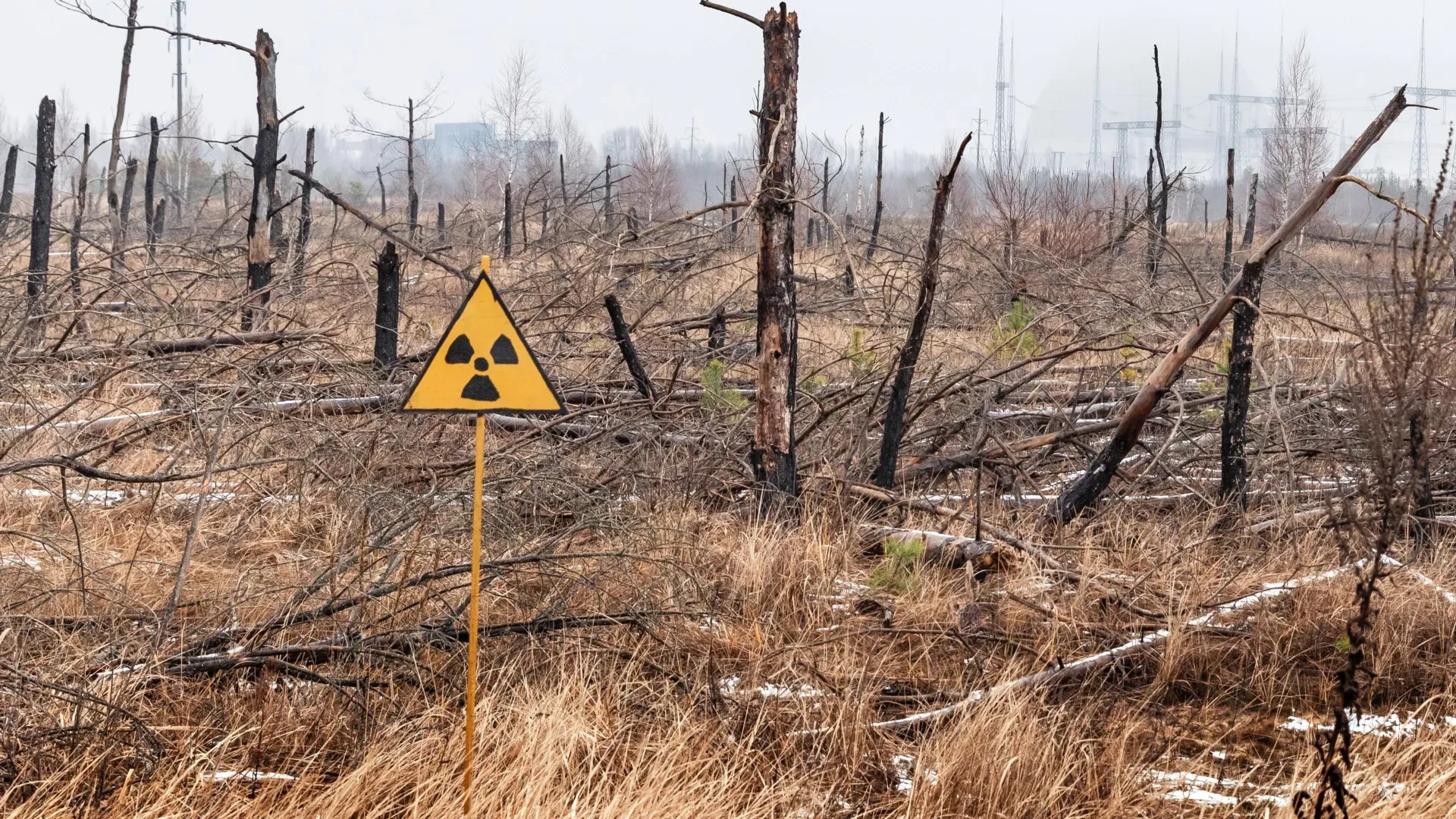
Four decades after the catastrophic reactor explosion at the Chornobyl Nuclear Power Plant, the surrounding Exclusion Zone remains a haunting testament to humanity’s worst nuclear disaster. Across the restricted landscape, microscopic radioactive particles—ranging invisibly from 8 to 50 micrometers in size—lie scattered through the topsoil and debris. For generations, entering these affected areas has required strict adherence to safety protocols, including full protective clothing and specialized respiratory gear. The ongoing hazard is driven not just by raw proximity to radiation, but by the physical behavior of these wind-borne, inhalable micro-particles.
Now, a team of German and international physicists and crystallographers has peered deeper into the atomic architecture of these remnants than ever before. Utilizing cutting-edge synchrotron X-ray diffraction at the Rossendorf Beamline in Grenoble, France, researchers successfully conducted the first high-resolution structural analysis of Chornobyl fuel particles. Their findings challenge long-held assumptions about how nuclear fallout weathers in the open environment.
Counter to decades of scientific models predicting rapid degradation, the team discovered that select radioactive fragments have preserved substantial portions of their original internal crystal structures over nearly forty years of environmental exposure. While this chemical stubbornness suggests that some particles may lock away dangerous fission products longer than anticipated—potentially slowing immediate contamination spread—scientists emphasize that the region’s long-term environmental hazards are far from resolved. The presence of structural outliers and erratic weathering patterns means that Chornobyl’s radioactive legacy remains deeply unpredictable, keeping the exclusion zone firmly closed for the foreseeable future.
Detailed Chronology & Scientific Investigation
To comprehend the significance of the recent findings, researchers first had to untangle the chaotic genesis of the micro-particles themselves. The explosion on April 26, 1986, did not merely release a uniform cloud of vaporized isotopes; it shattered the reactor core into a complex array of physical forms shaped by the extreme thermodynamics of a runaway nuclear accident.
The Birth of the Fallout: Three Distinct Classes
According to Tobias Weissenborn, a physicist and doctoral candidate at Leibniz University Hannover, the radioactive dust recovered from Ukrainian soil can be systematically categorized into three distinct classes, each born of different physical and chemical conditions within the dying reactor:
- Uranium Dioxide Remnants: The first class comprises particles that remain chemically and physically very similar to the original nuclear fuel—uranium dioxide ($textUO_2$). These fragments escaped the core without undergoing severe thermodynamic transformation.
- Zirconium-Fused Alloys: The second category originated under the extreme, unimaginable temperatures reached during the core meltdown. As the uranium fuel liquefied, it forged chemical bonds with zirconium, a highly resilient, refractory metal utilized in the fuel rods’ protective cladding. These particles are partially or fully encased in, or completely fused with, protective zirconium layers.
- Graphite-Moderator Derivatives: The third type of particle emerged when the reactor’s massive graphite moderator caught fire. Under normal operational parameters, the graphite structure slows fast neutrons down, maintaining the controlled nuclear chain reaction. During the disaster, however, the graphite ignited and burned unchecked for ten days. In this inferno, the nuclear fuel oxidized into various alternative uranium oxides, such as $textU_3textO_8$.
Unlike the robust uranium dioxide or zirconium-encased variants, these graphite-fire derivatives ($textU_3textO_8$) are mechanically fragile. Over decades, environmental weathering causes them to easily break apart into microscopic, highly mobile fragments. Wind currents easily lift and carry these radioactive motes across great distances, creating severe inhalation hazards for any biological life unfortunate enough to breathe them in.
Breaking the Atomic Barrier: Synchrotron Analysis in Grenoble
For decades, the fundamental mechanism governing why these particles weather and break down at drastically different rates remained an elusive puzzle. Predicting their long-term environmental trajectory was hampered by the sheer difficulty of analyzing microscopic, highly radioactive samples without destroying them or exposing research personnel to lethal radiation doses.
Overcoming this barrier required exceptionally precise technology: synchrotron X-ray diffraction. This advanced technique bombards crystalline materials with high-intensity X-rays, tracking how the waves scatter off atomic planes to reveal the precise spatial arrangement of atoms inside.
Dr. Christoph Hennig, a crystallographer at the Helmholtz-Zentrum Dresden-Rossendorf (HZDR), spearheaded the effort, executing the first successful structural analysis of these specific radioactive fragments at the European Synchrotron Radiation Facility’s Rossendorf Beamline in Grenoble.
The operational hurdles were immense. Collaborating with Weissenborn, Hennig’s team first had to isolate microscopic particles from raw Ukrainian soil samples within heavily shielded containment facilities. Once isolated, the particles were meticulously attached to tungsten needles. Because of their intense radioactivity, the samples required multi-layered containment vessels just to be safely transported across international borders to the French research facility.
At the beamline, Hennig and his colleagues devised a novel scanning protocol. "First, we had to figure out how to examine the particle structure," Hennig explained. "Ultimately, we fully rotated the particles in an X-ray beam focused down to 100 micrometers—about the thickness of a human hair. We measured each particle from 2,000 different angles to seamlessly capture all the reflections."
This meticulous rotational scanning enabled the team to map distinct uranium oxide phases within the fragments down to the nanometer scale, uncovering structural details that had previously been locked away behind impenetrable layers of radiation and microscopic scale.
Supporting Context & Metrics
The quantitative realities of the Chornobyl Exclusion Zone underscore the ongoing gravity of these discoveries.
- The Timeline: 40 years of continuous environmental weathering (rain, snow, freeze-thaw cycles, and microbial interaction).
- Particle Dimensions: Microscopic fragments measuring strictly between 8 and 50 micrometers—small enough to bypass human nasal filters and lodge deep within pulmonary alveoli if inhaled.
- The Scan Parameters: X-ray beams focused to 100 micrometers, capturing 2,000 unique angular perspectives per particle to construct a complete three-dimensional crystallographic profile.
- Sample Size: A deeply focused pilot study examining 6 individual particles recovered from 2 distinct locations within the contamination zone.
These metrics highlight both the astonishing precision of modern synchrotron physics and the inherent limitations of extrapolating localized micro-data to an entire regional ecosystem. While the technology is revolutionary, the vast expanse of the Exclusion Zone means these six particles represent only a microscopic fraction of the trillions of fragments still embedded in Ukrainian soil.
Official Statements & Expert Analysis
The implications of the Grenoble beamline experiments have sparked nuanced debate among nuclear physicists, radioecologists, and public safety officials. While the structural resilience of the particles introduces new scientific paradigms, experts urge caution against premature optimism.
"There are three classes of these particles… First, there are particles that are chemically and physically still very similar to the nuclear fuel uranium dioxide. Then, there are particles that are partially or fully encased in, or completely fused with, their zirconium layer."
— Tobias Weissenborn, Physicist and Doctoral Candidate, Leibniz University Hannover
The discovery that the nuclear fuel inside the six examined particles retained much of its original crystal structure after four decades of exposure was entirely unexpected. Conventional ecological models assumed that weathering processes would have completely dissolved or structurally degraded these matrices by now.
Instead, the retention of original crystallinity indicates that certain fallout fractions are far more chemically stable than previously theorized. From an environmental standpoint, this could be interpreted as a positive buffer: rather than rapidly leaking heavy radionuclides into the local hydrological network, these stable particles act as microscopic cages, holding onto dangerous fission products like strontium and cesium within their crystalline lattices.
However, Weissenborn and Hennig are quick to temper any notions that Chornobyl is self-mitigating.
"However, every single particle has a different structure, and our experiment only studied six such particles from two different locations. And even if we obtained some averages at some point, we still wouldn’t be able to make universal statements about health risks in the region. Because even if the particles decay in a largely uniform pattern, there will always be outliers, more persistent particles, that will release radionuclides at a later point in time."
— Tobias Weissenborn
This warning hits at the heart of why the Exclusion Zone remains strictly managed. Even if 90 percent of radioactive debris weathered predictably, the remaining 10 percent—the structural outliers—could act as delayed-release capsules, discharging dangerous isotopes long after the surrounding soil appears safe. These persistent anomalies complicate any long-term predictive modeling of environmental recovery.
Future Outlook & Ongoing Research
The pioneering work conducted at the Rossendorf Beamline marks a beginning rather than an endpoint. Understanding how Chornobyl’s nuclear inventory interacts with the biosphere requires scaling up these difficult methodologies.
To establish whether the chemical stability observed in the initial six particles is a localized anomaly or a widespread phenomenon, researchers must analyze hundreds—if not thousands—of additional particles harvested from diverse topographical environments across the entirety of the contamination footprint. Soil acidity, local water tables, organic matter concentrations, and micro-climates all play critical roles in dictating how individual particles weather over geological timescales.
Already, the research collaborative is pressing forward. Weissenborn and Hennig have initiated follow-up experiments focusing on highly radioactive transuranic phases—elements heavier than uranium, such as plutonium and americium—trapped within the remaining reactor debris. These heavy elements present some of the most enduring radiological hazards, possessing half-lives that span tens of thousands of years.
By charting the precise atomic transformations of these transuranic elements, scientists hope to construct a definitive model detailing how Chornobyl’s radioactive materials evolve over time. Yet, as the data repeatedly shows, nature rarely follows a straight line. While advanced synchrotron physics allows us to read the microscopic archive of the 1986 disaster with unprecedented clarity, the ultimate timeline of Chornobyl’s nuclear legacy remains written in an alphabet of unpredictable, enduring anomalies. Consequently, the Exclusion Zone will remain a guarded, heavily monitored frontier for generations to come.