

Executive Overview
The fragile architecture of an Egyptian-broistered cease-fire between Israel and militant factions in the Gaza Strip collapsed early Wednesday, plunging the region back into a volatile cycle of violence. The Israel Defense Forces (IDF) launched precision airstrikes targeting two designated "terror activity sites" in the northern Gaza Strip. According to military communiqués, these strikes were executed in direct retaliation for persistent cross-border rocket fire that persisted despite diplomatic efforts to pacify the enclave.
The renewed hostilities threaten to unravel days of frantic back-channel negotiations helmed by Egyptian intelligence officials. While the Egyptian-mediated truce had briefly quieted the flashpoint, starkly divergent interpretations of the agreement’s terms quickly exposed its structural fragility. Palestinian militant groups, led by Islamic Jihad, maintained that the cease-fire was contingent upon Israel halting its campaign of targeted assassinations and aerial bombardments. Conversely, Israeli defense officials vehemently denied agreeing to any restrictions on targeted killings, asserting their ongoing right to preemptively eliminate militant leadership.
Compounding the security crisis on the ground, diplomatic shockwaves reverberated across the region as Egypt’s Islamist-dominated parliament voted unanimously—though largely symbolically—to suspend diplomatic ties with Israel and halt natural gas exports. Although the vote lacks binding executive authority under Egypt’s ruling military council, it underscores the intense domestic pressures facing regional governments as public outrage builds over casualties in Gaza. With the death toll from four days of fierce exchanges climbing to 25 Palestinians and hundreds of rockets striking southern Israeli population centers, the international community faces mounting pressure to prevent a broader escalation.
Detailed Chronology of Escalation
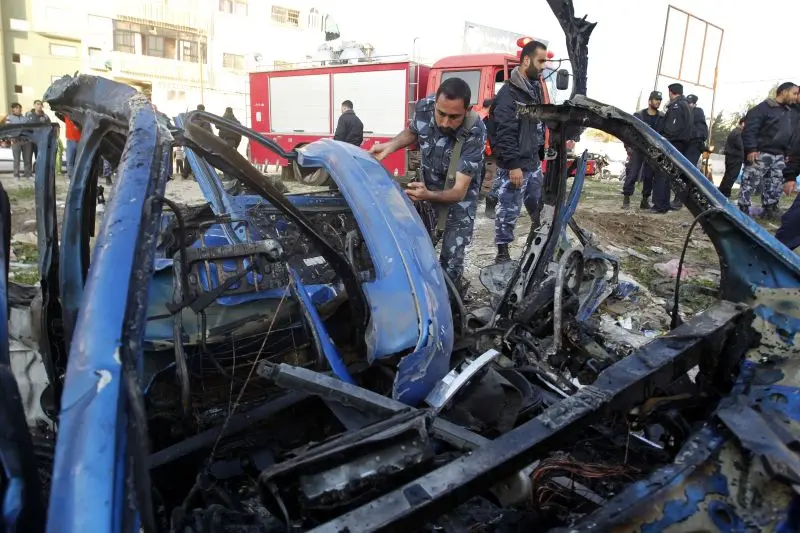
The latest spiral of violence represents the most intense cross-border conflict witnessed in the region since the turn of the year. The crisis was catalyzed on Friday when an Israeli airstrike struck a moving vehicle in Gaza, killing Zuhair al-Qaisy, a high-ranking leader of the Popular Resistance Committees (PRC).
The Spark: The Targeted Killing of Zuhair al-Qaisy
Israeli defense officials defended the targeted strike against al-Qaisy, asserting that he was in the advanced stages of planning a sophisticated cross-border terrorist attack against Israeli civilians and military personnel. However, the assassination triggered an immediate and ferocious response from Gaza-based militant organizations. Over the subsequent four days, militant factions—most notably the Iran-backed Islamic Jihad and the PRC—unleashed a barrage of hundreds of rockets and mortar shells indiscriminately targeted at population centers across southern Israel.
The sustained rocket fire disrupted daily life for hundreds of thousands of Israeli civilians, forcing schools to close and sending residents rushing into bomb shelters. In response, the IDF intensified its aerial campaign, targeting rocket-launching sites, weapons caches, and infrastructure associated with militant groups throughout the strip.
The Shaky Truce and Rapid Collapse
By early Tuesday, exhaustion and international mediation appeared to yield a breakthrough. Egyptian intelligence officials successfully negotiated the terms of a provisional cease-fire. Israeli Defense Minister Ehud Barak cautiously acknowledged the quiet, declaring early Tuesday, "It appears that we have reached the end of this round of violence." Similarly, IDF Chief of the General Staff Lt. Gen. Benny Gantz outlined a policy of strict reciprocity: "Calm will be reciprocated with calm, and fire will be reciprocated with fire."
However, the peace was ephemeral. Hours after the truce was supposedly enacted, suspected militants fired three additional rockets and mortar shells from Gaza into southern Israeli territory. Concurrently, Palestinian news agency WAFA reported that Israeli forces opened live fire near a funeral procession close to the border security fence east of Jabaliya in northern Gaza, wounding three mourners.
The IDF disputed the sequence of events regarding the funeral incident. An army spokeswoman explained that troops operating along the security fence identified approximately 50 Palestinians massing dangerously close to the barrier. According to the military’s rules of engagement, warning shots were deployed to disperse the crowd, with initial reports indicating no direct injuries from those specific warning shots.
By early Wednesday morning, the threshold for renewed military action was crossed. Israeli aircraft returned to the skies over northern Gaza, striking the two "terror activity sites" and confirming direct hits, effectively closing the book on the brief Egyptian-brokered truce.
Supporting Context & Metrics
The human and geopolitical cost of the four-day conflagration highlights the deep-seated volatility of the Gaza-Israel border, even as global attention remains transfixed on concurrent crises in Syria and Iran.
Casualties and Destruction
The intense four-day bombardment exacted a devastating toll, primarily within the densely populated confines of the Gaza Strip:
- Palestinian Fatalities: 25 individuals lost their lives during the hostilities. Among the dead were 14 members of the Iran-backed Islamic Jihad militant wing.
- Palestinian Injuries: At least 80 others sustained varying degrees of shrapnel and blast injuries, straining local medical facilities already grappling with chronic shortages of essential supplies and medical equipment.
- Israeli Impact: While hundreds of rockets slammed into southern Israeli towns and cities—damaging infrastructure and terrorizing civilian populations—effective deployment of civil defense measures and early-warning systems largely averted mass casualties on the Israeli side, though public endurance was severely tested.
Diplomatic Fallout and the Egyptian Parliament’s Vote
In Cairo, the humanitarian crisis in Gaza provoked a sharp legislative rebuke against Israel. Egypt’s parliament—dominated by Islamist parties following the political transition that unseated former President Hosni Mubarak—voted unanimously by a show of hands to suspend diplomatic relations with Israel and halt natural gas exports to the neighboring state.
Despite the high political theater and the emotional resonance of the vote within Egyptian domestic politics, foreign policy analysts noted that the move was largely symbolic. Under the transitional governance structure, the Supreme Council of the Armed Forces (SCAF) retains exclusive constitutional authority over foreign policy and international treaties. Consequently, the parliamentary resolution will not alter existing political or diplomatic relations between Cairo and Jerusalem, though it serves as a stark barometer of shifting political currents along Egypt’s eastern border.
Official Statements and Diplomatic Posturing
As military operations resumed, leaders from all sides took to public platforms to justify their actions, lay blame, and articulate their strategic red lines.
The Israeli Perspective
Jerusalem maintained an unyielding stance regarding its security policies, firmly rejecting the notion that targeted killings were up for negotiation under the Egyptian-brokered truce.
Senior Israeli defense official Amos Gilad defended the controversial practice of preemptive assassinations: "Targeting such mega-terrorists is the best way to save lives." Gilad emphasized that Israel views targeted operations as an indispensable counter-terrorism tool that cannot be bargained away in exchange for temporary cease-fires.
On the international front, Israel’s Ambassador to the United Nations, Ron Prosor, intensified diplomatic pressure by submitting a formal letter of complaint to U.N. Secretary-General Ban Ki-moon. Prosor rebuked the international body for its perceived inaction in the face of relentless rocket fire originating from the Gaza Strip:
"It is time for the Security Council to speak with one voice against the terrorism that continues to flow from Gaza," Prosor wrote. "The situation is grave. If one rocket lands in the wrong place at the wrong time, Israel will be forced to respond in a completely different manner."
The Palestinian Militant Perspective
Militant factions presented a fundamentally different narrative regarding the mechanics of the cease-fire. Khaled al-Batsh, a prominent Gaza-based leader of Islamic Jihad—an organization that claimed responsibility for launching dozens of rockets and mortars during the flare-up—insisted that Israel had indeed made major concessions through Egyptian intermediaries.
According to al-Batsh, Islamic Jihad and other resistance factions agreed to lay down their arms only after receiving ironclad Egyptian assurances that Israel had consented to two core demands: the termination of aerial bombardments and the permanent cessation of targeted assassinations of militant commanders.
"When Israel agreed to these two conditions with Egyptian assurances and mediation, then Islamic Jihad and all the Palestinian resistance factions agreed on a reciprocal cease-fire in the Gaza strip," al-Batsh stated. Israel’s subsequent refusal to acknowledge any restriction on targeted killings directly contradicted this narrative, all but guaranteeing the collapse of the agreement.
Future Outlook: A Precarious Precipice
The rapid unraveling of the Egyptian-brokered truce illustrates the profound structural challenges inherent in managing the Gaza-Israel conflict. With both sides operating under mutually exclusive understandings of the cease-fire’s terms—Israel claiming unmitigated freedom of action against perceived threats, and militant factions demanding an end to targeted assassinations—the potential for sustained de-escalation remains exceptionally low.
As the IDF weighs further operations in response to persistent rocket capabilities, and as Palestinian factions vow continued resistance, the humanitarian situation in Gaza hangs in the balance. International mediators, led by Egyptian intelligence, face a monumental task in resurrecting diplomatic channels. Unless a more robust, comprehensive framework that addresses the core security demands of Israel and the humanitarian and political grievances of Gaza’s populace is forged, the region risks sliding from sporadic tit-for-tat exchanges into a much wider, more devastating military confrontation.