

Executive Overview
In the high-stakes race to build scalable, fault-tolerant quantum computers and ultra-secure quantum networks, researchers face a relentless enemy: environmental decoherence. Quantum bits, or qubits, are notoriously sensitive to the slightest thermal, magnetic, or electrical fluctuations in their surroundings. Left unprotected, they lose their fragile quantum states—and with them, the calculations they carry—in fractions of a second.
For years, the scientific community has leaned heavily on electromagnetic radiation, specifically microwave and optical pulses, to shield and manipulate these quantum systems. However, a groundbreaking development emerging from the Harvard John A. Paulson School of Engineering and Applied Sciences (SEAS) is upending conventional methodologies. Researchers in the laboratory of Marko Lončar, the Tiantsai Lin Professor of Electrical Engineering at Harvard, have successfully demonstrated a radical new paradigm: protecting delicate quantum information using mechanical vibrations, essentially microscopic sound waves.
Published in the prestigious journal Nature Physics, the research marks a critical milestone in the journey toward compact, chip-scale quantum networks and hybrid quantum systems. By utilizing tiny packets of mechanical energy known as phonons, the Harvard team has achieved what was previously thought to be mutually exclusive: maintaining a strong, functional interaction between a qubit and its communication channels while simultaneously extending its quantum memory—or coherence time—by roughly a factor of three.
This innovation does not merely offer a clever engineering workaround; it fundamentally redefines the potential dual role of sound waves in quantum architectures. Phonons can now be deployed not only as data highways to transport quantum information across integrated circuits but also as defensive shields to protect that information from environmental noise. As the quantum computing industry transitions from theoretical physics to scalable manufacturing, Harvard’s all-mechanical coherence protection strategy introduces a transformative blueprint for the next generation of robust, ultra-dense quantum hardware.
Detailed Chronology: The Path to All-Mechanical Coherence Protection
The breakthrough reported in Nature Physics is the culmination of years of methodical investigation into nanophotonics, optomechanics, and spin physics within the Lončar lab at SEAS.
Laying the Groundwork: Phononic Cavities and Diamond Vacancies
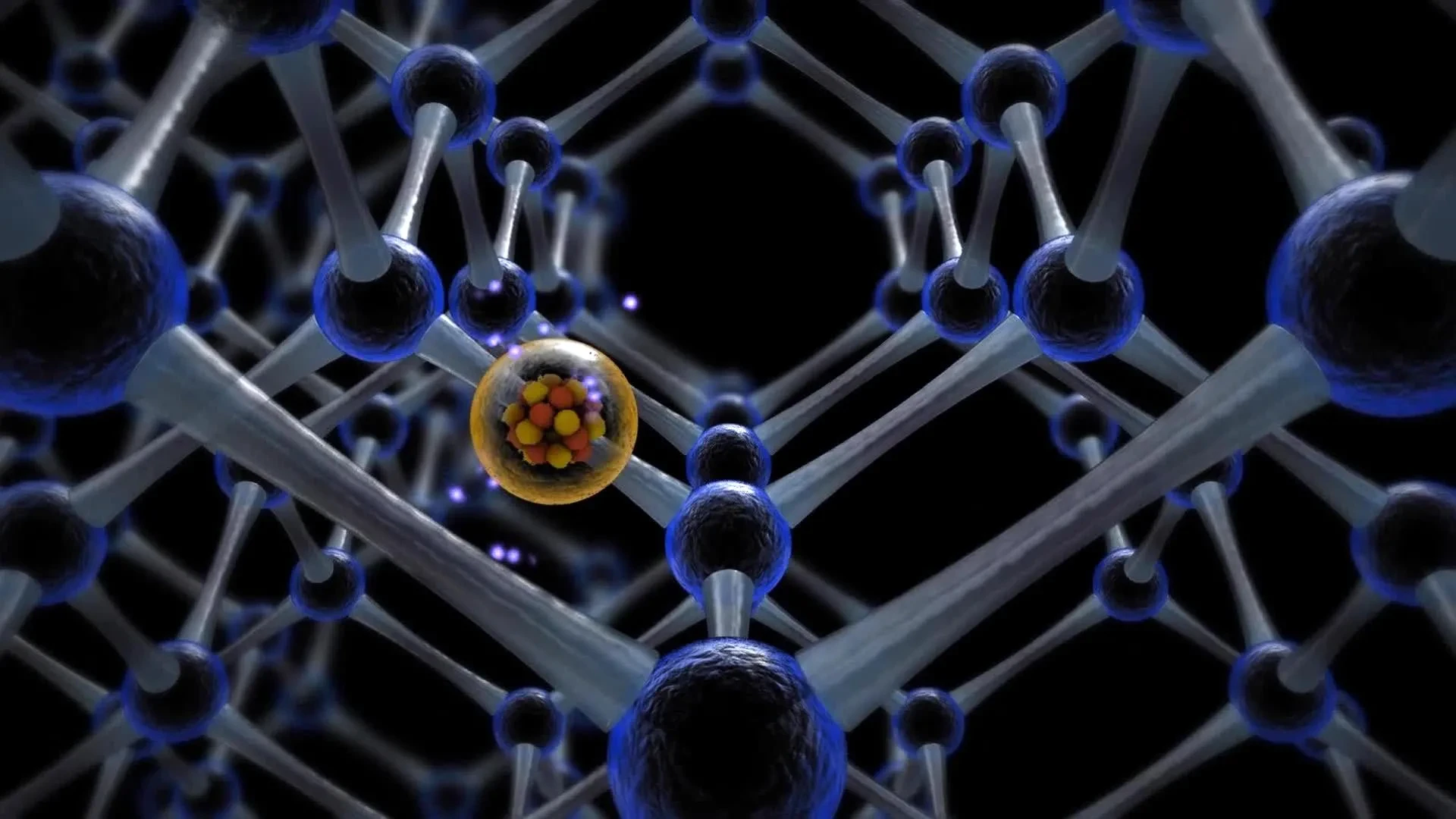
The foundational steps of this research began with the exploration of solid-state quantum systems, specifically the spin of an electron associated with a silicon-vacancy (SiV) center in a diamond lattice. Silicon-vacancy centers are attractive candidates for quantum technologies because their optical and spin properties can be controlled with high precision. However, bridging individual silicon-vacancy nodes across a network requires a reliable carrier of quantum information.
While light (photons) is the default choice for long-distance telecommunications and optical interconnects, its relatively long wavelength poses significant scaling challenges on microchips. Light requires larger routing structures, making high-density integration difficult.
To bypass this physical constraint, the Lončar lab turned its attention to phonons—quantized packets of mechanical vibration. At equivalent frequencies, phonons possess wavelengths vastly shorter than those of light. This dramatic reduction in spatial footprint allows engineers to design drastically smaller components and pack them tightly together on a single semiconductor chip. Furthermore, the lab previously pioneered the development of phononic cavities—microscopic structures engineered to trap mechanical vibrations precisely, forcing them to interact strongly with the electron spins embedded inside diamond qubits.
The Decoupling Dilemma
Despite their spatial advantages, phonons introduced a formidable roadblock: the degradation of quantum memory.
When a qubit is brought into close contact with a phononic environment to facilitate rapid communication, it is inevitably exposed to low-frequency mechanical and thermal noise from the surrounding material. Traditionally, physicists protect quantum memories from such environmental interference by applying external microwave pulses. These pulses rapidly decouple the qubit from ambient noise sources, preserving its coherence.
However, this conventional playbook fails when applied to qubits operating directly inside phononic cavities. The very mechanisms required to achieve strong spin-phonon coupling tend to amplify environmental disruption, wiping out the quantum state before useful computations or storage can take place. For years, this trade-off remained a major stumbling block in the field: researchers could either build devices with strong phonon-qubit interactions or devices with long-lasting quantum memory, but rarely both in the same architecture.
The "Dressed" Qubit Breakthrough
Led by Eliza Cornell, a recent Ph.D. graduate from the Lončar lab now serving as a postdoctoral researcher at Boston University, and Zhujing Xu, a former postdoctoral scholar in the group, the SEAS team systematically attacked this paradox.
Instead of fighting the mechanical environment with external microwaves, the researchers decided to weaponize it. They continuously applied a mechanical driving field composed of phonons directly to the silicon-vacancy spin system in the diamond.
This continuous acoustic driving fundamentally transformed the nature of the qubit, shifting it into a specialized quantum state known as a "dressed" qubit. In quantum mechanics, a "dressed" state describes a system that is intimately coupled to an external field—in this case, "wearing" a continuous acoustic blanket. By enveloping the qubit in this controlled mechanical field, the researchers rendered it largely immune to the chaotic, low-frequency noise fluctuating in its broader environment.
Crucially, because this protective mechanism is driven entirely by a continuous mechanical field natively compatible with phononic cavities, it operates seamlessly within the exact structures required to link stationary nodes in future quantum networks. The phonon had successfully transitioned from being a source of noise and vulnerability to the ultimate guardian of quantum coherence.
Supporting Context & Metrics: Why Sound Beats Light on the Chip
To fully appreciate the significance of the Harvard SEAS breakthrough, one must examine the underlying physics and engineering metrics that govern chip-scale quantum architecture.
The Scaling Advantage of Phonons
In the design of integrated quantum circuits, real estate is at an absolute premium. Traditional photonic interconnects require spatial routing channels scaled to the wavelength of light (typically measured in hundreds of nanometers to micrometers). In contrast, acoustic waves traveling through solid-state materials like diamond propagate at the speed of sound—which is roughly five orders of magnitude slower than the speed of light in a vacuum.
This vast disparity yields a profound scaling advantage:
- Wavelength Compression: At gigahertz frequencies, acoustic phonons exhibit wavelengths on the scale of nanometers, allowing for deep sub-wavelength confinement.
- Component Density: Microscopic resonators and phononic crystals can be packed densely onto a silicon or diamond chip without suffering from destructive optical cross-talk.
- Hybrid Versatility: Phonons act as universal translators. They interact readily with both solid-state electronic spins and electromagnetic fields, making them uniquely suited for hybrid quantum systems that bridge superconducting circuits, optomechanical cavities, and spin-based memories.
Quantifying the Gains: A Threefold Extension
The primary metric validating the SEAS team’s methodology is the dramatic enhancement of the qubit’s coherence time ($T_2$). Coherence time dictates how long a quantum bit can maintain its superposition state before environmental decoherence corrupts the data.
[Standard SiV Qubit] ---> Exposed to environmental noise ---> Rapid Decoherence
[Acoustically "Dressed" SiV Qubit] ---> Continuous Phonon Driving ---> ~3x Coherence Time Extension
Through the application of all-mechanical coherence protection, the Harvard researchers successfully extended the coherence time of the silicon-vacancy spin by roughly a factor of three. While a threefold increase is a monumental proof-of-concept in experimental physics, it also signals a clear developmental runway. By refining the acoustic driving fields, optimizing cavity geometries, and minimizing intrinsic material defects, researchers believe even greater suppression of low-frequency noise is achievable.
Official Statements and Research Perspectives
The implications of this research extend far beyond a single laboratory, drawing praise and analytical insight from the broader quantum engineering community.
Eliza Cornell, co-lead author of the study and postdoctoral researcher at Boston University, emphasized the dual mandate that drove the project:
"We are solving two problems. We want the spin to have strong interaction with phonons, and we want the spin to have a long coherence time. Our paper demonstrates a method of extending the coherence time that is compatible with the silicon-vacancy center being in a cavity."
Marko Lončar, the Tiantsai Lin Professor of Electrical Engineering at SEAS and principal investigator of the laboratory, has long championed the integration of mechanical systems into quantum information processing. His lab’s sustained focus on phononic crystal engineering has consistently pushed the boundaries of what solid-state quantum platforms can achieve.
The collaborative breadth of the study is underscored by its extensive co-author list. "All-mechanical coherence protection and fast control of a spin qubit" was co-authored by Zhaoyou Wang, Hana K. Warner, Eliana Mann, Michael Haas, Smarak Maity, Graham Joe, Liang Jiang, Peter Rabl, and Benjamin Pingault. This multidisciplinary team brought together expertise in nanofabrication, quantum optics, theoretical physics, and condensed matter systems.
Institutional and Financial Backing
The rigorous nature of this research required sustained financial and infrastructure support from major federal and institutional entities. Primary funding was provided by:
- The National Science Foundation (NSF): Under grant number EEC-1941583.
- The Air Force Office of Scientific Research (AFOSR): Under award numbers FA9550-23-1-0333 and FA9550-23-1-0338.
- Q-NEXT: A U.S. Department of Energy (DOE) Office of Science National Quantum Information Science Research Center, operating under award No. DE-FOA-0002253.
Additionally, experimental fabrication was conducted in part at the Harvard Center for Nanoscale Systems (CNS), a member of the National Nanotechnology Infrastructure Network supported by NSF award No. ECS-0335765. Recognizing the commercial potential of these integrated quantum devices, the Harvard Office of Technology Development is actively pursuing patent protection and commercialization pathways to transition these academic breakthroughs into market-ready technologies.
Future Outlook: Toward Commercial Chip-Scale Quantum Networks
As the quantum computing landscape matures, the industry faces an architectural bottleneck: how to scale individual, highly sensitive qubits into massive, interconnected processor networks without losing computational integrity. Massive room-sized dilution refrigerators and sprawling optical bench setups are formidable for laboratory demonstrations, but they are fundamentally unsuited for widespread commercial deployment, data centers, or secure telecommunication nodes.
The Harvard SEAS demonstration points toward an alternative future: the fully integrated, chip-scale quantum module.
Roadmap for Next-Generation Quantum Hardware
- On-Chip Signal Routing: By replacing bulky optical free-space optics and complex microwave coaxial lines with on-chip phononic waveguides, manufacturers can drastically reduce the physical footprint of quantum processors.
- Modular Hybrid Architectures: The natural versatility of phonons enables engineers to couple disparate quantum modalities—such as superconducting qubits used for rapid processing and diamond spin qubits used for long-term quantum memory—onto a single unified motherboard.
- Scalable Error Mitigation: Implementing continuous mechanical driving fields as a standard operational protocol could become a foundational error-mitigation layer, hardware-suppressing environmental noise before it requires complex software-level quantum error correction cycles.
Challenges Ahead
Despite the immense promise of all-mechanical coherence protection, hurdles remain. Scaling these devices requires nanometer-scale fabrication precision to ensure that phononic cavities maintain their resonant frequencies without introducing structural defects that scatter acoustic waves. Furthermore, operating these systems at scale will demand rigorous thermal management to prevent parasitic heating from acoustic driving fields.
Yet, the foundational barrier—proving that microscopic sound waves can simultaneously facilitate strong qubit interaction and prolonged quantum memory—has been decisively surmounted.
By tuning into the quiet physics of acoustic vibrations, Harvard researchers have unlocked a powerful new dimension in quantum control. As this technology transitions from academic publications to commercial development pipelines, the microscopic sound wave may well become the steady heartbeat of the quantum computing revolution.
