

Executive Overview
The high-profile Massachusetts triple-homicide trial of Lindsay Clancy ended not with a definitive verdict, but in a fractured stalemate that has reignited a nationwide debate over criminal responsibility, severe postpartum mental illness, and the complex mechanics of jury deliberations. Michael P. Desronvil, the lone holdout juror whose stubborn refusal to align with his eleven peers resulted in a mistrial on September 4, has broken his silence. In a public statement issued through his attorney, Edward Paltzik, Desronvil vehemently disputed claims that he harbored reasonable doubt regarding Clancy’s guilt. Instead, he asserted that he firmly believed the prosecution proved the mother of three acted with premeditation and a clear understanding of her actions when she strangled her children in January 2023.
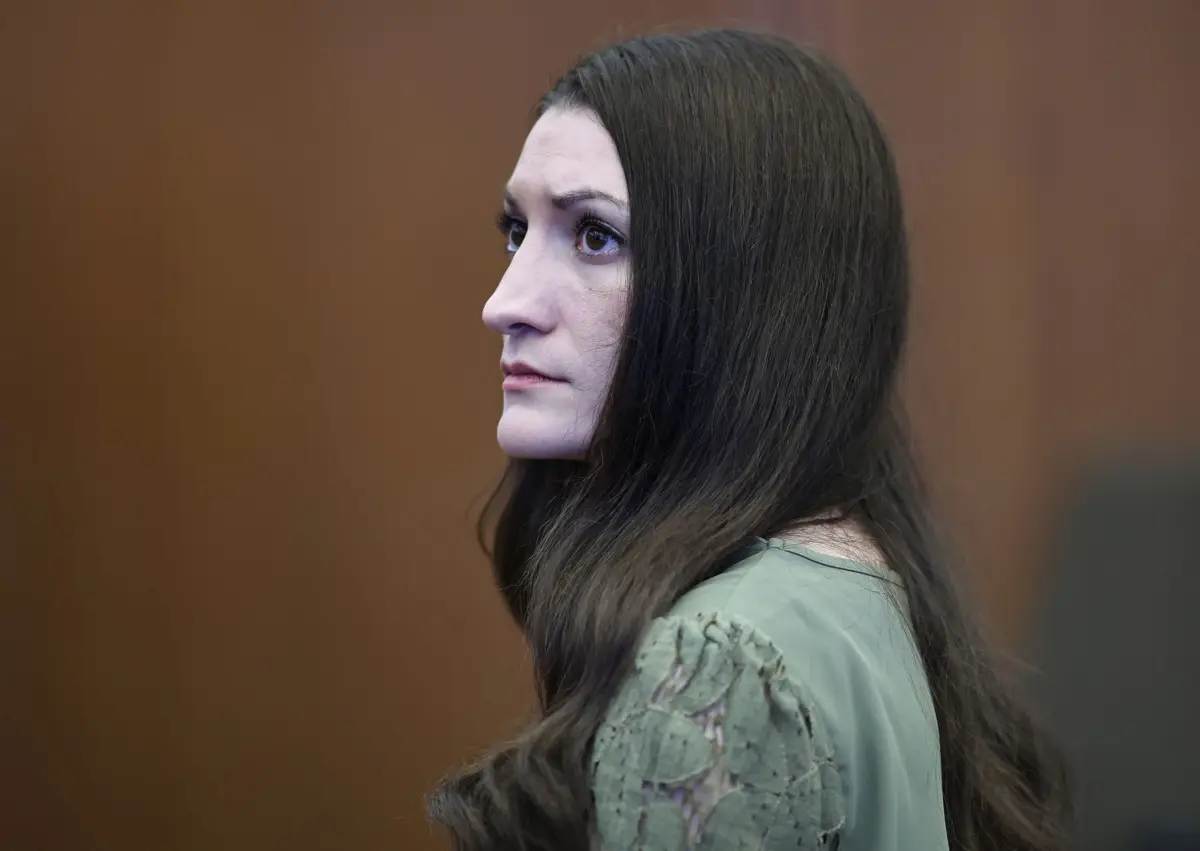
The case, which captured the nation’s attention due to its harrowing intersection of mental health, motherhood, and the criminal justice system, remains in a legal purgatory. Clancy, who was paralyzed after attempting to take her own life by jumping from a second-story window immediately following the killings, admits to strangling her three young children: 5-year-old Cora, 3-year-old Dawson, and 8-month-old Callan. However, her defense team argued that she was suffering from acute postpartum psychosis—a severe medical emergency that rendered her incapable of conforming her conduct to the requirements of the law. Prosecutors countered that while Clancy was undoubtedly experiencing profound psychological distress, her actions demonstrated calculation, planning, and an acute awareness of wrongfulness.
Desronvil’s recent revelations illuminate the intense, high-pressure environment inside the deliberation room. While fellow jurors, such as Paula Devlin, have publicly characterized Desronvil as "very arrogant" and inconsistent—claiming he admitted to having reasonable doubt yet refused to reach a compromise—Desronvil presents an entirely different narrative. He claims his fellow jurors actively cut him off when he attempted to articulate complex theories based on the trial evidence. As legal experts, mental health advocates, and the public grapple with the implications of the mistrial, the central question remains: Will prosecutors attempt to retry a case that has already exposed deep societal divisions over how the legal system evaluates severe maternal mental illness?
Detailed Chronology: From Tragedy to Mistrial
The Events of January 2023
The tragedy unfolded on the evening of January 24, 2023, in the quiet, affluent suburb of Duxbury, Massachusetts. Patrick Clancy returned home from picking up takeout to find a horrific scene. His wife, Lindsay Clancy, a 32-year-old labor and delivery nurse, had jumped from a second-story window of their home in an apparent suicide attempt. Inside, Patrick discovered their three children—Cora, Dawson, and Callan—unconscious, with exercise bands tied around their necks.
Emergency responders arrived swiftly, but despite heroic efforts, the three children were pronounced dead at local hospitals. Lindsay Clancy survived the fall but sustained catastrophic spinal injuries that left her permanently paralyzed from the waist down. In the days and weeks that followed, the community of Duxbury and the broader medical community reeled as details emerged painting a portrait of a family grappling with the invisible, crushing weight of postpartum depression, anxiety, and an alleged over-medication regimen—a condition her defense would later characterize as a complete break from reality.
The Legal Proceedings and Trial
By the time the case proceeded to trial, the central facts were largely undisputed: Lindsay Clancy killed her children. The legal battleground focused entirely on her mental state at the precise moment of the killings.
- The Defense’s Case: Defense attorneys mounted a rigorous insanity defense, arguing that Clancy was deep in the throes of postpartum psychosis. They presented expert medical testimony detailing how a cascade of psychiatric medications—prescribed to treat her rapidly deteriorating mental health in the weeks leading up to the tragedy—may have exacerbated her condition, inducing a psychotic state where she believed she was saving her children and herself from a tortured existence.
- The Prosecution’s Case: The Commonwealth argued that while Clancy was undoubtedly struggling with mental health issues, she did not meet the legal threshold for insanity. Prosecutors presented evidence of timing and execution, pointing out that Clancy had sent her husband out on a specific errand, utilized exercise bands to carry out the murders sequentially, and demonstrated a calculated awareness of her actions. They urged the jury to convict her on three counts of first-degree murder.
The Deadlock and Mistrial
Deliberations stretched across multiple tense days. As the jury wrestled with the voluminous physical evidence, expert testimony, and emotional weight of the trial, it became clear they were deadlocked. For at least two days, the vote remained stubbornly stagnant at 11-1 in favor of a guilty verdict.
Attempts by the defense to intervene were rejected by higher courts, and the jury ultimately informed the judge that they were hopelessly deadlocked. On September 4, the presiding judge declared a mistrial, bringing an abrupt and emotionally charged close to weeks of intense courtroom drama. Clancy, wheelchair-bound and residing in a state-run psychiatric facility, was remanded back into custody as prosecutors weighed their next steps.
Supporting Context & Metrics: The Anatomy of a Deadlocked Jury
The mechanics of a deadlocked jury—often referred to as a hung jury—represent one of the most challenging hurdles in the American criminal justice system. When 12 jurors are sequestered to evaluate complex evidence, unanimity is constitutionally required in criminal trials in Massachusetts and the vast majority of U.S. jurisdictions.
The Dynamics of 11-1 Stalemate
Statistically, 11-1 deadlocks are relatively rare compared to evenly split juries (such as 6-6) or 10-2 splits. When a single juror holds out against an overwhelming majority, the psychological pressure on that individual is immense. Conversely, the majority jurors often experience deep frustration, believing the holdout is being obstinate or unreasonable.
In the Clancy trial, this dynamic was amplified by the extreme emotional resonance of the case. Jurors were tasked with reconciling two profoundly conflicting narratives:
- The Medical-Humanitarian Narrative: A mother completely detached from reality by a poorly understood and severely debilitating medical condition.
- The Legal-Accountability Narrative: A perpetrator who executed a multi-step plan to take the lives of three defenseless children.
Postpartum Psychosis in the Courtroom
The trial also served as a watershed moment for how the legal system addresses postpartum psychiatric disorders. According to psychiatric data, postpartum depression affects up to 15% of new mothers, while the much rarer postpartum psychosis occurs in approximately 1 to 2 per 1,000 deliveries. Characterized by hallucinations, delusions, severe confusion, and a loss of touch with reality, postpartum psychosis is widely recognized by medical professionals as a psychiatric emergency.
However, bridging the gap between medical definitions of psychosis and legal definitions of criminal insanity remains fraught with difficulty. Legal insanity tests (such as the M’Naghten rule or the substantial capacity test) require juries to determine whether the defendant understood the nature and quality of their act, or knew it was wrong, at the exact moment the crime was committed. In Clancy’s case, the 11-1 split starkly illustrated how profoundly ordinary citizens can differ when applying these rigid legal standards to complex, highly technical psychiatric evidence.
Official Statements and Public Fallout
The aftermath of the mistrial has been characterized by an unprecedented public airing of grievances by the jurors themselves, shattering the traditional veil of post-trial deliberation secrecy.
Paula Devlin’s Account
Earlier in the month, juror Paula Devlin spoke candidly with NBC10, offering a glimpse into the contentious atmosphere of the deliberation room. Devlin described the lone holdout, Michael P. Desronvil, in sharp terms, calling him "very arrogant." According to Devlin, Desronvil explicitly admitted during discussions that he had reasonable doubt regarding aspects of the case, yet stubbornly refused to vote alongside his peers to finalize a verdict.
Michael P. Desronvil’s Rebuttal
Seeking to correct the record and respond to public criticism, Desronvil issued a definitive statement through his attorney, Edward Paltzik, to NewsNation and The New York Times. Desronvil categorically rejected Devlin’s characterization, maintaining that his stance was entirely firm and unambiguous.
"I didn’t have any doubts," Desronvil stated. "As I tried to explain different possible theories during deliberation, I kept getting cut off as if I had doubts based on the evidence present."
Elaborating on his analytical framework during the trial, Desronvil’s statement emphasized that the state had met its burden of proof:
"Based on all the physical evidence, key witnesses and what the prosecution presented, I thought it was enough proof that she knew exactly what she was doing and planned."
Legal analysts have noted that Desronvil’s decision to speak out—and the counter-statements from fellow jurors—highlight the immense strain placed on modern juries, particularly in high-profile cases magnified by 24-hour news cycles and social media commentary.
Future Outlook: What Lies Ahead for Lindsay Clancy?
As the dust settles on the dramatic mistrial, the legal and institutional questions surrounding Lindsay Clancy’s future remain unresolved.
The Prospect of a Retrial
The primary decision now rests with the Cape and Islands District Attorney’s office, which must determine whether to expend the immense resources required to mount a second trial. Retrying a high-profile, emotionally draining murder case is a monumental undertaking. Prosecutors must weigh several critical factors:
- The Likelihood of Success: Will a second jury be any more likely to reach a unanimous verdict, or is the public too deeply divided on the issue of postpartum mental illness?
- Resource Allocation: The financial and emotional toll on the surviving family members, particularly Patrick Clancy, who has endured unimaginable grief while navigating the public spectacle of the legal proceedings.
- The Defendant’s Medical Status: Clancy remains confined to a state-run psychiatric facility, wheelchair-bound and paralyzed from her suicide attempt. Her ongoing medical and psychiatric needs complicate both her incarceration and the logistics of court appearances.
Broader Societal and Legal Implications
Regardless of whether a retrial is pursued, the Lindsay Clancy case has already permanently altered the conversation surrounding maternal mental health and the criminal justice system. Advocacy groups continue to push for greater awareness, early screening, and destigmatization of postpartum psychiatric disorders, arguing that punitive measures alone cannot address the root causes of such tragedies. At the same time, legal scholars point to the case as a prime example of the friction that occurs when modern psychiatric science collides with century-old legal definitions of criminal responsibility.
For now, Lindsay Clancy remains in secure psychiatric custody, while the legal system pauses to reflect on a trial that exposed the limits of consensus, the complexities of human psychology, and the heavy burden carried by twelve ordinary citizens tasked with judging the unthinkable.