

Executive Overview
Deep beneath the ocean floor south of Kyushu, Japan, one of Earth’s most formidable geological engines is quietly stirring back to life. Millennia after unleashing an apocalyptic cataclysm that devastated the surrounding region and altered global climates, the Kikai caldera is once again refilling its immense subterranean magma chamber.
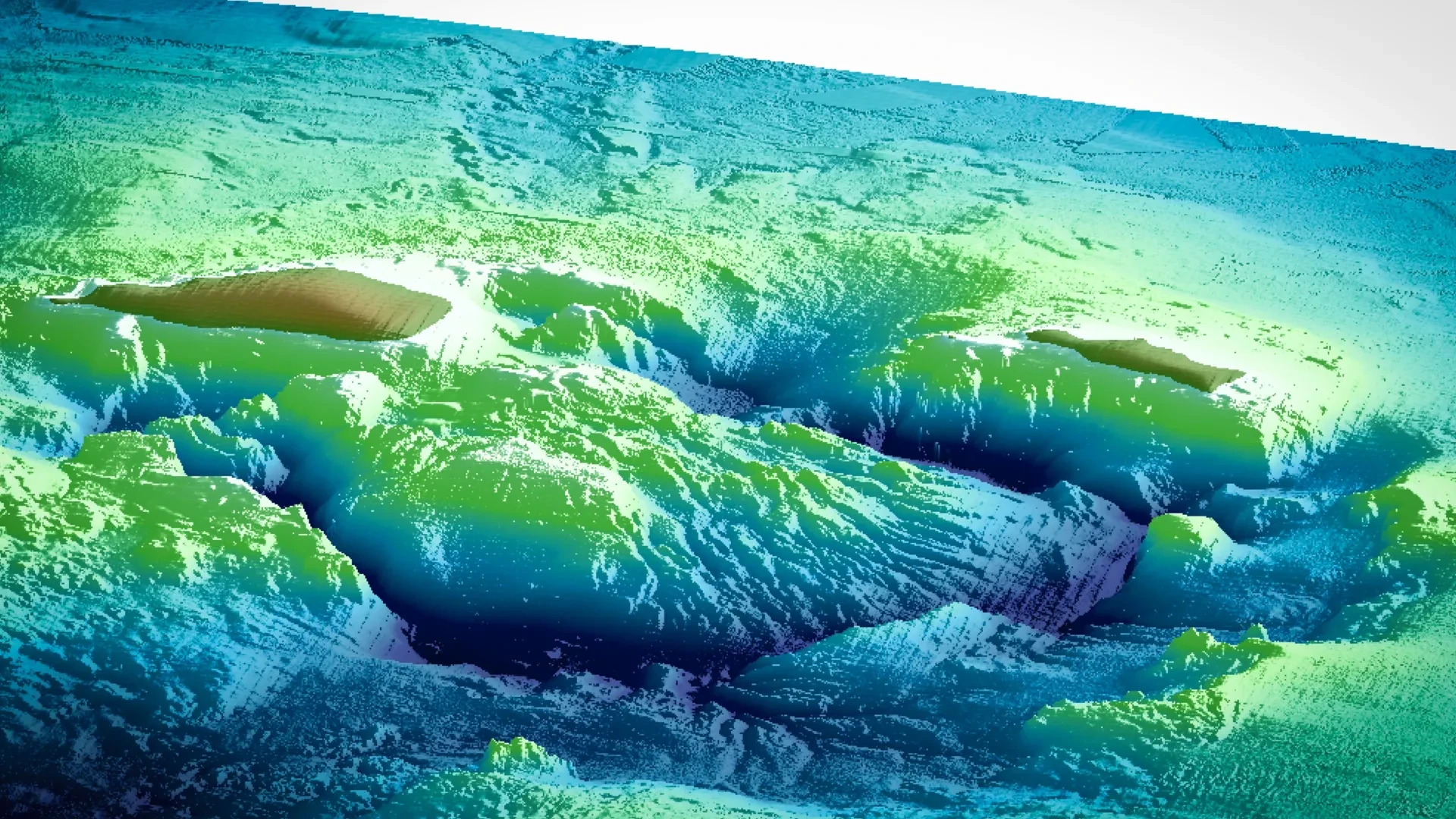
In a groundbreaking study published in Communications Earth & Environment, a collaborative team of geophysicists from Kobe University and the Japan Agency for Marine-Earth Science and Technology (JAMSTEC) has mapped the hidden architecture of this submarine supervolcano. Utilizing advanced marine seismic imaging, the researchers have confirmed that fresh, molten material is actively accumulating beneath the ancient caldera, effectively setting the stage for a multi-thousand-year cycle of volcanic regeneration.
While this discovery does not portend an imminent eruption, it offers an unprecedented look into the inner workings of giant volcanic systems. For decades, the mechanisms by which supervolcanoes replenish their massive underground reservoirs have remained shrouded in mystery. By decoding the geological and chemical signatures locked within Kikai, scientists are gaining crucial insights that could transform our understanding of other hyper-destructive systems worldwide—including Yellowstone in the United States and Lake Toba in Indonesia. Ultimately, this research bridges a critical knowledge gap, moving humanity one step closer to identifying the subtle warning signs that precede Earth’s most catastrophic natural hazards.
Detailed Chronology and Investigative Journey
To comprehend the significance of the Kikai discovery, scientists must first look backward through the deep corridors of geological time, tracing the history of an eruption that nearly erased regional ecosystems and left an indelible scar upon the planet.
The Holocene’s Greatest Cataclysm: The Akahoya Eruption
Approximately 7,300 years ago, Kikai—primarily submerged beneath the waters of the East China Sea—suffered a catastrophic collapse. Known to geologists as the Akahoya eruption, this event stands as the largest volcanic explosion of the Holocene epoch, the current geological period that began roughly 11,700 years ago.
The scale of the Akahoya eruption defies everyday human imagination. The volcano discharged a staggering volume of pyroclastic material and magma, enough to bury the entirety of New York City’s Central Park under a scorching, suffocating blanket of rock and ash approximately 12 kilometers (7.5 miles) thick. The sheer velocity and magnitude of the evacuation of magma from the underground chamber caused the roof of the volcano to collapse inward. This catastrophic structural failure left behind a colossal, ring-shaped depression on the seafloor: a caldera spanning roughly 20 kilometers (12 miles) across.
Peering Beneath the Waves: The JAMSTEC Collaboration
Studying a submerged supervolcano presents unique logistical and technical challenges. Unlike terrestrial giants like Yellowstone, which can be monitored via surface stations spread across national parks, Kikai’s primary features lie hidden beneath meters of seawater and thick layers of marine sediment.
However, Kobe University geophysicist Nobukazu Seama and his colleagues realized that this watery domain actually offers a distinct geological advantage. The flat, unobstructed seafloor permits researchers to conduct systematic, large-scale seismic surveys across the entirety of the volcanic edifice without the topographical interference common on land.
To peer into the abyssal depths beneath Kikai, the research team partnered with JAMSTEC to deploy cutting-edge marine geophysics technology. Researchers utilized powerful airgun arrays towed behind research vessels to fire intense acoustic pulses down through the ocean water and deep into the Earth’s crust. As these sound waves propagated through subterranean rock layers, they were captured by a network of ocean-bottom seismometers (OBS) deployed strategically around the caldera.
Because seismic waves travel at different speeds through solid rock versus molten or partially molten material, the recorded data acted like an acoustic CAT scan. By analyzing the velocity and refraction of these waves, the research team successfully mapped the density and state of the material lurking miles beneath the seabed, revealing a massive, distinct reservoir packed with high proportions of magma.
Chemical Signatures of Subterranean Rejuvenation
Locating a magma chamber is only half the battle; determining the origin of that magma is where the true detective work begins. Geologists needed to know whether the newly discovered reservoir consisted merely of stagnant, cooling leftovers from the ancient Akahoya explosion or if it represented something far more dynamic.
Previous geological surveys had already established that a new lava dome—known as Shodoshima-Iwa and other associated structures—has been steadily developing near the center of the caldera over the past 3,900 years. Lava domes form when highly viscous, silica-rich lava squeezes out of a volcanic vent but is too thick to flow away easily, piling up into a massive mound.
By analyzing the chemical composition of rocks from this modern lava dome and comparing them to the debris ejected during the 7,300-year-old cataclysm, the research team uncovered a vital geochemical fingerprint. The chemical makeup of the modern dome material differed significantly from the older catastrophic output. This variation proved that the magma currently feeding the modern dome and filling the underground chamber has not simply stagnated since prehistoric times. Instead, it is being actively replenished by fresh injections of molten rock surging upward from deeper within the Earth’s crust and mantle.
Supporting Context and Metrics
To truly grasp the mechanics of supervolcanoes, one must examine the physical scales involved, the mechanics of caldera collapse, and the global network of similar geological anomalies.
The Anatomy of a Supervolcano
Supervolcanoes are not towering, conical mountains like Mount Fuji or Mount St. Helens. Instead, they are sprawling, depressed systems where massive quantities of magma—often hundreds to thousands of cubic kilometers—accumulate in shallow crustal reservoirs.
The life cycle of a supervolcano generally follows a multi-stage progression:
- Accumulation: Over tens of thousands of years, basaltic or mantle-derived melts rise and pool in the lower crust, melting surrounding crustal rocks and generating massive bodies of buoyant, silica-rich magma.
- The Cataclysm: Driven by extreme internal pressure and gas exsolution, the chamber breaches the surface, triggering an explosive caldera-forming eruption that empties the reservoir in a matter of days or weeks.
- Collapse: Unsupported by the evacuated magma, the overlying surface caves inward, forming a caldera basin.
- Resurfacing and Recharge: Over subsequent millennia, hydrothermal activity, minor dome building, and renewed magma injections from below begin the slow, invisible process of refilling the system.
Global Scale Comparison
Kikai is far from alone in this dangerous cycle. The processes observed beneath the Japanese seafloor closely mirror those hypothesized for other colossal volcanic systems across the globe:
- Yellowstone Caldera (United States): Formed by three major cataclysmic eruptions over the past 2.1 million years, Yellowstone sits atop a massive subterranean magma reservoir that remains partially molten, fueled by a deep mantle plume.
- Lake Toba (Indonesia): The site of the Toba supereruption approximately 74,000 years ago—the largest explosive volcanic event on Earth in the last 25 million years—Toba continues to exhibit complex post-caldera resurgence and active seismic zones.
- Taupo Volcano (New Zealand): Responsible for the Oruanui eruption roughly 26,500 years ago, Taupo features an active, highly dynamic magma system capable of generating frequent smaller eruptions and steady ground deformation.
| Supervolcano System | Location | Estimated Date of Last Giant Eruption | Scale / Impact Category | Current Activity Status |
|---|---|---|---|---|
| Kikai Caldera | East China Sea, Japan | ~7,300 years ago (Akahoya) | Largest Holocene eruption | Active magma recharge; growing lava dome |
| Yellowstone | Wyoming, USA | ~631,000 years ago (Lava Creek) | Continental supervolcano | Active hydrothermal systems, seismic swarms |
| Lake Toba | Sumatra, Indonesia | ~74,000 years ago | Global climate bottleneck event | Post-caldera resurgence, active seismicity |
| Taupo | North Island, New Zealand | ~26,500 years ago (Oruanui) | Major rhyolitic system | Frequent unrest phases, geothermal activity |
Official Statements and Expert Analysis
The implications of the Kikai study extend far beyond Japanese waters, prompting praise and commentary from the international geophysical community.
Lead researcher Nobukazu Seama of Kobe University emphasized the necessity of understanding the mechanics of recharge before attempting to predict long-term volcanic hazards.
"We must understand how such large quantities of magma can accumulate to understand how giant caldera eruptions occur," stated Nobukazu Seama. Describing the methodology behind the survey, he added, "The underwater location allows us to implement systematic, large-scale surveys, giving us a clearer window into structures that cannot be observed directly on land."
Addressing the origin of the molten material, Seama clarified the distinction between ancient remnants and modern inputs:
"Due to its extent and location, it is clear that this is in fact the same magma reservoir as in the previous eruption. However, chemical analyses show that the magma now present in the magma reservoir under the lava dome is likely newly injected magma, supplied from deeper within the crust or mantle."
Connecting these findings to global supervolcanoes, Seama noted a unifying physical principle that applies across continents:
"This magma re-injection model is consistent with the existence of large shallow magma reservoirs beneath other giant calderas like Yellowstone and Toba."
Future Outlook: Toward Advanced Volcanic Early Warning Systems
While the discovery that Kikai is refilling its magma reservoir sounds alarming to the layperson, scientists urge calm. The replenishment of a supervolcano’s magma supply is a geological process that spans millennia. The presence of fresh magma does not imply an imminent catastrophic eruption; rather, it documents the baseline behavior of Earth’s most powerful volcanic systems during their prolonged inter-eruptive phases.
Nevertheless, the insights gained from this study lay the groundwork for a revolution in volcanic monitoring. By understanding the timeline and pathways of magma re-injection, geophysicists can begin to identify the critical tipping points that transform a slowly recharging reservoir into an active eruption threat.
Refining the Science
Buoyed by the success of their marine seismic survey at Kikai, the research team—including scientists from Kobe University and JAMSTEC—has set ambitious goals for the future. They plan to refine their acoustic and seismic imaging techniques to achieve even higher-resolution maps of the subterranean plumbing system.
- High-Resolution Tomography: Future deployments aim to integrate dense networks of permanent ocean-bottom sensors with real-time satellite data to track subtle movements of magma in three dimensions.
- Crustal Flow Modeling: Researchers intend to combine seismic velocity models with thermodynamic and fluid-dynamic simulations to calculate the rate at which fresh magma ascends from the mantle into the shallow crust.
- Global Standardization: The methodologies successfully tested at Kikai could soon be exported to monitor other submerged or coastal caldera systems worldwide, significantly expanding humanity’s early-warning capabilities for marine volcanic hazards.
As humanity continues to inhabit a dynamic, ever-changing planet, unlocking the deep secrets of systems like Kikai is essential. By listening to the subtle whispers of seismic waves echoing through the oceanic crust, scientists are gradually lifting the veil on the subterranean forces that shape our world—turning the ancient mystery of supervolcanoes into a measurable, predictable science.
This research was made possible through financial support from the Ministry of Education, Culture, Sports, Science and Technology (MEXT) under the Third Earthquake and Volcano Hazards Observation and Research Program, as well as the Japan Society for the Promotion of Science (Grant 20H00199). The project was conducted in close partnership with the Japan Agency for Marine-Earth Science and Technology (JAMSTEC).