

Executive Overview
The contemporary relationship between political power, institutional media, and public accountability has entered a uniquely volatile era. Across the global media ecosystem, foundational norms governing press freedom, editorial independence, and public transparency are being aggressively tested. At the center of this turbulence is a compounding series of high-stakes legal battles, unprecedented shifts in government-press access protocols, and deep financial and ideological pressures reshaping venerable news organizations.
Most notably, President Donald Trump’s staggering $10 billion defamation lawsuit against the British Broadcasting Corporation (BBC)—stemming from a deceptively edited documentary surrounding the events of January 6, 2021—has reached a critical juncture. A federal magistrate judge has ordered the president to sit for a video-recorded deposition, setting the stage for a rare instance in which a sitting or former American head of state must answer under oath for claims of business and reputational harm.
Concurrently, the mechanisms of press access are undergoing a radical contraction. The White House’s ongoing exclusion of mainstream and independent news outlets from the presidential travel pool—epitomized by the recent barring of The Independent’s White House correspondent—points to a deliberate strategy to marginalize critical coverage. Outside the executive branch, foundational transparency is faltering; civil rights journalism is forced to sue federal immigration authorities just to secure basic custodial records, while historic publications like Scientific American grapple with corporate interference, massive layoffs, and existential threats to their political commentary.
Even as the industry confronts these external pressures, it is mourning the loss of foundational leaders like former New York Times managing editor John Geddes, while weathering structural transitions such as the relocation of NPR’s independent public editor role to the University of Maryland. Together, these developments illustrate a media industry caught between the urgent necessity of holding power to account and the systemic forces seeking to curtail that mission.
Detailed Chronology
The convergence of legal ultimatums, access disputes, and institutional transformations unfolded across a tense sequence of events in late October 2026:
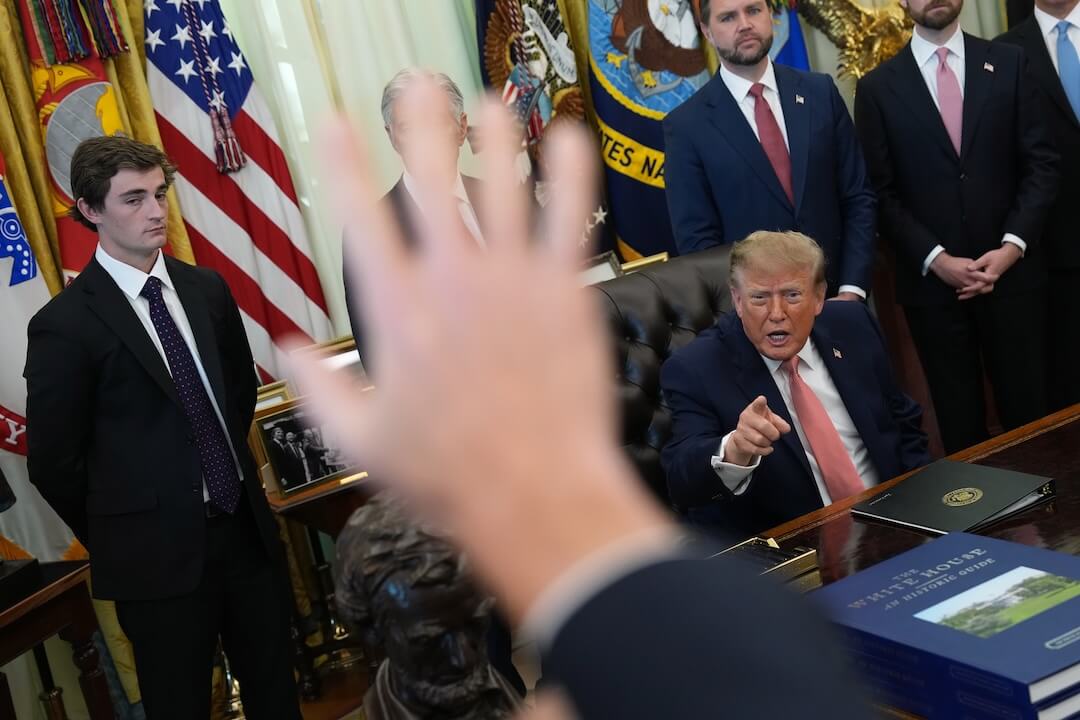
- October 20, 2026: In the Oval Office, President Donald Trump publicly castigates Independent White House correspondent Andrew Feinberg, labeling him a "sick person" after Feinberg attempts to ask substantive policy questions regarding federal whistleblower rewards.
- October 21, 2026: Administration rhetoric escalates significantly; the White House rapid response team and high-ranking executive officials utilize social media platforms and official channels to hurl disparaging remarks and developmental disability slurs at Feinberg in retaliation for his reporting.
- October 22, 2026: Scientific American is revealed by The Nation to have undergone severe corporate pressure from its former German parent company, Springer Nature, to tone down critical political coverage and sideline Trump-skeptical editorials to protect federal subscriptions and research funding streams. Simultaneously, media scholar and Poynter executive Kelly McBride announces she will step down as NPR’s independent public editor at the close of the year.
- October 23, 2026: For the third time in less than a week, the White House blocks a dissenting news organization—this time The Independent—from joining the Air Force One press pool traveling to South Dakota, replacing traditional independent rotation rules with a ideologically curated pool.
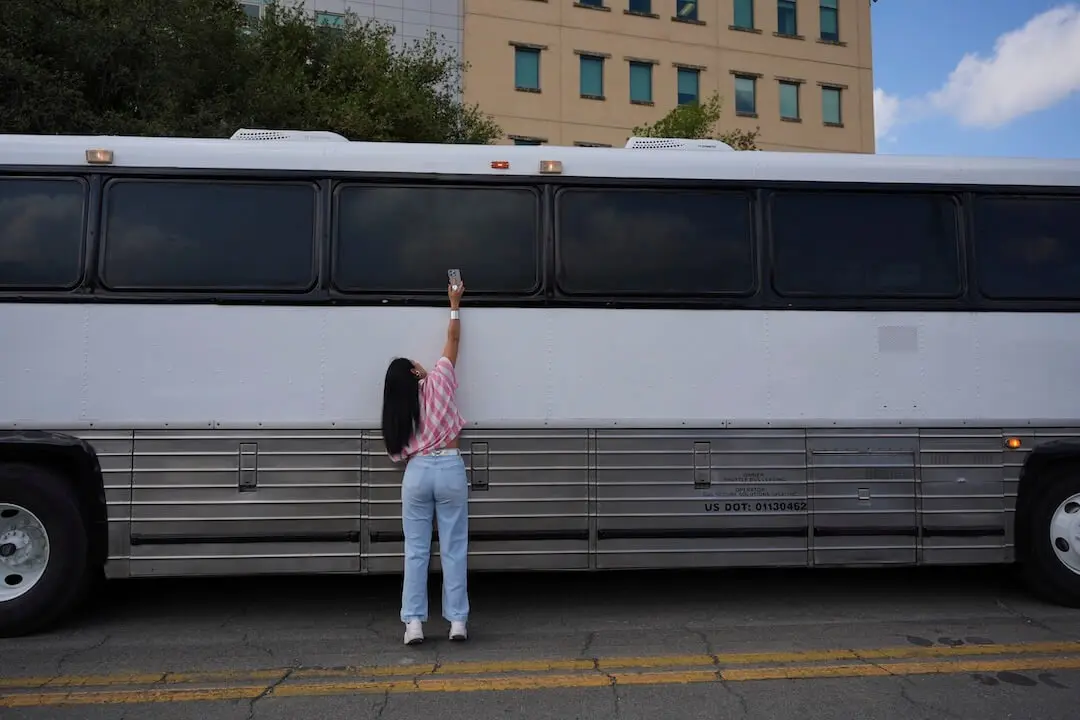
- October 24, 2026: U.S. Magistrate Judge Enjoliqué Lett issues a strict legal order commanding President Trump to sit for a deposition by December 11 in his $10 billion defamation suit against the BBC, warning that failure to comply could result in severe sanctions or the complete dismissal of his lawsuit. On the same day, The Marshall Project files a landmark lawsuit against Immigration and Customs Enforcement (ICE) and Customs and Border Protection (CBP) to force the release of basic detainee tracking data.
- October 27, 2026: The journalistic community mourns the passing of John Geddes, the former New York Times managing editor who masterminded the publication’s historic digital transition, at the age of 74.
Supporting Context & Metrics
To fully comprehend the gravity of these current media friction points, one must examine the underlying metrics, historical precedents, and structural vectors driving the conflicts:
The BBC Defamation Suit and Discovery Pressures
The roots of Trump’s $10 billion lawsuit lie in the BBC documentary Trump: A Second Chance?, which aired in the lead-up to the 2024 presidential election. The program spliced distinct soundbites from Trump’s January 6, 2021, speech—specifically separating his call to "walk down to the Capitol" from his exhortation to "fight like hell"—by nearly an hour. Although the BBC later issued an explicit apology acknowledging that the edit created the "mistaken impression that President Trump had made a direct call for violent action," the network has consistently denied legal defamation.
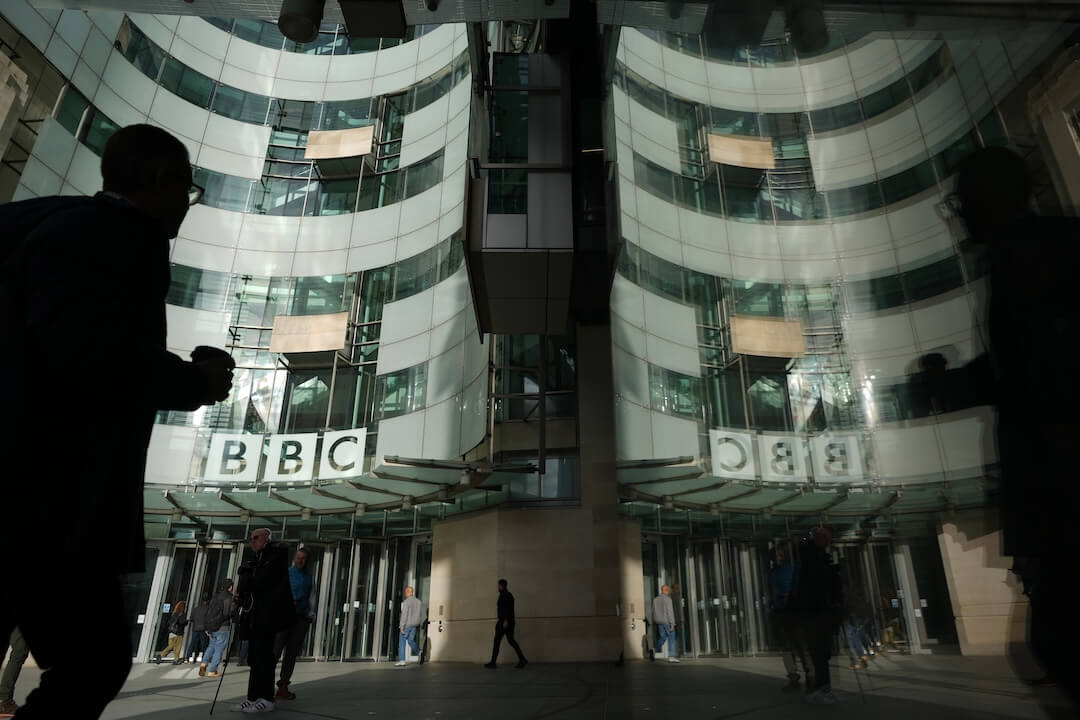
The defense hinges heavily on the jurisdictional hurdle of proving direct financial or reputational harm within the United States, given that the documentary did not air domestically and that Trump ultimately secured victory in the 2024 election. Nevertheless, by dragging the case into discovery, Trump’s legal strategy has backfired into an exposure risk: the obligation to testify under oath. Historically, Trump has exhibited a distinct aversion to depositions in suits where he is the plaintiff. Most notably, in 2023, he voluntarily dismissed a $500 million lawsuit against former attorney Michael Cohen mere days before his scheduled deposition, citing campaign pressures. U.S. Magistrate Judge Enjoliqué Lett’s recent order ensures that Trump cannot indefinitely evade similar cross-examination in the BBC matter, though the video recording will be strictly restricted to counsel and barred from public release.
Access Restrictions and the White House Pool
The systemic reconfiguration of the White House press pool represents a fundamental break from decades of journalistic tradition. Established in February 2025, the administration’s usurpation of the pool rotation duties—historically managed by the independent White House Correspondents’ Association—has transformed a logistical necessity into a tool of ideological exclusion.
- The Scale of Exclusions: Major news operations, including CNN, The Wall Street Journal, HuffPost, Politico, and The Associated Press, have all faced systematic travel restrictions.
- Litigation: Legal pushback is mounting; CNN, MS NOW, Politico, and the AP have already initiated lawsuits against the executive branch over First Amendment violations stemming from loss of access.
- Ideological Homogeneity: Independent analyses of recent presidential travel pools reveal that nearly 100% of non-photo outlets lean conservative, effectively insulating the executive from rigorous, adversarial questioning.
Institutional Contraction: Scientific American and NPR
The financial and political squeeze on independent journalism extends deeply into scientific and public service sectors. Scientific American, which has endured the departure or termination of over 60% of its editorial staff through layoffs and resignations over an 18-month span, highlights the perils of corporate media consolidation. Springer Nature’s anxiety over federal research subsidies at agencies like the National Institutes of Health directly compromised the magazine’s editorial autonomy, leading to paused opinion departments and self-censorship regarding political headlines.
Simultaneously, the structural evolution of media accountability is visible in the transition of NPR’s public editor post. After nearly seven years under Kelly McBride at Poynter—monitoring coverage through a global pandemic, historic civil rights protests, multiple presidential elections, and severe congressional funding threats—the role is migrating to the University of Maryland’s Philip Merrill College of Journalism in January 2026. This shift ensures the survival of one of the few remaining independent ombudsperson roles in American media, coupling editorial critique with academic training in media ethics.
Official Statements
The friction between legal institutions, federal authorities, and media organizations has generated a sharp exchange of public statements:
- On the BBC deposition order and legal strategy, a BBC defense attorney noted:
"With two months left in the discovery period, we still haven’t been able to depose the plaintiff."
- Jennifer Peter, managing editor of The Marshall Project, addressing the transparency lawsuit against immigration authorities:
"We are seeking the same transparency and access to information that have existed within the criminal justice system for centuries."
- Andrew Feinberg, White House correspondent for The Independent, reflecting on his exclusion from the travel pool and subsequent harassment:
"(E)ven though the White House might insist that they are simply acting to preserve decorum around the president, they’re really trying to create a safe space where the boss won’t get uncomfortable follow-ups from reporters… The press office has made sure that anytime Trump takes questions, many if not a majority of the ‘reporters’ present will be from ideologically-driven media outlets that are more or less dedicated less to reporting news than supporting Republicans and denigrating Democrats."
- Reflecting on the legacy of journalism during structural upheavals, former New York Times managing editor John Geddes famously advised aspiring reporters:
"Journalism has always been in crisis… Anyone wanting to enter the profession right now had better love doing it, because the odds are that sometime in the next few years, it might break your heart."
Future Outlook
As the legal and political battles of late 2026 cascade into the coming year, the trajectory of American journalism faces profound structural transformations.
First, the outcome of Trump’s deposition before the December 11 deadline will establish a critical precedent for how political figures utilize the American judicial system for reputational redress while managing the mandatory accountability of the discovery process. Should the deposition proceed on camera without settlement, the resulting transcripts and legal arguments could redefine the boundaries of defamation law in cross-border media broadcasting.
Second, the systematic dismantling of traditional press pool protocols points toward a permanent bifurcation of the American media landscape. As executive access is increasingly tied to ideological alignment rather than journalistic standing, independent outlets will likely lean heavier on collective litigation, constitutional challenges, and alternative reporting mechanisms to breach the information firewall.
Finally, the contraction of legacy publications—exemplified by the unionization efforts and corporate restructuring at Scientific American—signals that economic pressures will continue to threaten deep-dive, investigative journalism. Yet, as enduring institutional safeguards adapt—such as the relocation of the NPR public editor to the University of Maryland and the persistent legal pressure applied by watchdogs like The Marshall Project—the core infrastructure of accountability reporting demonstrates remarkable, if battered, resilience. The upcoming months will test whether these defensive structures can withstand the compounding weight of political hostility and economic volatility.