

Executive Overview
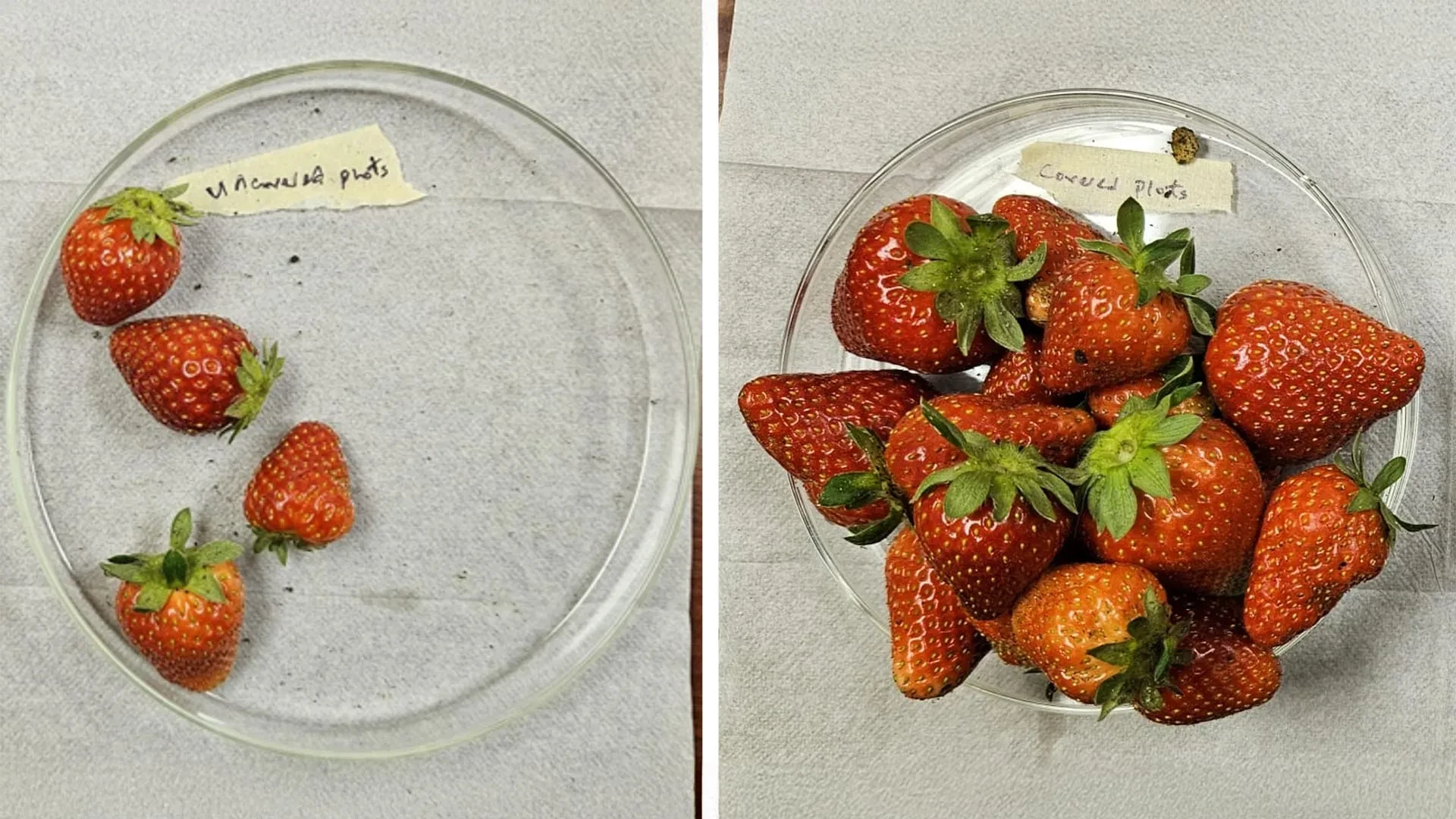
In the relentless pursuit of agricultural efficiency, climate resilience, and sustainable food security, breakthrough innovations often emerge from the most unexpected places. Recent tunnel field trials conducted by researchers at North Carolina State University (NC State) have revealed that an innovative, newly developed textile covering known as Plant Armor can increase strawberry fruit yields by more than three times compared to traditional, uncovered growing methods.
More importantly, this extraordinary surge in productivity occurs without compromising plant health or requiring heavy inputs of chemical interventions. The technology presents a compelling dual-benefit proposition: it acts as a physical barrier against destructive agricultural pests while simultaneously optimizing the microclimate around the crops.
The implications of this breakthrough stretch far beyond the confines of North Carolina experimental tunnels. By strategically combining thermal enhancement, physical pest exclusion, and optimized light permeability, Plant Armor addresses several of the most persistent vulnerabilities in modern horticulture. As the agricultural sector faces mounting pressures from climate instability, shrinking arable land, and stringent regulations on chemical pesticides, innovations like Plant Armor offer a vital roadmap toward resource-efficient farming.
This comprehensive report examines the origins, scientific mechanics, field trial results, interdisciplinary collaboration, and commercial outlook of Plant Armor. By tracing its journey from military laboratories to commercial agricultural fields, we uncover a masterclass in cross-disciplinary scientific translation that promises to reshape the economics and methodologies of modern berry production.
Detailed Chronology: From Military Defense to Agricultural Innovation
The birth of Plant Armor is a striking testament to the unpredictable nature of scientific research. Its origins lie not in crop science or agronomy, but in the specialized domain of military textile engineering.
Phase I: The Soldier Protection Initiative
Years prior to its deployment in strawberry fields, the foundational research behind Plant Armor began as an effort to improve the comfort, safety, and operational effectiveness of military personnel. Researchers were tasked with designing advanced fabrics to enhance military uniforms, specifically focusing on two critical challenges:
- Creating textiles inherently resistant to mosquito bites and other vector-borne disease threats in tropical or high-risk operational environments.
- Improving moisture management, breathability, and overall ergonomics for soldiers wearing heavy, cumbersome body armor in sweltering climates.
Through years of trial and error, textile engineers and entomologists at NC State experimented with specialized knitting techniques, yarn compositions, and three-dimensional structural matrices. They engineered fabrics capable of creating a physical standoff distance between the skin and the outer environment, preventing insects from reaching the epidermis while maintaining high air permeability.
Phase II: The Pivot to Agronomy
While evaluating the unique properties of these advanced three-dimensional knitted textiles, researchers recognized that the fabric’s structural attributes—specifically its porosity, physical barrier capabilities, and moisture/air management—bore a striking resemblance to the environmental control needs of high-value specialty crops.
Horticultural production, particularly soft fruit cultivation like strawberries, relies heavily on row covers, low tunnels, and greenhouses to extend growing seasons and protect against frost and pests. However, traditional agricultural plastics and non-woven row covers frequently suffer from critical flaws: they can trap excessive humidity, degrade rapidly under ultraviolet radiation, block vital photosynthetically active radiation (PAR), or create a greenhouse effect that burns plants during unexpected heat spikes.
Recognizing these agricultural limitations, NC State researchers pivoted their focus. They began modifying the military-grade textile architecture to suit plant canopies. This iterative design process led to the creation of Plant Armor—a specialized, patented, three-dimensional porous textile engineered explicitly for deployment directly over living plant rows.
Phase III: Tunnel Field Testing and Validation
With the textile optimized for agricultural use, the multidisciplinary research team initiated rigorous tunnel field trials. Over the course of three successive growing seasons, the team tested Plant Armor on commercial-grade strawberry cultivars.
The trials were designed to measure a comprehensive suite of agricultural metrics:
- Vegetative biomass accumulation versus reproductive output.
- Light penetration and relative humidity under the canopy.
- Thermal dynamics, including growing degree-days.
- Pest incidence and corresponding pesticide reduction potentials.
- Overall marketable fruit yield and post-harvest quality indicators.
The results of these trials exceeded initial expectations, demonstrating quantitative leaps in productivity that immediately captured the attention of both the academic community and commercial agricultural stakeholders.
Supporting Context & Metrics: The Science Behind Plant Armor
To understand why Plant Armor achieves a more than threefold increase in strawberry yields, one must examine the complex interplay of physics, plant physiology, and microclimate engineering at work within the textile’s architecture.
Overcoming the "Shade-Avoidance" Dilemma
In standard agricultural settings, covering plants with an opaque or semi-translucent material typically triggers a survival mechanism known as the "shade-avoidance" response. When plants detect a reduction in light availability or an unfavorable change in the red-to-far-red light ratio, their evolutionary programming dictates that they divert their metabolic energy away from reproduction (fruiting, flowering) and toward vegetative growth (stems, runners, and broad leaves) in a desperate race to outgrow the canopy shade.
When the NC State team first approached Plant Armor, they anticipated this exact hurdle. The fabric, at a glance, appears deceptively opaque due to its dense, multi-layered 3-D knitted architecture.
"To produce fruit, plants need sunlight," explains Gabriel Olawuyi, a graduate research assistant at NC State and lead author of the research paper. "We expected that Plant Armor’s seemingly opaque fabric would lead to an increase in vegetative biomass at the expense of fruiting—because reduced sunlight would trigger a ‘shade-avoidance’ response, making the plant divert energy toward stem and leaf growth rather than fruit production."
However, empirical data shattered this assumption. Subsequent light meter measurements confirmed that the fabric’s unique porous geometry does not impede access to photosynthetically active radiation. Sunlight filters through the microscopic channels of the 3-D matrix without causing destructive light attenuation, while relative humidity remains stable, preventing the fungal outbreaks commonly triggered by trapped moisture under traditional plastic sheeting.
The Power of Growing Degree-Days
Beyond light management, Plant Armor acts as an effective thermal blanket, creating a consistent, steady warming effect across the crop canopy throughout the growing season.
Plants do not measure time by the calendar; they measure development through accumulated thermal units known as "growing degree-days" (GDD). Each phenological stage—from vegetative leafing to flowering, pollination, and fruit set—requires a specific threshold of cumulative heat energy.
"Plants require a certain amount of accumulated heat, calculated as ‘growing degree-days,’ to progress through developmental stages including fruiting," Olawuyi notes. "Our plant cover has proven to enhance these. The plants were in a condition whereby the warmth they need to go through each phenological stage to their production was given to them optimally, and they produced far more than the uncovered plants."
By capturing ambient thermal radiation and preventing overnight heat loss, Plant Armor accelerates the accumulation of growing degree-days. Consequently, covered strawberry plants reached their productive fruiting stages significantly earlier in the season and maintained high output velocities longer than their uncovered counterparts.
Quantitative Yield Analysis and Pest Mitigation
The culmination of optimized light transmittance and accelerated thermal accumulation yielded remarkable statistical outcomes:
- Yield Multiplication: Strawberries cultivated beneath Plant Armor produced marketable yields up to 3.56 times higher than control groups grown in identical tunnel conditions without the textile.
- Chemical Reduction: Because the fabric’s 3-D physical structure creates an impenetrable mechanical barrier, insects are physically blocked from landing on, feeding on, or laying eggs within the plant canopy. This passive defense mechanism drastically reduces the need for conventional insecticides, lowering production costs and minimizing chemical runoff into local ecosystems.
- Water Efficiency Optimization: While the study’s primary focus centered on yield and thermal dynamics, researchers noted that the microclimatic stability provided by the textile significantly curtails soil moisture evaporation, pointing toward substantial water conservation benefits in arid or drought-prone farming regions.
Official Statements and Interdisciplinary Collaboration
The success of Plant Armor highlights the profound value of institutional collaboration across disparate scientific faculties. The project brought together experts from the NC State College of Natural Resources, the Wilson College of Textiles, and the College of Agriculture and Life Sciences (CALS).
Dr. R. Michael Roe, William Neal Reynolds Distinguished Professor at NC State and co-author of the study, reflected on the unpredictable and transformative nature of the research trajectory:
"The path to Plant Armor started with trying to make a cloth to go on a soldier’s chest to make body armor more comfortable," Roe explains. "Then, through trial and error, we arrive at a product which could triple the output of strawberry farms here in North Carolina. We couldn’t have predicted that when we started. Without all these people here doing research and following the science, we wouldn’t have arrived at this product."
The research paper detailing these findings—titled "Knitted 3-D, Porous Textile Cover to Enhance Strawberry Fruit Production and Prevent Insect Feeding"—was published in the peer-reviewed journal Agriculture.
The research team behind this collaborative milestone includes a diverse roster of NC State specialists:
- Gabriel Olawuyi (Lead Author, Graduate Research Assistant)
- R. Michael Roe (Distinguished Professor, Entomology and Plant Pathology)
- James Clothier (Textile Engineering)
- Matthew Bertone (Entomology)
- Grayson Cave (CALS)
- Reuben Garshong (CALS)
- Andre West (Wilson College of Textiles)
- Loganathan Ponnusamy (W.M. Keck Center)
- Clyde Sorenson (Department of Entomology and Plant Pathology)
Institutional and Financial Support
The development and commercial maturation of Plant Armor was made possible through robust institutional backing and competitive grant funding:
- A foundational research grant from the North Carolina Agricultural Foundation (Grant No. AG00463770).
- Research Capacity Funding (HATCH) project award no. 02853, administered by the U.S. Department of Agriculture’s National Institute of Food and Agriculture (USDA-NIFA).
- Intellectual property protection via U.S. Patent No. 11,582,968 B2 (issued February 21, 2023), assigned to North Carolina State University.
Future Outlook: Commercialization and Scaling Agriculture
With Plant Armor Gen 2 successfully patented and licensed by NC State for commercial development, the technology stands poised on the threshold of widespread agricultural adoption. However, transitioning a laboratory-tested textile into a globally distributed agricultural commodity requires navigating distinct logistical and economic challenges.
Commercialization Roadmap
The university’s technology transfer office is actively collaborating with industrial textile manufacturers and agricultural supply distributors to scale production of Plant Armor. Key areas of ongoing development include:
- Durability and Weatherability: Ensuring that the knitted polymeric fibers can withstand multiple seasons of intense ultraviolet exposure, high winds, heavy rain, and mechanical handling without losing their structural integrity or porosity.
- Cost-Effectiveness for Growers: While a 3.56x yield increase offers an undeniable economic incentive, initial capital expenditures for specialized textiles can deter small-to-medium-scale farmers. Scaled manufacturing is expected to drive down unit costs, making the technology economically accessible across diverse farming demographics.
- Adaptability to Other Crops: Although current trials have focused predominantly on strawberries within tunnel systems, the fundamental physics of Plant Armor suggest broad applicability. Researchers are already eyeing trials for other high-value specialty crops, including raspberries, blackberries, tomatoes, peppers, and leafy greens.
Sustainability and Environmental Stewardship
As global agriculture confronts the realities of a changing climate, water scarcity, and ecological degradation, the demand for non-chemical, resource-multiplying technologies has never been higher. Plant Armor represents a paradigm shift in how we approach crop protection.
Rather than relying on chemical warfare—spraying pesticides to combat pests after infestations occur—Plant Armor deploys structural engineering to prevent the problem entirely. Simultaneously, by maximizing thermal efficiency and reducing water evaporation, the fabric addresses two of the most critical resource constraints facing modern farmers.
Conclusion
The journey of Plant Armor—from military uniforms designed to stop mosquito bites to high-tech agricultural textiles tripling strawberry harvests in North Carolina tunnels—illustrates the profound potential of interdisciplinary science. By bridging military textile engineering, entomology, and plant physiology, NC State researchers have unlocked a powerful tool for the future of farming. As Plant Armor moves from experimental trials to commercial fields, it carries the promise of transforming agricultural productivity, securing food supplies, and charting a sustainable course for generations of growers to come.