

NEW YORK — The 81st session of the United Nations General Assembly convened this week under a heavy shadow of escalating global conflicts, chief among them the grinding war of attrition in Ukraine and the devastating U.S.-led coalition conflict against Iran.
Gathering at the United Nations headquarters in New York City, world leaders, diplomats, and international observers faced a diplomatic landscape pushed to its limits. Fiery rhetoric, walkouts, and stark warnings characterized the high-level debates, underscoring a fracturing international order where traditional frameworks of diplomacy are increasingly tested by military force.
Executive Overview
The high-stakes diplomatic summit opened with deep fractures over the ongoing conflicts in the Middle East and Eastern Europe. The assembly floor became a battleground for competing narratives on sovereignty, human rights, and the legitimacy of the use of force.
Most notably, Iranian President Masoud Pezeshkian addressed the international body directly—marking a rare and volatile instance of a head of state speaking to the UN while actively engaged in a hot war with the host nation, the United States. Meanwhile, U.S. President Donald Trump weighed a drastic escalation of the ongoing Middle Eastern conflict, contrasting sharply with Ukrainian President Volodymyr Zelenskyy’s urgent pleas to choke off the Russian war machine through unyielding economic pressure.
Amid these major geopolitical clashes, regional disputes also surfaced, including a pointed appeal by Japanese Prime Minister Sanae Takaichi to remove antiquated World War II-era "enemy state" clauses from the UN Charter—provisions increasingly leveraged by Beijing and Moscow in modern diplomatic disputes.
Detailed Chronology: A Week of Diplomatic Confrontation
Monday, September 21: Setting the Stage
As delegations arrived in New York, security measures reached historic highs. Speculation swirled regarding how the United Nations would handle the direct participation of nations currently engaged in active hostilities. Behind closed doors, European and Asian delegations worked urgently to draft resolutions addressing spiraling energy costs and civilian displacement caused by the twin conflicts in Ukraine and the Middle East.
Tuesday, September 22: Trump’s Ultimatum and Pezeshkian’s Defiance
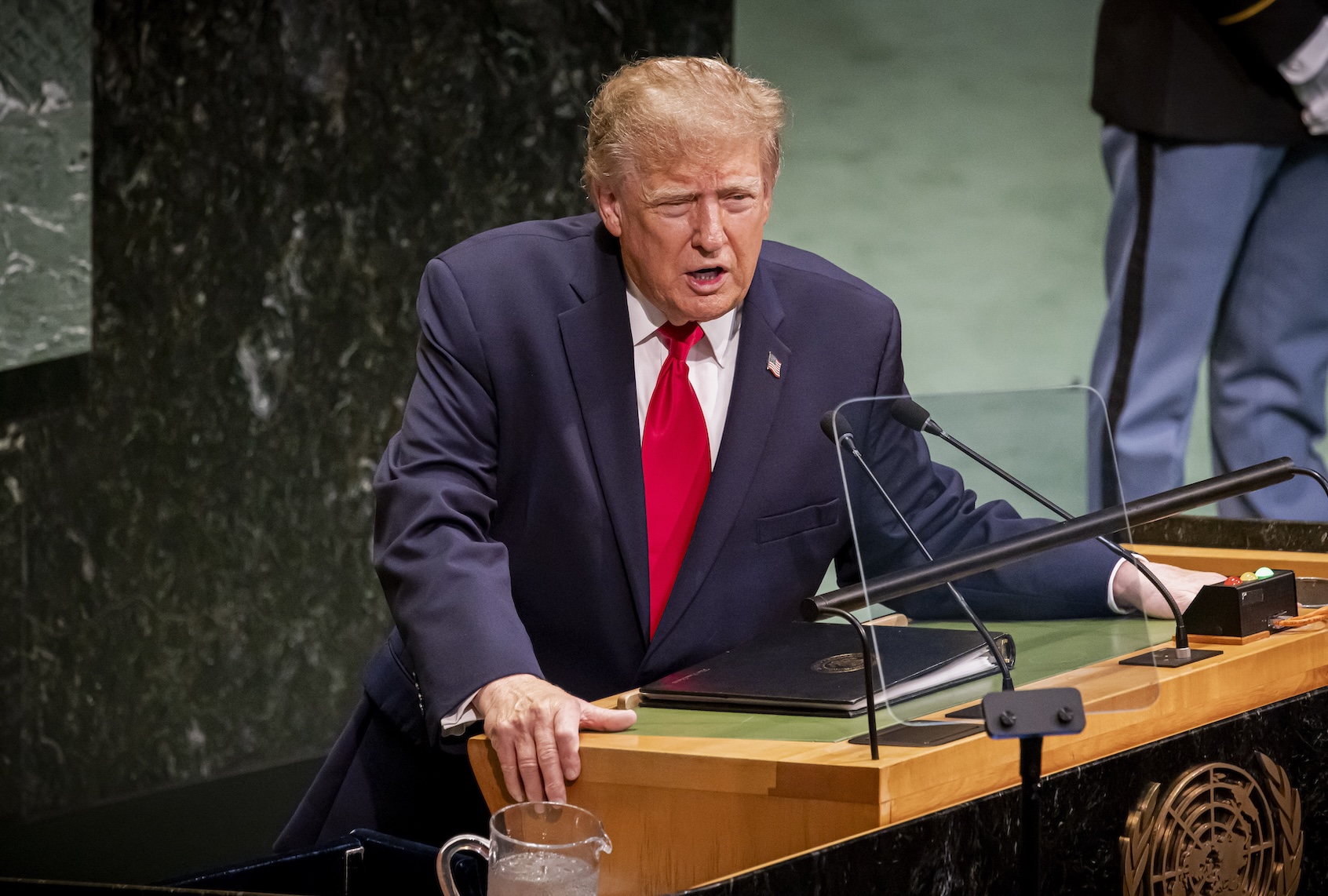
The assembly’s second day featured some of the most dramatic confrontations in recent UN history. U.S. President Donald Trump took to the podium to outline his administration’s position on the Middle East. Delivering a stark ultimatum regarding the conflict with Iran, Trump laid out a binary choice for the Islamic Republic.
"I have a big decision to make," Trump told the assembly. "Will a deal be made with Iran that lets them rebuild and create a far greater country than it ever was before, maybe one of the greatest in the Middle East or even the world? Or do I annihilate the Islamic Republic and do it quickly, never giving them a chance to kill and destroy people and countries again?"
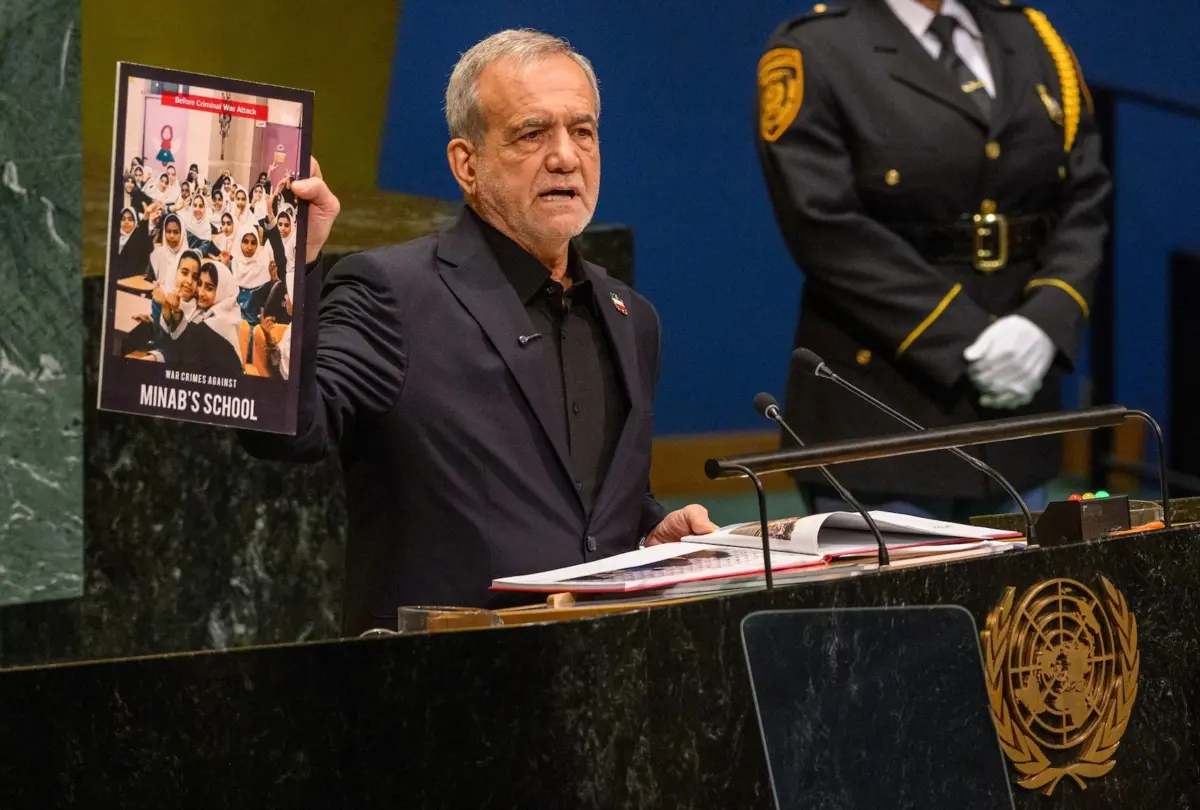
Later in the session, Iranian President Masoud Pezeshkian delivered a defiant counter-address. Portraying Iran as the "victim of terrorism" at the hands of the United States, Pezeshkian emphasized that despite suffering devastating blows, Tehran "did not bend the knee."
In a visceral moment that stunned the assembly hall, Pezeshkian held up large photographic evidence of more than 120 children killed during a U.S. missile strike in the opening days of the war—an action that a UN fact-finding mission recently deemed to contain "reasonable grounds" for war crimes investigations.
"It must be understood by Mr. Trump and those who seek to bully us that we are ready for dialogue and diplomacy and negotiations without accepting the language of force," Pezeshkian stated.
The speech prompted a U.S. diplomat to walk out of the General Assembly hall in protest. Shortly after, U.S. Secretary of State Marco Rubio dismissed Pezeshkian’s remarks during a press briefing, questioning Tehran’s moral authority on the global stage.
In a separate address on Tuesday, Japanese Prime Minister Sanae Takaichi took aim at the UN Charter itself, calling for the elimination of outdated references to former Axis powers as "enemy states." Takaichi noted that the archaic terminology has recently been weaponized by China and Russia to diplomatic and rhetorical disadvantages, arguing that Japan remains dedicated to safeguarding UN ideals.
Wednesday, September 23: Zelenskyy’s Appeal and Continued Fallout
Shifting focus to Eastern Europe, Ukrainian President Volodymyr Zelenskyy addressed the General Assembly on Wednesday, issuing an impassioned plea for the global community to tighten the economic noose around Moscow.
Directly targeting Russian President Vladimir Putin—whom Zelenskyy dubbed "Patient Zero" of modern global conflict—the Ukrainian leader argued that any continued trade with Russia directly finances the destruction of his country.
"When someone gives Russia more money through trade, they give this war more time," Zelenskyy declared. "And that is exactly why we insist on limiting trade with the aggressor, and why we are burning Russia’s revenues ourselves. Can you even imagine him without war? He is ‘Patient Zero’, the one from whom war keeps spreading further. ‘Patient Zero’ must be stopped."
Supporting Context & Metrics: The Human and Economic Toll
The rhetorical clashes at the podium occurred against a backdrop of mounting devastation in the real world.
The Middle East Conflict
The U.S.-led war against Iran has wreaked havoc across the Middle East, precipitating an unprecedented spike in global energy prices and inflicting massive civilian casualties. Independent human rights monitors and regional health ministries estimate that between 1,800 and 3,000 civilians have been killed across the region since the conflict began.
Furthermore, transparency concerns have plagued the U.S. military establishment. A recent investigative report by The Washington Post revealed that the Pentagon’s publicly maintained casualty database—which officially lists 18 U.S. servicemember deaths—undercounts the true toll. Defense officials speaking anonymously have indicated that actual American fatalities may be as high as 23, fueling domestic debate over the transparency of the administration’s military engagements.
The Ukraine War
In Eastern Europe, the prolonged conflict continues to drain regional economies and destabilize global supply chains. Despite extensive international sanctions, Moscow has managed to sustain its military operations through alternative trade channels, prompting Kyiv to push for secondary sanctions and absolute trade embargoes from Western allies ahead of Russia’s scheduled address to the assembly on Saturday.
Official Statements and Reactions
The polarized nature of the 81st General Assembly was mirrored in the immediate aftermath of the speeches:
- U.S. Secretary of State Marco Rubio: Dismissing Iran’s defense, Rubio stated, "I don’t know what standing Iran has to lecture anyone on human rights or the international system when they habitually violate it. They violate the sovereignty of every one of their neighbors by sponsoring terrorist organizations that reside in the borders of those countries. They slaughter their own people."
- Iranian President Masoud Pezeshkian: Reiterating his government’s stance on diplomacy free from coercion, Pezeshkian maintained that Tehran remains open to international talks, provided they are not conducted under the threat of total destruction.
- Japanese Prime Minister Sanae Takaichi: Emphasizing Tokyo’s commitment to international peace, Takaichi remarked, "Japan feels a sense of responsibility to safeguard the ideals of the United Nations as our beacon of hope," while urging structural modernization of the UN Charter.
Future Outlook
As the 81st UN General Assembly moves toward its conclusion, the path forward for international diplomacy appears increasingly perilous.
The looming threat of a U.S. escalation against Iran, combined with the intractable nature of the Russia-Ukraine war, suggests that the international community is entering a prolonged era of great power competition and regional instability. With Moscow’s address scheduled for the weekend and little common ground found between Washington and Tehran—or Kyiv and the Kremlin—the United Nations finds itself struggling to fulfill its foundational mandate of maintaining international peace and security.
Observers warn that unless robust diplomatic off-ramps are established, the rhetorical escalation witnessed in New York this week could very well translate into a wider, more catastrophic phase of global warfare.