In the rapidly evolving landscape of digital marketing, organic search visibility remains a critical cornerstone for sustainable business growth. As search engine algorithms become increasingly sophisticated, the methodology behind keyword research has shifted from simple volume chasing to a nuanced understanding of user intent, semantic clustering, and competitive gap analysis. Among the suite of enterprise-grade platforms available to digital strategists, Semrush stands out as a dominant ecosystem, offering robust toolsets designed to extract, analyze, and operationalize high-value search data.
This report provides an authoritative, deep-dive examination of how modern businesses—ranging from local service providers and e-commerce enterprises to content-driven affiliate platforms—can leverage Semrush’s premier tools (including the SEO Toolkit, Keyword Magic Tool, Keyword Gap analyzer, and Keyword Manager) to optimize their organic performance. By deploying advanced filtering, strategic subfolder analysis, and automated topic clustering, digital marketers can systematically uncover quick-win opportunities, outmaneuver competitors, and build resilient, scalable content architectures.
Detailed Chronology and Strategic Evolution of Keyword Research
The practice of keyword research has undergone a profound transformation over the past decade. In the early days of search engine optimization, the discipline was largely characterized by keyword stuffing and targeting broad, high-volume head terms with little regard for the user’s actual journey. However, with the rollout of semantic search updates and advanced machine learning algorithms like Google’s Hummingbird and BERT, search engines evolved to prioritize context, intent, and topical authority over exact-match frequency.
As the search landscape matured, the tools required to navigate it had to adapt. Platforms like Semrush transitioned from basic rank-tracking utilities into comprehensive, multi-faceted marketing suites capable of mapping billions of keywords across global databases.
The Era of Head-Term Obsession: Early SEO strategies focused heavily on generic, high-volume keywords, often resulting in high competition and low conversion rates.
The Rise of Long-Tail and Intent Mapping: As competition intensified, marketers recognized the value of long-tail keywords—search queries that capture specific user intent and drive higher conversion rates.
The Pivot to Topical Authority and Clustering: Modern SEO requires a holistic approach. Rather than targeting isolated keywords, successful strategies now group related terms into topical clusters, building comprehensive subject matter expertise that signals authority to search engines.
Integration and Automation: Contemporary workflows demand seamless data flow. Modern toolkits allow strategists to move seamlessly from discovery to clustering, tracking, and content production within a single, unified interface.
Supporting Context and Metrics: Leveraging Semrush’s Core Modules
To execute a sophisticated keyword strategy, marketers must understand how to extract actionable intelligence from Semrush’s primary reporting engines. Below is a detailed breakdown of the foundational methodologies used to mine valuable search data.
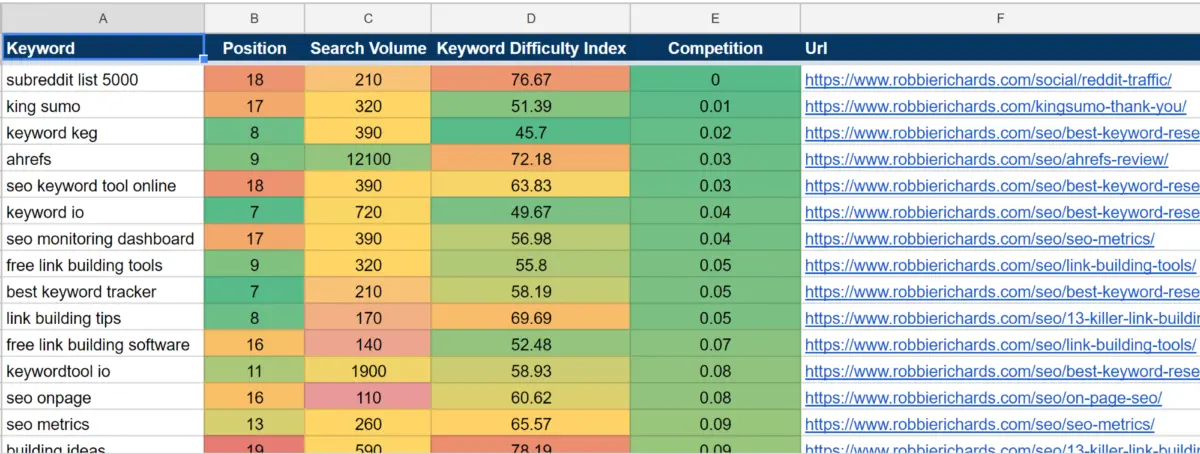
When working with an established website that already possesses a content footprint, the most efficient starting point is uncovering existing rankings that are hovering just off the first page of search engine results pages (SERPs)—specifically positions 4 through 15.
The Path: Navigate to the Semrush SEO Toolkit, access the Organic Research >> Positions report, and review the top 100 ranking keywords.
Applying Advanced Filters: To isolate the highest-potential targets, apply specific parameters:
Position: Filter for rankings between 4 and 15 (page one and upper page two).
Volume: Set a minimum search volume threshold tailored to your business model.
Keyword Difficulty (KD): Cap the difficulty score to filter out hyper-competitive terms.
Operationalizing the Data: Export these terms or import them into a structured workflow template. Segmenting opportunities into "Existing" and "New" lists allows content teams to prioritize optimization updates (such as adding fresh data, improving internal linking, or expanding depth) on pages that already hold baseline authority with Google.
2. Competitor Keyword and Subfolder Analysis
Analyzing competitors is one of the fastest routes to discovering high-intent search terms. Semrush provides multiple avenues for competitor intelligence, moving far beyond basic domain overviews.
The Top Pages Report: By inputting a competitor’s domain into the SEO Toolkit and accessing Organic Research >> Pages, strategists can identify which specific URLs drive the lion’s share of organic traffic.
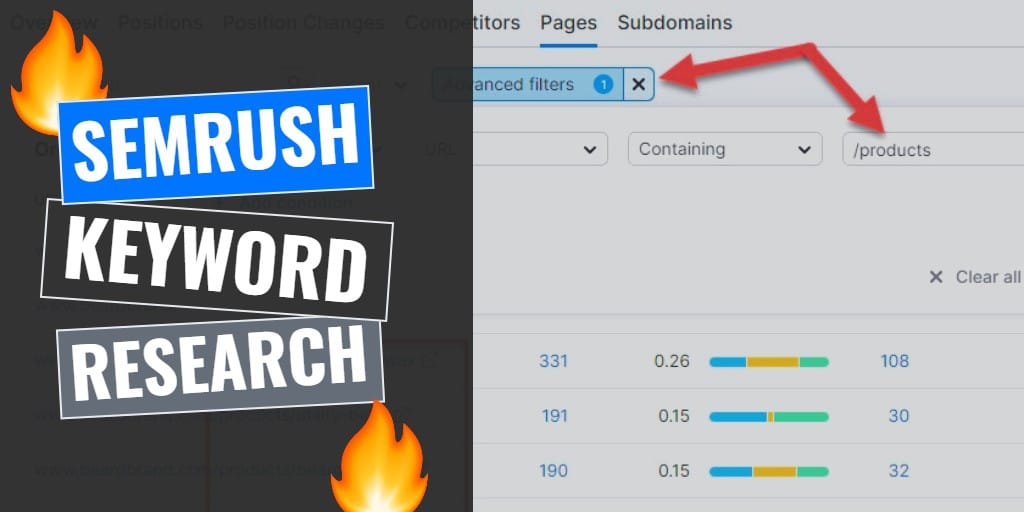
Subfolder Filtering: For enterprise sites, e-commerce stores, or professional service firms, content is frequently organized into logical subdirectories (e.g., /products/, /legal-services/, or /software/). By applying a URL contains filter, marketers can isolate exact product or service pages, revealing the exact keyword portfolio driving transactional revenue for competitors.
Keyword Modifiers: If competitors do not utilize clean subfolder architectures, keyword modifiers (such as "best," "reviews," "pricing," or "software") can be applied to isolate commercial and transactional intent queries suitable for affiliate or direct-response monetization.
3. Comprehensive Keyword Gap Analysis
The Semrush Keyword Gap Tool allows strategists to cross-reference their domain against multiple competitors simultaneously, surfacing valuable organic and paid search opportunities.
Missing Keywords: Identifies search terms for which competing domains rank in the top 100, but the target domain has zero visibility.
Weak Keywords: Highlights terms where the target domain currently ranks, but is outperformed by competitors. These represent prime candidates for content expansion or optimization.
PPC-Organic Cross-Analysis: A unique capability of Semrush is its ability to analyze paid versus organic gaps. Marketers can identify high-intent keywords where competitors are bidding on paid search (indicating strong conversion potential) while the target domain either lacks organic presence or sits outside the top three positions. This provides actionable data for deploying paid search "air cover" while organic rankings are being cultivated.
4. Topical Generation via the Keyword Magic Tool
Boasting a massive database of over 24 billion keywords, the Keyword Magic Tool is the engine room for topical research.
Intent and Funnel Stage Filtering: By inputting seed terms and layering in modifier filters (such as comparison terms like "vs," "alternative," or "best"), marketers can target users in the consideration stage of the buyer’s journey.
Question-Based Targeting: Filtering for question modifiers ("how," "what," "why," "can") uncovers low-competition informational queries that capture top-of-funnel traffic, which can then be nurtured through internal linking pathways down to commercial landing pages.
5. Automated Topical Clustering
Manually grouping hundreds of keywords is an exhaustive, inefficient process. The Semrush Keyword Manager and clustering engine automate this workflow by analyzing SERP overlap.
Creating Lists from Scratch: Users can input up to five seed keywords along with a target domain. The tool automatically generates semantic clusters, highlighting metrics such as total cluster volume, average keyword difficulty, and "high-ranking potential" flags.
Clustering Existing Datasets: Marketers can also paste raw keyword lists (exported from various sources) directly into the tool. Semrush instantly groups them based on search engine behavior—meaning keywords that share top-ranking URLs are automatically bundled together.
Content Reference Audit: Before drafting new content, strategists must review the content references within each cluster to determine whether an existing page should be optimized or if a dedicated new URL (such as a sub-service landing page) is required to capture the traffic effectively.
Official Statements and Industry Insights
Industry practitioners and SEO authorities consistently emphasize the importance of integrated workflows in modern digital marketing strategies. As search engines place greater emphasis on topical depth and semantic relevance, isolated SEO tools are increasingly giving way to comprehensive ecosystems.
"The true power of modern SEO toolsets lies not merely in data retrieval, but in frictionless integration. When a strategist can move seamlessly from competitor gap analysis to topical clustering, and finally to content production and rank tracking within a single environment, the velocity of campaign execution increases exponentially."
— Digital Marketing Strategy Review
Furthermore, product updates from analytics platforms highlight an ongoing commitment to refining intent classification. By categorizing search terms into Informational, Navigational, Commercial, and Transactional intents automatically, platforms like Semrush empower businesses to align their content assets precisely with user expectations, directly addressing the core quality guidelines enforced by modern search engines.
Future Outlook: The Next Frontier of Search Optimization
As the digital marketing ecosystem continues to mature, several key trends are poised to shape the future of keyword research and search optimization:
AI-Driven Search and Generative Engines: With the rise of AI-powered search experiences and conversational chat interfaces, traditional keyword volume metrics are shifting. Marketers must increasingly focus on semantic context, entity relationships, and answering complex, multi-layered user queries rather than isolated strings of text.
Real-Time Intent Adaptation: Search intent is dynamic and can shift rapidly based on seasonal trends, global events, or algorithm updates. Future keyword workflows will rely more heavily on real-time SERP feature tracking and continuous intent monitoring.
Deep Ecosystem Integration: The boundary between content creation, technical optimization, and performance tracking will continue to blur. Tools that offer unified workflows—such as sending clustered keywords directly to writing assistants and rank-tracking monitors—will become the mandatory standard for enterprise SEO teams seeking to maintain a competitive edge.
By mastering the advanced capabilities of platforms like Semrush, digital strategists can future-proof their operations, ensuring their content remains authoritative, highly visible, and closely aligned with the ever-changing demands of the modern search landscape.