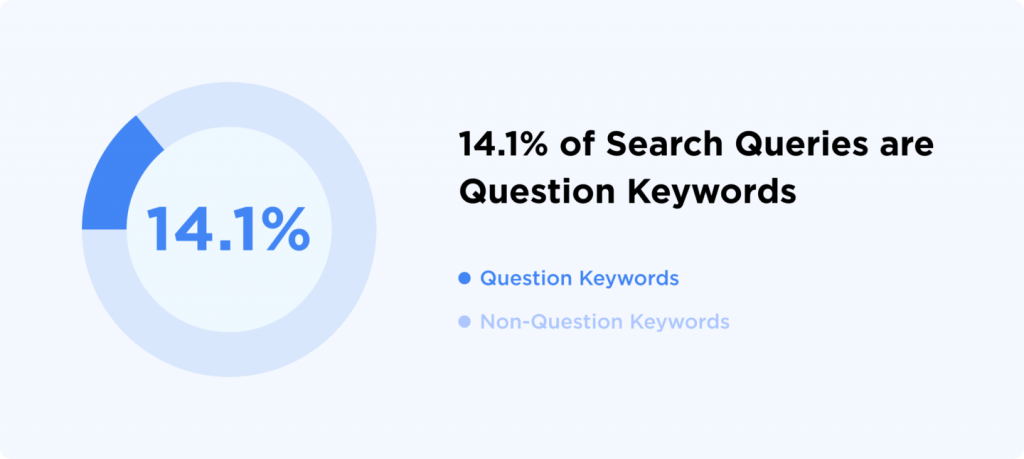
In the modern digital landscape, the anatomy of search engine queries is undergoing a profound structural shift. As global internet users increasingly turn to search engines and online forums to troubleshoot real-time challenges, search behavior has evolved from fragmented strings of nouns into conversational, inquisitive sentences. Industry data reveals a staggering statistic: approximately 14.1% of all Google queries are framed as questions. With daily global searches hovering around 3.5 billion, this translates to an astonishing 490 million questions processed by Google every single day.
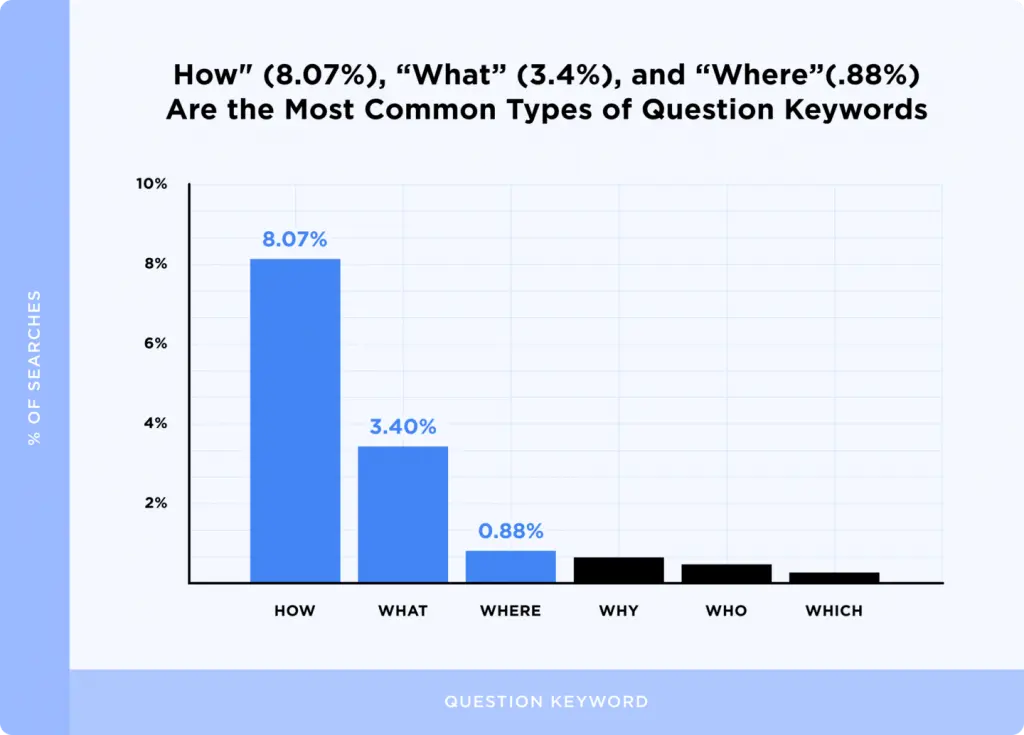
Among these inquiries, specific interrogative pronouns dominate the search landscape. Leading the charge are “how” queries, which account for 8.07% of searches, followed by “what” queries at 3.4%. Driven largely by the exponential rise of voice search technology, these question-based phrases typically manifest as long-tail keywords. Whether a consumer is casually researching how to grind specialty coffee beans or an enterprise buyer is conducting deep due diligence on the best Enterprise Resource Planning (ERP) system to implement, the intent remains uniform: people are actively seeking authoritative, immediate answers.
For digital marketers, search engine optimization (SEO) professionals, and content strategists, this behavior presents a lucrative opening. By systematically identifying these inquiries and engineering high-value, precise responses, brands can seamlessly weave their products, services, or affiliate offerings into the user’s decision-making journey. However, uncovering the exact phrasing of what your target audience is asking requires more than intuition; it demands a repeatable, scalable research methodology. This report explores four advanced tactics to extract, filter, and operationalize high-intent, low-competition question-based keywords to supercharge organic growth.
Detailed Chronology and the Evolution of Intent-Driven Search
To understand the current dominance of question keywords, one must trace the evolution of search engine algorithms over the past decade. Early search optimization relied heavily on exact-match, short-tail keywords—often sacrificing readability for algorithmic positioning. Keyword stuffing and superficial content routinely dominated ranking pages.
However, major algorithmic updates, such as Google’s Hummingbird and BERT, fundamentally transformed how search engines process human language. Instead of matching isolated strings of text, search engines now decode contextual semantics, intent, and conversational nuance. This shift directly elevated the status of long-tail question queries.
The Dual Advantage: High Intent and Low Competition
Question-based keywords offer two distinct strategic advantages that make them a goldmine for digital publishers and brands:
Unmatched User Intent: When users input a question into a search engine, they are rarely browsing aimlessly. They are experiencing a specific pain point and demand an immediate, actionable solution. This high-degree-of-intent environment creates a frictionless pathway for brands to position their offerings as the definitive answer to the user’s problem.
Reduced Keyword Competition: Because questions are inherently long-tail and specific, they typically feature significantly lower keyword difficulty (KD) scores compared to broad head terms. Consequently, marketers frequently do not need to construct massive, exhaustive resource pages or embark on aggressive backlink-acquisition campaigns to secure first-page rankings for these terms.
Supporting Context & Metrics: Scaling Research with Precision Tools
Executing a robust keyword research strategy at scale requires moving beyond manual searches. Industry-leading SEO platforms like Semrush and Ahrefs provide specialized reporting structures designed to parse millions of data points into actionable insights.
To maximize efficiency, digital strategists utilize a four-tier framework that captures question keywords from diverse corners of the web: dedicated SEO platform reports, Google’s "People Also Ask" (PAA) boxes, niche Reddit subreddits, and high-traffic Quora threads.
4 Advanced Tactics to Scale Question-Based Keyword Research
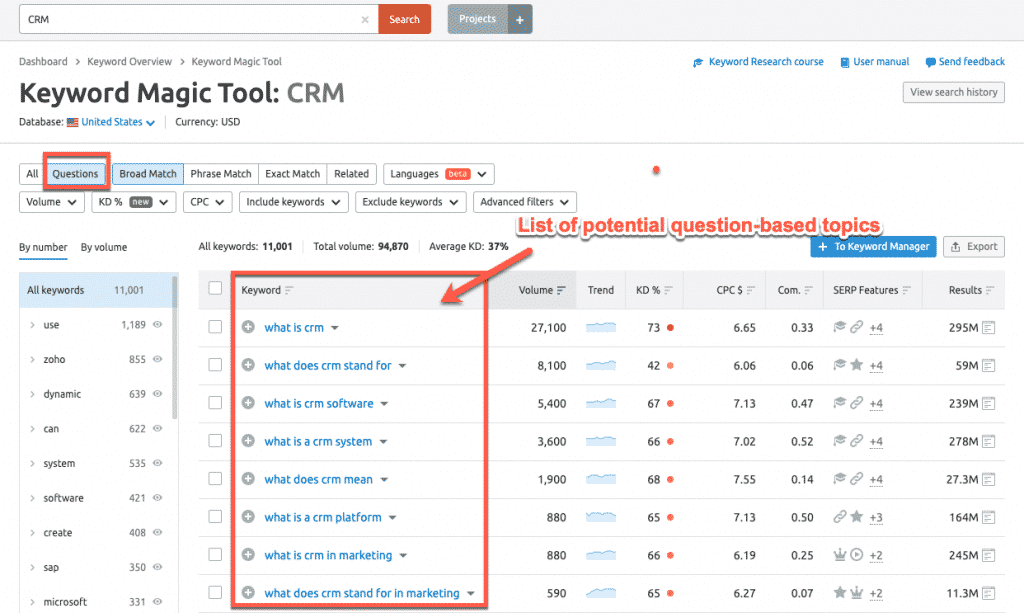
The most direct method for unearthing question opportunities is utilizing specialized reports within enterprise SEO suites. By inputting a foundational "seed" topic into a tool like Semrush, users can generate expansive lists filtered specifically for interrogative modifiers.
Top-Tier vs. Deep-Funnel Inquiries: At the top of a standard question report, you will typically find broad, high-volume queries (e.g., “What is a CRM?”). However, as you scroll deeper into the report, the queries transform into hyper-specific, low-competition opportunities (e.g., “Can a CRM be integrated with an ERP?” or “How to maintain a CRM database”).
Aligning Content with Product Features: These ultra-specific queries allow content teams to build targeted support pages, business-case guides, or integration documentation. For instance, addressing an integration question provides a natural segue to showcase how your software bridges disparate systems.
Filtering by Intent and Difficulty: Advanced platforms allow marketers to apply custom thresholds for Keyword Difficulty and use Intent filters (Informational, Commercial, Navigational, Transactional) to instantly isolate the most profitable queries.
2. Mining the "People Also Ask" (PAA) Box at Scale
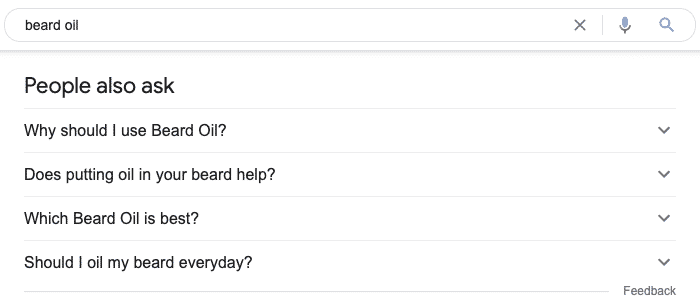
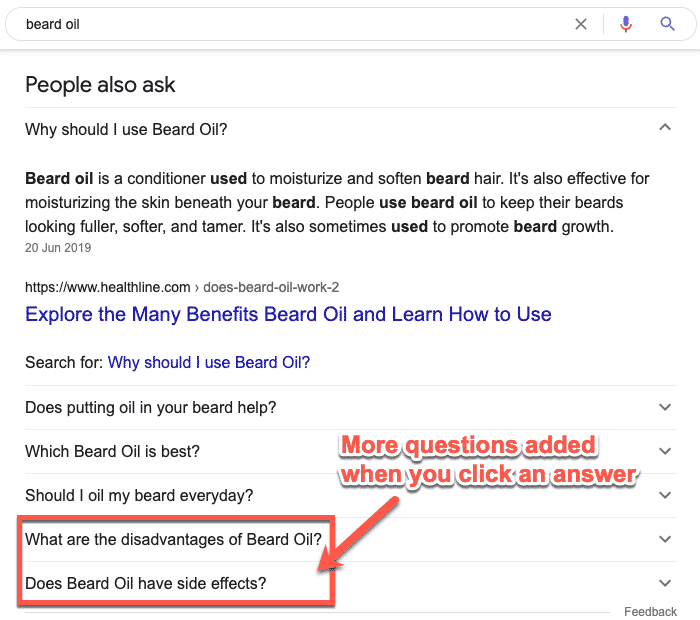
Google’s PAA boxes represent a direct pipeline into the collective consciousness of your target audience. Every question displayed in these interactive modules is pulled from live user behavior.
Manually clicking through PAA boxes, expanding sub-questions, and copying text into a spreadsheet is entirely inefficient. To scale this process, professionals employ automated workflows:
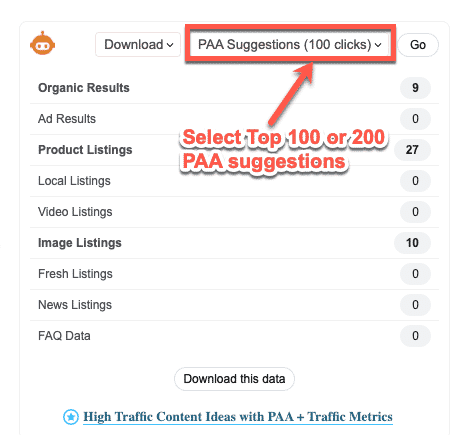
Install Browser Extensions: Utilize free productivity extensions such as SEO Minion to streamline SERP data extraction.
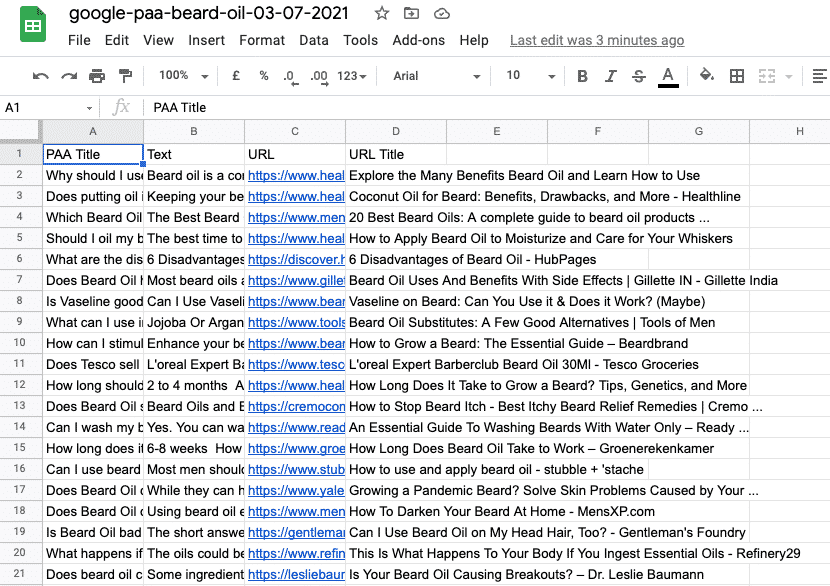
Export SERP Data: Run your seed keyword through Google, open the extension’s export tool, and extract the top 100 to 200 PAA records directly into a CSV file.
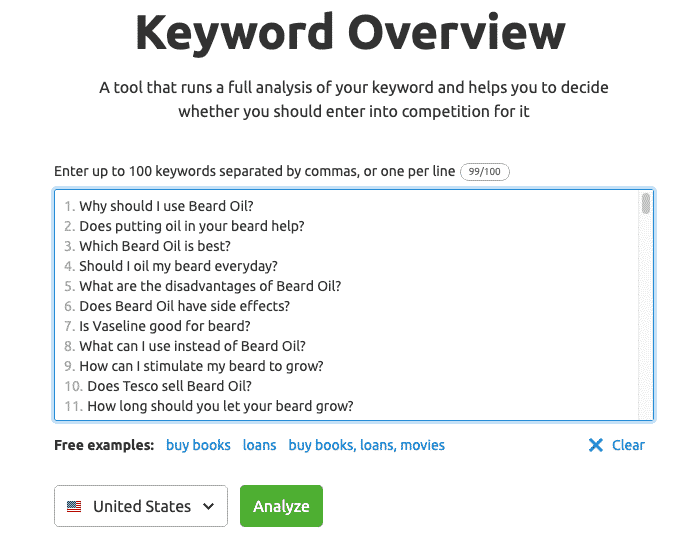
Batch Analyze Metrics: Take the extracted PAA questions from Column A of your spreadsheet, paste them in bulk into an SEO platform’s Keyword Overview report, and analyze metrics such as monthly search volume and keyword difficulty.
Curate Your List: While every 100 PAA results may yield only a handful of commercially viable topics, repeating this process across multiple seed keywords builds a robust reservoir of untapped, low-competition content ideas.
3. Tapping into Niche Subreddits for Community-Driven Insights
Online communities are breeding grounds for authentic consumer questions, technical hurdles, and competitive frustrations. Reddit houses millions of active subreddits catering to virtually every niche, industry, and buyer persona.
Identifying Subfolder Opportunities: Search for a community related to your industry (e.g., /r/CRM/) and input that specific subreddit URL into an Organic Research tool (making sure to select the subfolder parameter).
Layering Advanced Filters: Apply specific filters to refine the output—such as setting a minimum search volume (e.g., volume $ge$ 20) and a word count filter (e.g., word count > 2) to weed out generic head terms.
Unearthing Competitive Differentiators: Scrolling through these filtered results often reveals highly specific pain points, such as “HIPAA compliant CRM” or “Is HubSpot HIPAA compliant?”. These queries allow brands to craft comparative content or highlight compliance features that serve as direct differentiators against market leaders.
4. Extracting High-Traffic Threads from Quora
Quora remains an authoritative forum that consistently ranks prominently for long-tail, question-based keywords. Beyond capturing direct referral traffic by answering questions within the platform, Quora serves as an exceptional keyword research source.
Targeted Organic Research: Input your domain or a competitor’s domain into an SEO tool, filter the organic results by URL containing the /q/ path (Quora’s thread structure), and apply keyword modifiers like "how" or "best" alongside your core product topic (e.g., "beard oil").
Targeting Green-Zone KD Scores: Analyze the resulting list for green or light-yellow keyword difficulty scores. This surfaces unique consumer inquiries that rarely appear in traditional keyword research tools.
Exporting to Master Lists: Select the relevant question keywords, add them to your master tracking sheet, build comprehensive content briefs, and assign them to your editorial team.
Official Statements and Industry Expert Perspectives
Industry leaders continue to emphasize the strategic necessity of aligning content marketing with conversational search intent.
“When users enter questions into search engines, they exhibit maximum urgency. They aren’t looking for vague overviews; they want immediate problem-solving. Brands that capture these specific queries build immediate trust and capture high-intent traffic right at the point of need.”
— Leading Enterprise SEO Strategists
Furthermore, experts highlight the diminishing returns of traditional, volume-chasing keyword strategies. As search engines become more adept at parsing semantics, the long tail of search has transformed from an afterthought into the core foundation of modern content architecture. By systematizing the extraction of PAA, forum, and platform-specific question reports, businesses can future-proof their organic visibility against algorithmic volatility.
Future Outlook: The Next Frontier of Conversational Search
Looking ahead, the proliferation of generative artificial intelligence (AI) and conversational search assistants (such as Google’s Search Generative Experience, OpenAI’s ChatGPT, and Perplexity) will only accelerate the demand for question-based content. As search interfaces transition from blue links to conversational dialogues, algorithms will increasingly favor concise, authoritative, and deeply contextual answers to specific user questions.
Brands that adopt a scalable, programmatic approach to question-based keyword research today will be uniquely positioned to dominate tomorrow’s AI-driven search results. By systematically mining PAA boxes, subreddits, Quora threads, and SEO platform reports, content creators can build an agile, high-intent content engine capable of meeting the modern consumer precisely where their search journey begins.