

Executive Overview
In the sprawling, hyper-saturated landscape of modern documentary filmmaking, true-crime projects typically follow a predictable trajectory: sensationalized headlines, a parade of talking heads, an investigation of a scandalous downfall, and a tidy, moralizing conclusion designed to give viewers closure. However, the boundaries of the medium have been permanently upended by You Can See Everything, a shape-shifting, deeply unsettling documentary directed by Nathan Fielder and Lance Oppenheim.
What begins as an unprecedented, raw look into the final days of disgraced Theranos founder Elizabeth Holmes before her 11-year federal prison sentence abruptly morphs, roughly halfway through its three-hour runtime, into something entirely unprecedented. The catalyst for this transformation is Amanda Seyfried, who famously portrayed Holmes in the Hulu limited series The Dropout.
By stepping into Fielder’s elaborate, highly manipulative web of theatrical recreations and psychological probes, Seyfried bridges the chasm between pop-culture mimicry and lived reality. The resulting film is not merely a documentary about a high-profile corporate fraudster; it is a mind-bending piece of metafiction that forces audiences, critics, and the participants themselves to grapple with the fragile nature of truth, performance, empathy, and the heavy toll of modern celebrity culture.
Detailed Chronology: From San Diego Rentals to Prison Inquiries
To understand the structural audacity of You Can See Everything, one must trace the meticulously orchestrated timeline of its production and the seismic narrative shifts that define its viewing experience.
Act I: The Purgatory of the Condemned
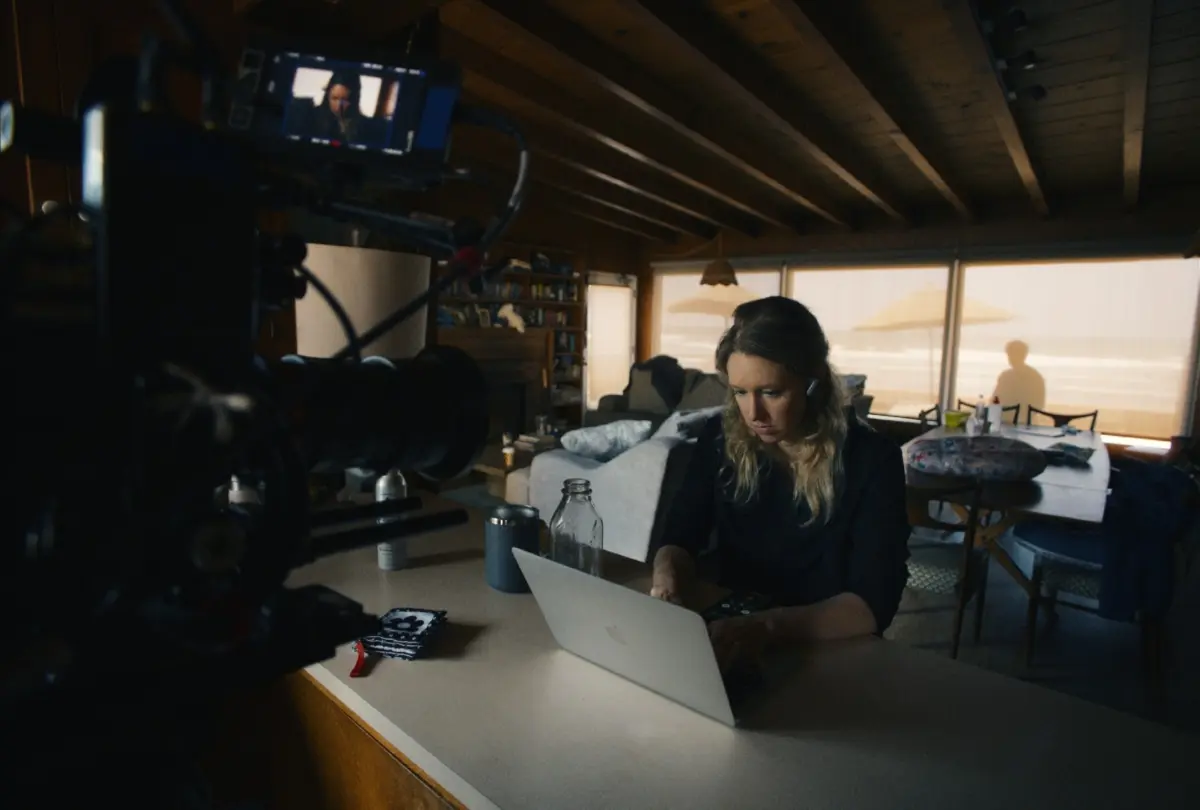
Initially, directors Nathan Fielder and Lance Oppenheim spent over thirty days embedded with Elizabeth Holmes and her partner, Billy Evans, inside a San Diego beach rental as Holmes awaited the execution of her prison sentence. This first act of the documentary offers a claustrophobic, deeply unsettling character study. Holmes appears suspended behind an invisible barrier—specious yet undeniably charming, trapped in an alternate reality of her own design. Beside her, Evans functions as a governing, loathsome presence, utilizing a brand of psychological manipulation that foreshadows the darker complexities of the film’s second half.
Had the documentary concluded here, it would have stood as a fascinating, albeit conventional, psychological profile—a specialized feature-length exploration of female fraud within a punishing, patriarchal tech ecosystem. But Fielder and Oppenheim refused to stop at the surface.
Act II: The Seyfried Intervention
Roughly 90 minutes into the film, Holmes surrenders to federal custody, and the documentary pivots into uncharted territory. Enter Amanda Seyfried. Two years removed from her Emmy-winning performance in The Dropout, Seyfried is brought into Fielder’s orbit to watch footage of Holmes watching Seyfried portray her.
Rather than serving as a simple post-mortem interview subject, Seyfried agrees to a radical proposition: she steps back into the shoes of Holmes, participating in meticulously staged recreations of Fielder’s interactions with the disgraced biotech founder. Working from scripts rather than rigid transcripts, Seyfried and Fielder blur the lines between acting and documentary evidence. This process culminates in a disquieting dinner at Evans’ home, followed by a simulated prison phone call where Seyfried makes emotional, tentative contact with Holmes herself.

Act III: The Real-Time Climax
In the film’s final act, Fielder pairs footage of a simulated prison visiting-room encounter with real-time documentation of Seyfried reading the script for that very scene for the first time. There are no grand expository bombshells, yet the sequence crackles with tension. Seyfried wrestles live on camera with her own responsibilities as an artist, the weight of womanhood, the ethics of public shaming, and the uncanny friction between fame and infamy. The documentary does not offer answers; instead, it leaves viewers suspended in a labyrinth of artificiality, anchored only by Seyfried’s radical capacity for empathy.
Supporting Context & Metrics: The Anatomy of Spoiler Culture and Metafiction
The release of You Can See Everything—premiering in semi-secret at the Telluride Film Festival—ignited intense discourse surrounding the mechanics of modern media consumption and spoiler culture.
The Economics of Spoiler Anxiety
Modern spoiler culture is not a recent internet phenomenon; it is an economic symptom. In an increasingly unstable economic climate that demands longer working hours and saps the average consumer’s bandwidth for cultural engagement, media consumption has become precious. The rise of DVR, streaming platforms, and social media acceleration dismantled the traditional "watercooler" conversation, replacing it with an aggressive economy of immediate hot takes, "endings explained" breakdowns, and viral reveals.
When You Can See Everything premiered, organizers requested absolute secrecy regarding Seyfried’s mid-film arrival. In 2026, however, keeping an actor of Seyfried’s caliber hidden within a Fielder-led project was an impossible mandate. Yet, as cultural critics have noted, knowing about Seyfried’s involvement in advance does not diminish the film—it enhances it. Removing the initial shock allows viewers to bypass superficial textual analysis and engage directly with the philosophical questions the film poses about identity and perception.
The Faustian Pact of Acting
Seyfried’s participation highlights the inherent risks of prestige performance. The traditional actor’s journey—becoming another person to better understand oneself—frequently flirts with narcissism or psychological distress. For Seyfried, who famously maintains strict boundaries between her celebrity and her personal life by living on a farm, entering Fielder’s labyrinth was a hazardous undertaking.
By willingly engaging with two megalomaniacal figures (Holmes and Evans) under Fielder’s direction, Seyfried walked a tightrope between brilliant performance art and emotional exposure. Her willingness to sit in discomfort, question her moral responsibility to a convicted felon, and extend radical empathy across ideological divides elevates You Can See Everything from a standard true-crime critique into a masterclass in human psychology.
Official Statements and Industry Reactions
The audacity of You Can See Everything has sent shockwaves through the cinematic and television communities, prompting intense debate among critics, distributors, and industry insiders.
- On the Blurring of Genres: Industry analysts have struggled to categorize the project. Distributed via A24, the film defies traditional genre definitions, sitting uncomfortably between investigative journalism, reality television, and psychological theater.
- Directoral Intent: While Nathan Fielder and Lance Oppenheim have remained characteristically enigmatic regarding the exact boundaries between documented reality and scripted reenactment during their press rounds, insiders suggest the project was designed precisely to provoke this existential confusion. By weaponizing the tools of television production against its subjects and its star alike, the directing duo successfully interrogates the audience’s baseline need for absolute truth.
- Critical Reception: Early reviews from the Telluride Film Festival and subsequent theatrical screenings have praised Seyfried’s work as a career-best achievement. Critics have highlighted her refusal to treat Holmes as a mere caricature, instead using her platform to explore the intersection of gender, corporate ambition, public perception, and the systemic pressures faced by women in hyper-capitalist environments.
Future Outlook: Redefining the Boundaries of Non-Fiction Media
As You Can See Everything rolls out to broader audiences, its long-term cultural impact is poised to reshape how creators approach true-crime, documentary, and hybrid filmmaking.
- The Death of Traditional True-Crime: The project serves as a sharp indictment of the sensationalized, low-effort true-crime genre that dominates streaming services. By exposing the ethical limitations and voyeuristic tendencies inherent in documenting disgraced public figures, Fielder and Oppenheim have effectively raised the bar for non-fiction storytelling. Future documentarians will find it increasingly difficult to ignore the meta-narrative frameworks that You Can See Everything has so brilliantly exposed.
- The Evolution of Hybrid Performance: Seyfried’s fearless integration into a documentary framework opens new doors for narrative actors. The project demonstrates that the wall separating scripted drama from documentary non-fiction is entirely porous. Actors may increasingly find themselves drawn to experimental, participatory projects that challenge their craft in unscripted, high-stakes environments.
- A Triumph of Empathy Over Cynicism: Ultimately, the lasting legacy of You Can See Everything lies not in its clever twists or its satirical stabs at tech-bro culture, but in its surprising emotional core. In a media ecosystem driven by schadenfreude and algorithmic outrage, Seyfried’s performance posits a radical alternative: a universe where human connection is forged not through verified facts or mutual cynicism, but through the daring, risky act of radical trust.