For well over a decade, Moz has served as a foundational pillar in the search engine optimization (SEO) toolkit ecosystem. As an all-in-one suite, it empowers digital marketers and website administrators to execute keyword research, perform comprehensive site audits, evaluate backlink profiles, track local listings, and monitor search engine rankings. Its signature SEO Toolbar has long been a staple for instant on-page metric evaluations directly within the SERP.
However, the modern SEO landscape has evolved dramatically. While Moz remains a respected player, it is no longer the definitive choice for every single user. A segment of digital marketers finds its subscription tiers increasingly restrictive relative to data limits on crawls and keyword reports, while others seek more aggressive pricing structures, vastly expanded global databases, or more intuitive user interfaces (UIs).
Whether you are an enterprise agency managing international client portfolios, a lean in-house marketing team, or a solopreneur looking for budget-friendly configurations, the marketplace now offers powerful alternatives. This comprehensive guide evaluates the top free and paid alternatives to Moz, dissecting their unique use cases, data capabilities, and ideal deployment scenarios to help you make an informed investment decision for your digital marketing stack.
Detailed Chronology of the SEO Tool Evolution
To understand why so many professionals are diversifying away from legacy all-in-one toolsets like Moz, it helps to examine how the SEO software industry has matured:
The Early Era (Late 2000s to Early 2010s): SEO software was largely fragmented. Practitioners relied on standalone desktop scrapers for rank tracking, basic plug-ins for on-page checks, and manual spreadsheet methodologies for link building. Moz (then SEOmoz) disrupted this space by pioneering community-driven education alongside integrated, cloud-based software suites.
The Data Arms Race (Mid-2010s): Platforms like Semrush and Ahrefs radically expanded their web crawlers, shifting the competitive paradigm toward massive, real-time proprietary link and keyword databases. Competitors began measuring index sizes in the billions of URLs and keywords, fundamentally altering user expectations.
The Specialization and Micro-SaaS Boom (Late 2010s to Present): As algorithms grew more complex—incorporating user intent, local hyper-targeting, and advanced technical requirements like Core Web Vitals—the market fractured into specialized tools. Today, users increasingly demand either an enterprise-grade ecosystem (like Semrush) or best-in-breed point solutions (like AccuRanker for tracking or Surfer SEO for content optimization) rather than settling for generalized compromise.
Supporting Context & Metrics: Comparing the Heavyweights
When migrating away from Moz or building an expanded SEO stack, understanding the raw infrastructure of competing platforms is essential. Below is a comparative breakdown of the industry’s leading all-in-one alternatives.
1. Semrush: The Best Comprehensive All-in-One Alternative
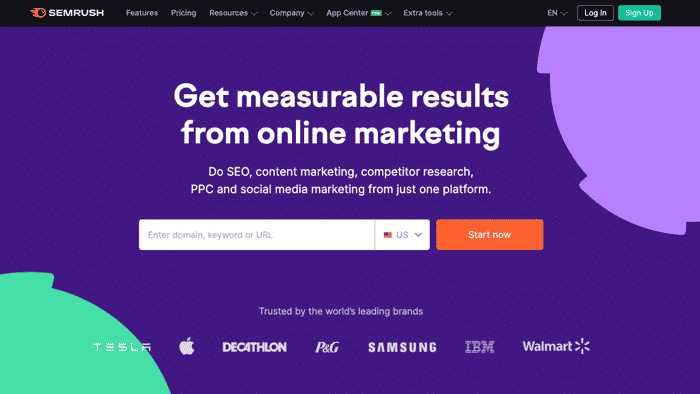
Semrush has firmly established itself as an enterprise-grade powerhouse, housing over 55 distinct tools dedicated to competitive intelligence, keyword research, rank tracking, and technical auditing. Trusted by global brands like Amazon, Tesla, and Walmart, Semrush boasts a staggering data infrastructure: over 24 billion keywords, 142 geo-locations, nearly a billion domain profiles, and a massive backlink database exceeding 43 trillion historical and active data points.
Traffic Analytics: Unlike Moz, Semrush provides deep-dive traffic intelligence on virtually any competitor. You can analyze organic, paid, referral, and social channels, view estimated bounce rates, check average visit durations, and run bulk comparative analyses on up to 200 websites simultaneously.
Rank Tracking: Offering granular tracking down to the zip-code level across desktop and mobile environments, Semrush delivers daily ranking updates that outperform Moz in raw geographic specificity.
Technical Audits: The Site Audit tool performs lightning-fast crawls, categorizing issues by severity and integrating seamlessly with external task-management systems like Trello.
2. Mangools: The Best Option for Beginners and Budget-Conscious Teams
For users who find enterprise platforms overwhelming or overpriced, Mangools offers an elegantly designed, highly intuitive 5-in-one toolset (featuring KWFinder, SERPChecker, SERPWatcher, LinkMiner, and SiteProfiler).
User Experience: Mangools boasts arguably the cleanest UI in the industry. It translates complex metrics—such as Majestic’s trust and citation flow—into digestible, color-coded visual dashboards.
Affordability: It provides exceptional value for freelancers and small businesses who need reliable core SEO metrics without paying for bloated feature sets they will never use.
3. Ubersuggest: The Leading Free Entry Point
Maintained by Neil Patel’s digital marketing ecosystem, Ubersuggest offers a functional bridge for users seeking zero-cost or low-cost alternatives.
Core Capabilities: While the free tier imposes strict caps—such as limiting keyword results to 100 per search—it still delivers basic site audits, keyword suggestions, and backlink overviews.
Accessibility: It is an ideal sandbox for hobbyists, bloggers, and absolute beginners testing the waters of search engine optimization before committing to paid infrastructure.
Many organizations prefer not to rely on a single monolithic platform. If you are looking to replace specific facets of your Moz subscription with specialized tools, consider the following market leaders.
Best for Backlink Analysis: Ahrefs Site Explorer
Ahrefs operates the second most active web crawler on the internet, rivaled only by major search engines. Its backlink index is unmatched in freshness and depth.
Use Cases: Beyond backlink prospecting and competitor link-gap analysis, Ahrefs serves as a world-class technical crawler and content explorer. Its Link Intersect tool allows users to find websites that link to multiple competitors but not to their own domain, providing a ready-made list of high-probability outreach targets.
Best for Rank Tracking: AccuRanker
For agencies and brands where real-time ranking data is paramount, AccuRanker is the premier on-demand tracking solution.
Use Cases: It provides lightning-fast manual refreshes, deep integration with Google Analytics and Search Console to correlate ranking shifts with revenue generation, and advanced segmentation for enterprise-level local and international campaigns.
Best for Technical Audits: Screaming Frog & Sitebulb
Screaming Frog SEO Spider: A desktop-based crawler favored by advanced technical SEOs. It allows for infinite customization, complex regex parsing, and direct integration with APIs like Google PageSpeed Insights.
Sitebulb: Designed for users who prefer visual clarity. Sitebulb automatically translates complex technical issues into intuitive, color-coded graphs paired with actionable remediation advice.
Best for Content Analysis: Surfer SEO
Content optimization has shifted from simple keyword stuffing to semantic relevance modeling. Surfer SEO analyzes top-ranking pages in real-time to generate exact guidelines on word counts, heading structures, NLP terms, and image placements. Its seamless integration with Google Docs and native content editors makes it an indispensable asset for modern content teams.
Best for Local SEO: BrightLocal
While Moz offers commendable local citation features, BrightLocal is purpose-built for multi-location businesses and agencies specializing in local search. It excels at Google Business Profile (formerly Google My Business) audits, review management, local rank tracking, and citation building across hundreds of niche directories.
Official Statements and Industry Perspective
Industry veterans and digital marketing authorities continually emphasize that the "best" SEO tool is entirely dependent on workflow requirements rather than brand prestige.
"While all-in-one suites like Semrush provide unmatched macro-data for enterprise strategy, specialized point solutions often win out in daily operational efficiency. The modern SEO stack is rarely about finding a single tool to rule them all; it’s about integrating the right tools for the specific job at hand." — Industry SEO Analyst
Furthermore, software providers themselves acknowledge the shift toward modular workflows. Competitors are increasingly focusing on open APIs and robust data-export capabilities, ensuring that marketing teams can easily pipe metrics from platforms like AccuRanker or Ahrefs into unified custom data warehouses or Looker Studio dashboards.
Future Outlook: Where is the SEO Software Industry Heading?
As we look toward the future of search engine optimization, several technological shifts are poised to reshape how software platforms serve digital marketers:
AI Integration and Intent Modeling: With search engines increasingly deploying sophisticated machine-learning algorithms (such as Google’s Search Generative Experience), SEO tools must evolve beyond simple keyword tracking. Future platforms will rely heavily on predictive analytics, forecasting how algorithm updates and AI-driven SERP layouts will impact organic visibility before changes hit bottom-line traffic.
Consolidation vs. Specialization: The market will likely continue to polarize. On one end, enterprise suites like Semrush will push deeper into holistic digital marketing ecosystems—unifying SEO, PPC, social media management, and content generation. On the other end, hyper-specialized micro-SaaS tools will continue to capture market share by delivering superior, lightning-fast execution in niche areas like programmatic SEO, link prospecting, or local review syndication.
Privacy and Data Granularity: As third-party data tracking becomes more heavily regulated, proprietary crawlers that can accurately map public SERP behavior, local hyper-local intent, and user engagement metrics will hold an increasingly decisive competitive advantage.
Conclusion: Which Alternative is Right For You?
Moz remains a venerable, reliable all-in-one toolset, particularly praised for its beginner-friendly layout and historic brand equity. However, if your business goals demand higher data caps, deeper competitor intelligence, or more specialized workflows, the alternatives explored in this guide offer compelling upgrades.
Choose Semrush if you need an enterprise-grade, all-in-one powerhouse to replace and vastly expand upon Moz’s capabilities.
Choose Mangools or Ubersuggest if you are a beginner, freelancer, or small business seeking affordability and ease of use.
Choose specialized tools like Ahrefs, AccuRanker, Surfer SEO, or BrightLocal if your strategy requires best-in-class performance in specific verticals like link building, rank monitoring, content optimization, or local search.
Evaluate your operational bottlenecks, leverage free trials where available, and build the SEO toolstack that best fuels your long-term digital growth.