

Executive Overview
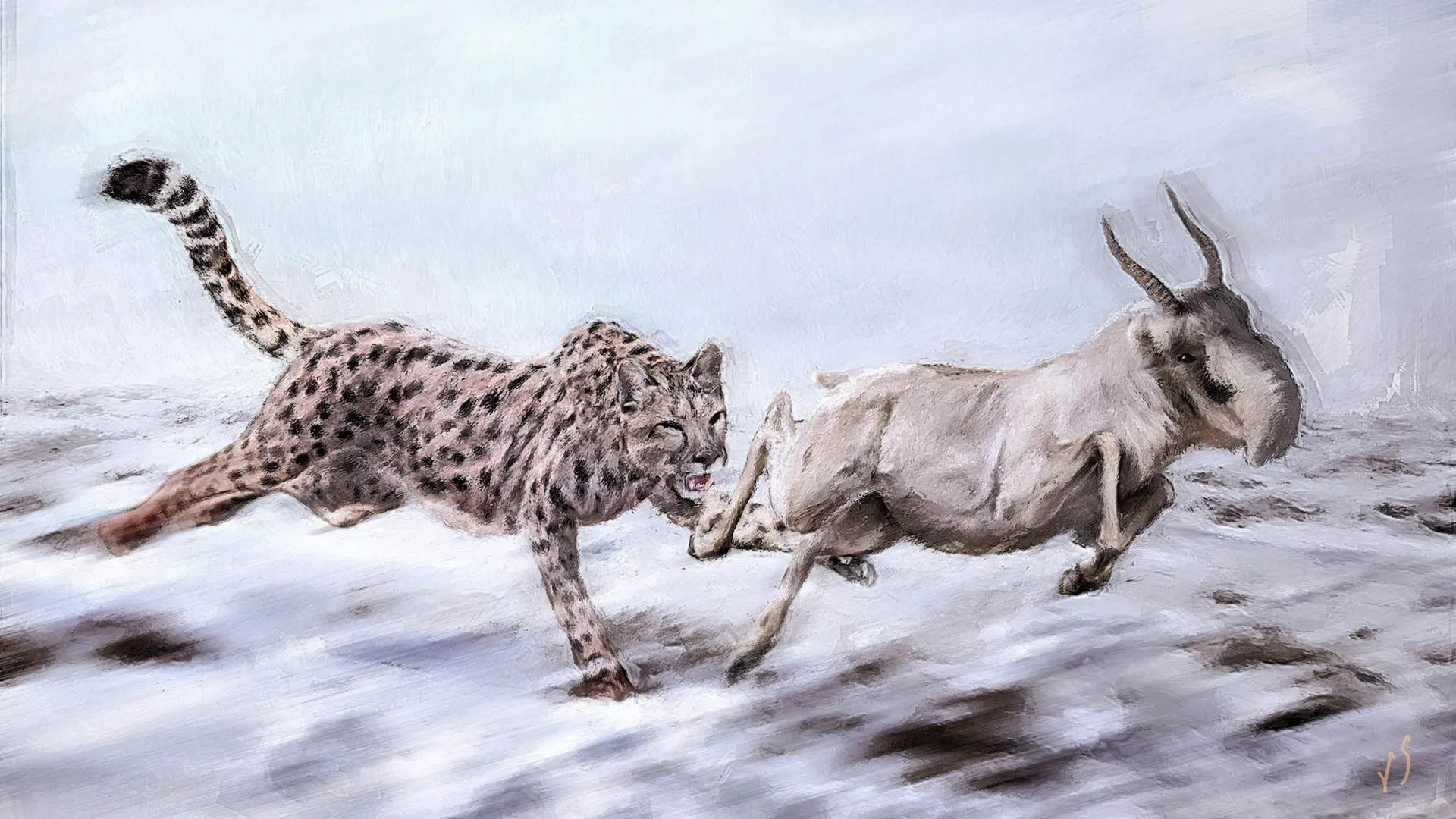
For generations, paleontologists and evolutionary biologists viewed Miracinonyx trumani—popularly known as the American cheetah—through a singular lens: a high-speed, plains-running specialist that mirrored the predatory role of the modern African cheetah (Acinonyx jubatus) across Pleistocene North America. This long-standing paradigm offered a neat ecological explanation for the blazing speed of the modern pronghorn (Antilocapra americana), cementing the belief that an ultra-fast feline stalked the prehistoric grasslands.
However, groundbreaking new research led by scientists at the University of California, Santa Cruz (UCSC), completely upends this historical narrative. Published on September 4 in the journal Current Biology, the study utilizes advanced nuclear paleogenomics and stable isotope analysis to prove that M. trumani was not a cheetah at all. Instead, it was a remarkably adaptable, close evolutionary cousin of the modern puma (Puma concolor).
Even more astonishingly, the research reveals that northern populations of this feline pushed nearly 20 degrees of latitude farther north than previously recorded, adapting to extreme Arctic environments by shifting their diets to rely heavily on anadromous fish, such as salmon. Spanning a vast geographic range from the sun-drenched plains of Florida to the freezing expanses of the Yukon Territory, M. trumani emerges not as a fragile speed specialist, but as an ecological generalist capable of breathtaking evolutionary plasticity.
This comprehensive investigation explores the genetic revelations, the rewriting of North American predator-prey dynamics, the sensory adaptations required for Arctic survival, and the slow, inexorable decline that ultimately sealed the fate of one of the Pleistocene’s most misunderstood carnivores.
Detailed Chronology and Discovery
The unraveling of the Miracinonyx trumani mystery began in earnest with the extraction and sequencing of high-coverage nuclear genomes from exceptionally well-preserved fossils dating back between 23,000 and 31,000 years. These remains included specimens recovered from the Tr’ondëk Hwëch’in and Vuntut Gwitchin Traditional Territories in the Yukon Territory—lands whose indigenous stewards maintain a deep, ancient connection to the landscape and its history.
By sequencing the nuclear paleogenomes of these ancient specimens, researchers were able to look past physical anatomy and examine the blueprint of the animal’s ancestry. The genetic data confirmed that M. trumani diverged from the modern puma lineage approximately 2.6 million years ago, making it a sister species to the cougar rather than a relative of the Old World cheetah.
This revelation provides a textbook example of evolutionary convergence—a biological phenomenon where unrelated species independently evolve remarkably similar physical traits because they face comparable environmental pressures. Standing roughly 3 feet tall, stretching 8 feet from nose to tail tip, and weighing an estimated 150 pounds, adult M. trumani possessed a slender body, long front legs, and proportions strikingly similar to those of modern cheetahs. These physical traits were previously assumed to indicate a shared predatory strategy of high-speed chases across open country.
However, the new fossil evidence and isotopic data tell a much richer story. While populations in temperate grasslands—such as those found in modern-day Wyoming and Florida—may have hunted like generalist predators, their northern counterparts in the Arctic Yukon occupied an entirely different ecological niche. Operating as tertiary consumers, these northern cats adapted to landscapes defined by extreme seasonal shifts and freezing temperatures, transforming their hunting habits to exploit river ecosystems.
Furthermore, genomic sequencing of the Yukon specimens revealed specific loss-of-function mutations in genes responsible for regulating circadian rhythms. These genetic alterations strongly suggest that the cats had evolved to cope with the extreme, radically altered light cycles of Arctic summers and winters, demonstrating an unprecedented level of physiological flexibility for a large felid.
Supporting Context & Metrics: Decoding the Ice Age Ecosystem
To fully grasp the significance of the UC Santa Cruz-led study, one must examine the metrics, ecological theories, and genetic anomalies that define this research.
The Demise of the "Ghosts of Predators Past" Hypothesis
For decades, evolutionary biologists invoked M. trumani to solve one of nature’s great riddles: why is the American pronghorn capable of sustaining speeds up to 60 miles per hour, making it the second-fastest land animal on Earth today?
Under the "ghosts of predators past" hypothesis, scientists argued that pronghorns evolved their astonishing acceleration and endurance to outrun a Pleistocene cheetah. Because no modern North American predator poses a high-speed threat capable of driving such extreme evolutionary adaptations, researchers pointed to M. trumani as the missing evolutionary engine.
The new genomic evidence deals a severe blow to this hypothesis. Because M. trumani was actually a close relative of the puma—a stalking, versatile ambush predator rather than a dedicated, hyper-fast sprinter—the evolutionary pressure driving the pronghorn’s speed must be reevaluated. While M. trumani possessed long limbs, its anatomical build was versatile, featuring powerful forelimbs capable of grabbing and holding prey, a trait characteristic of pumas rather than the delicate, shock-absorbing frames of true cheetahs.
Sensory Adaptations and Dietary Specialization
The genetic analysis yielded another unexpected discovery regarding the sensory biology of M. trumani. By examining the sensory receptor genes across the sampled felid lineages, researchers discovered that M. trumani lacked a functional gene responsible for producing a receptor used to detect sour tastes.
While domestic and wild cats are already famous for lacking a "sweet tooth" due to a pseudogenized sweet-taste receptor gene, this study marks the first documented case in felids involving the inactivation of genes tied to sour taste perception. In the animal kingdom, sensory gene losses are frequently tied to dietary specialization. Combined with the stable isotope data proving that northern populations relied heavily on marine-derived nutrients from anadromous fish, this genetic quirk paints a picture of a carnivore capable of radical dietary shifts depending on regional resource availability.
Long-Term Genetic Decline Versus Sudden Collapse
Understanding why M. trumani went extinct near the end of the Pleistocene has long vexed paleontologists. By analyzing the genetic diversity of specimens from both the southern end of their range (Wyoming) and the northern extreme (the Yukon), researchers uncovered a pattern of low genetic diversity.
Unlike modern populations of endangered species that suffer from sudden, catastrophic population bottlenecks or severe inbreeding, M. trumani showed no such acute signatures. Instead, the genetic record reveals a slow, generational reduction in diversity that stretched from the early Pleistocene deep into the late Pleistocene. This long-term, creeping erosion of genetic health explains why fossil records of the species are comparatively sparse and why the cats were ultimately unable to adapt when rapid, large-scale climate shifts dismantled their ecosystems.
Official Statements from the Research Team
The collaborative nature of the study brought together leading experts in paleogenomics, ecology, and Arctic fisheries from institutions including UC Santa Cruz, the University of Alaska Fairbanks (UAF), the Yukon Palaeontology Program, and Des Moines University.
Lead author Molly Cassatt-Johnstone, a Ph.D. candidate in the Paleogenomics Lab at UC Santa Cruz, emphasized the extraordinary behavioral and physiological range of the animal:
"These cats were remarkably flexible, much like pumas are across their range today. We found loss-of-function mutations in certain genes that regulate circadian rhythms, suggesting they may have adapted to the extreme light cycles of summers and winters in northern latitudes."
Co-author Matthew Wooller, a professor in the College of Fisheries and Ocean Sciences at UAF, highlighted the unprecedented ecological span demonstrated by the fossil evidence:
"This species of carnivore has this massive range, all the way from the Arctic to the Lower 48. They’re demonstrating uber-specialization at two ends of their range, while also feeding on two completely different food sources."
Senior author Beth Shapiro, professor of ecology and evolutionary biology at UC Santa Cruz and co-director of the Paleogenomics Lab, reflected on the lessons the extinction holds for understanding vulnerability to modern climate change:
“Miracinonyx persisted for a very long time without the signs of inbreeding we’d expect before a collapse. The decline was slow, not sudden, and that may be what left it unable to adapt when the climate shifted.”
Shapiro and her colleagues also issued a broader warning to the scientific community regarding the dangers of relying solely on morphology when classifying extinct species. The designation "American cheetah" is misleading on two distinct fronts: it falsely implies a direct ancestral link to true African and Asian cheetahs, and it presupposes a hyper-specialized, high-speed hunting strategy that the new genomic and isotopic data conclusively refute.
Future Outlook: Re-evaluating Ice Age North America
The publication of this study in Current Biology marks a foundational shift in how paleoecologists will reconstruct Ice Age ecosystems moving forward. By demonstrating that animals can evolve strikingly similar physical forms to exploit mechanical demands—such as running across open plains—while retaining vastly different underlying evolutionary lineages, the research forces a rigorous re-examination of convergent evolution in the fossil record.
Furthermore, the discovery of fish-eating, Arctic-adapted pumas thriving 20 degrees farther north than previously understood opens up exciting new avenues for stable isotope analysis and ancient DNA research. Scientists are now turning their attention to other enigmatic Pleistocene carnivores, questioning whether other assumed specialists were similarly adaptable generalists capable of shifting their ecological roles across vast continental ranges.
As climate change once again reshapes modern ecosystems and pressures vulnerable wildlife populations, the cautionary tale of Miracinonyx trumani resonates deeply. It demonstrates that a species can endure for millions of years, weathering gradual environmental shifts, only to find itself tragically unequipped when systemic climatic tipping points arrive. By unearthing the true genetic heritage of the American "cheetah," science has not only corrected a historical misidentification but has also gained a profound appreciation for the resilience, adaptability, and ultimate fragility of life on Earth.