

Executive Overview
For over a century, a chilling hypothesis has lingered on the margins of Egyptology: that the earliest pharaohs of a unified Egypt took their royal courts with them to the grave. When pioneering archaeologist Flinders Petrie excavated the monumental First Dynasty burial complexes at Abydos in the 1920s, he unearthed hundreds of subsidiary graves tightly clustered around the monumental tombs of Egypt’s primordial kings. Petrie suspected that these lower-level officials, artisans, and servants had been systematically put to death to serve their masters in the netherworld—a macabre practice known as retainer sacrifice.
However, because Petrie and his contemporaries lacked the diagnostic tools of modern forensic science, they could find no physical, skeletal evidence of fatal trauma to substantiate this claim. Lacking definitive proof, the theory of widespread human sacrifice in Early Dynastic Egypt remained an academic debate—a dark historical footnote overshadowed by the architectural splendor of the pyramids and temples that would rise centuries later.
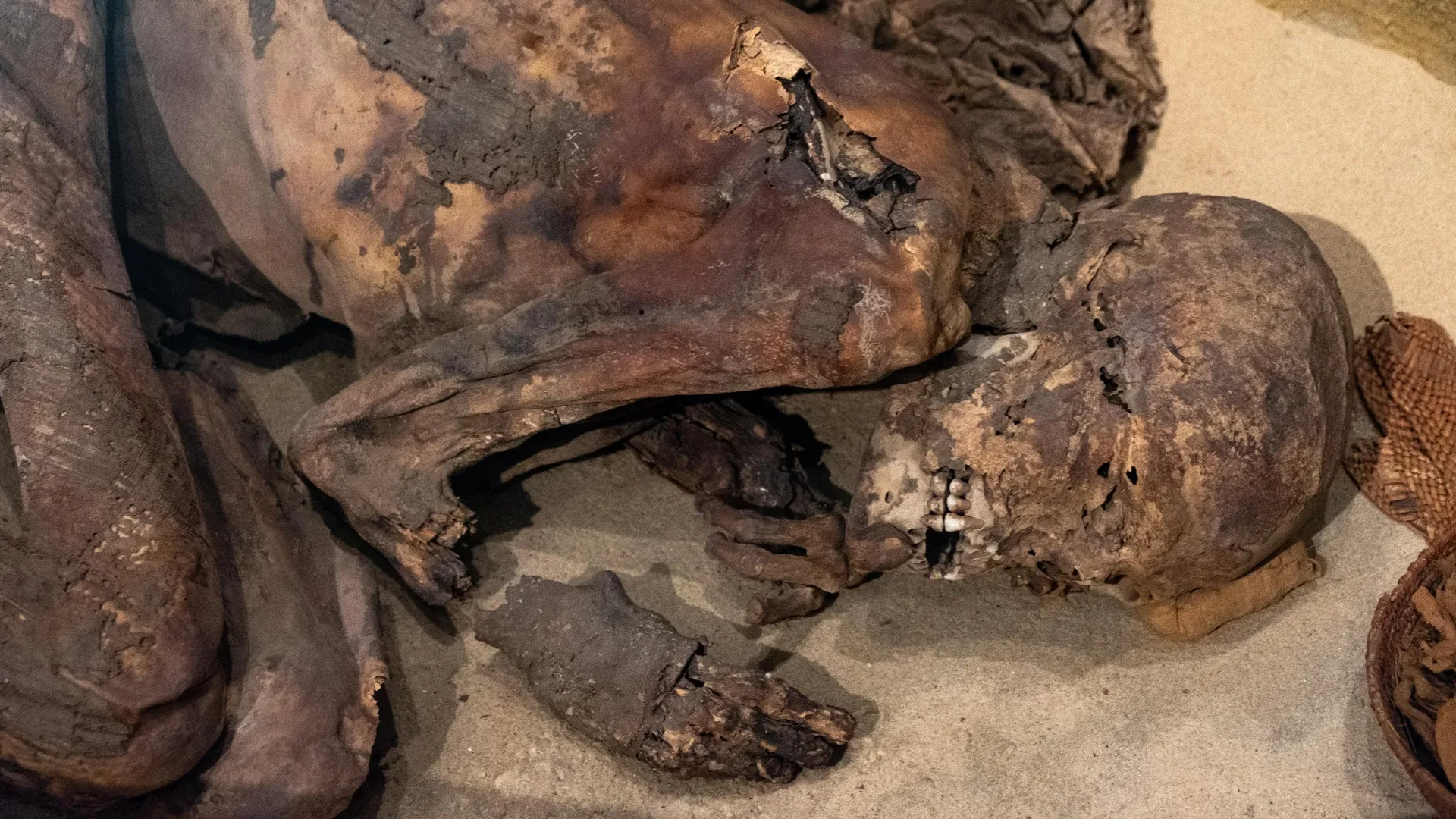
Now, a groundbreaking forensic re-evaluation of preserved human remains has shattered a century of ambiguity. Dr. Roselyn Campbell, a bioarchaeologist and researcher at Purdue University, has uncovered definitive, perimortem cranial trauma on nearly 40% of a studied cohort of skulls recovered from the Abydos subsidiary tombs. Published in the journal Frontiers in Environmental Archaeology, Campbell’s research bridges a 5,000-year chasm, providing the most compelling physical proof to date that state-sanctioned violence and ritualized homicide were foundational elements of Egypt’s earliest royal mortuary cults.
Detailed Chronology
The Dawn of Pharaonic Rule (c. 3000 BCE)
Around three millennia before the common era, the Nile Valley witnessed a momentous geopolitical transformation. Through the unification of Upper and Lower Egypt—traditionally attributed to the legendary ruler Narmer or his immediate successors of the First Dynasty—the world’s first unified nation-state was born. Alongside this unprecedented centralization of political power came the evolution of divine kingship. To cement their god-like status and organize an administrative apparatus capable of managing an entire river civilization, these primordial kings constructed elaborate, sprawling funerary complexes in the ancient holy city of Abydos.
These architectural marvels were designed not merely as eternal resting places, but as thresholds between the earthly realm and the celestial cosmos. Crucially, these complexes featured not only the primary royal tomb but also extensive rows of uniform, satellite burial chambers intended for members of the royal household.
Petrie’s 1920s Excavations at Abydos
Fast-forward nearly five millennia to the interwar period of archaeological discovery. Famed British archaeologist Flinders Petrie descended upon the dusty sands of Abydos to map the origins of Egyptian civilization. As his excavation teams cleared the perimeter of the First Dynasty royal tombs, they encountered a startling layout: hundreds of small, orderly graves encircling the central royal monuments.
Each subsidiary grave was a modest subterranean chamber, frequently containing a simple wooden coffin accompanied by sparse grave goods—utilitarian ceramic vessels, occasional copper tools, projectile points, and small ivory figurines. More intriguingly, Petrie recovered fragmentary grave markers bearing the names and official titles of the deceased. These inscriptions revealed that the occupants were not anonymous peasants, but lower- to mid-level administrative officials, domestic servants, and skilled artisans who had orbited the king in life.
Struck by the sheer volume of bodies interred simultaneously with or immediately following the burial of a single monarch, Petrie proposed the radical theory of retainer sacrifice. Yet, constrained by the forensic methodologies of the 1920s, he could locate no obvious fractures or structural failures on the bones that could definitively be categorized as fatal wounds. Ultimately, Petrie reburied the vast majority of the excavated human remains, preserving only a select handful of crania for shipment to institutional archives in the United Kingdom.
The Modern Re-Examination (The Duckworth Collection)
For nearly a century, the Abydos skeletal collection languished in museum archives, effectively frozen in time. The question of whether Egypt’s first rulers were absolute monarchs capable of demanding the ultimate sacrifice from their subjects remained an open, unprovable mystery.
Enter Dr. Roselyn Campbell. Recognizing that the human element of these royal households had been relegated to footnotes in grand historical narratives, Campbell embarked on a mission to interrogate the archived material using twenty-first-century forensic science. She located 46 preserved skulls originating from the Abydos subsidiary graves housed within the prestigious Duckworth Collection at Cambridge University.
Employing contemporary bioarchaeological frameworks, macroscopic trauma analysis, and high-resolution imaging, Campbell systematically re-examined the crania. Where Petrie and his contemporaries had observed unremarkable weathering or natural post-mortem fragmentation, modern forensic expertise detected a sinister reality: intentional, perimortem violence.
Supporting Context & Metrics
To fully understand the gravity of Campbell’s findings, one must analyze the quantitative metrics and cultural context of Early Dynastic mortuary practices.
- Sample Size and Scale: The study focused on 46 well-preserved crania curated from the Abydos subsidiary burials. While thousands of individuals were theoretically subjected to retainer sacrifice across multiple First Dynasty royal tombs (with some complexes featuring upwards of 300 satellite graves), this specific cohort represents a vital window into the demographic.
- Trauma Prevalence: Out of the 46 skulls analyzed, 18 displayed substantial cranial trauma, accounting for approximately 39% of the studied population.
- Nature of the Injuries: The identified trauma manifested primarily as linear fractures spanning the cranial vault. In a forensic context, such linear fractures are typically the result of blunt-force impacts delivered with high velocity. These specific injuries would have induced rapid loss of consciousness, catastrophic internal intracranial bleeding, and near-instantaneous death. Furthermore, isolated instances of sharp-force trauma were recorded, including a chilling chopping injury directed precisely at the eye socket of one individual.
- Exclusion of Battle Wounds: Ancient Egyptian iconography frequently depicts pharaohs smiting foreign enemies with stone maces. However, Campbell’s analysis quickly dismissed the idea that these retainers were war casualties. Standard mace-head impacts characteristically produce depressed, stellate (star-shaped) fractures where the weapon’s contours punch directly through the bone. The linear fractures observed at Abydos point instead toward impacts from broad, flat objects, heavy wooden staves, or meticulously controlled blunt implements—or, alternatively, severe structural blows inconsistent with battlefield combat.
- The Rule-Out of Accidental Falls: Could these fractures be the result of accidental workplace injuries or falls within the royal compounds? Campbell notes that while accidental trauma cannot be utterly dismissed, a fall forceful enough to induce a fatal linear skull fracture would inevitably leave secondary impact markers elsewhere on the skeleton—such as broken clavicles, fractured ribs, or defensive limb fractures. Because Petrie’s historical excavation records document no such skeletal trauma, and because accidental mass trauma affecting 39% of a royal retinue simultaneously is statistically improbable, intentional human violence remains the most scientifically robust explanation.
+--------------------------------------------------------------------+
|                   ABYDOS FORENSIC METRICS SUMMARY                  |
+--------------------------------------------------------------------+
| Total Skulls Analyzed        | 46                                  |
| Skulls Exhibiting Trauma     | 18                                  |
| Percentage of Traumatized    | ~39%                                |
| Primary Trauma Type          | Linear Cranial Fractures            |
| Secondary Trauma Type        | Sharp-Force / Chopping (e.g., eye)  |
| Timing of Fractures          | Perimortem (Around time of death)   |
+--------------------------------------------------------------------+
+--------------------------------------------------------------------+
Official Statements & Expert Insights
The implications of this study stretch far beyond anatomical pathology, offering deep psychological insights into the nature of power, state-sanctioned violence, and theological compliance in the ancient world.
Dr. Roselyn Campbell, whose exhaustive research also forms the foundation of her forthcoming book, State-sanctioned Violence and Human Sacrifice in Early Dynastic Egypt (published by Routledge Press), emphasized the human tragedy hidden beneath the archaeological nomenclature:
"I was drawn to these retainers partly because, even though they were buried around royalty, they are mostly relegated to footnotes in the grander narrative. Who were these people and how did they view the ruler and their own role in his or her life and death?" Campbell reflected, underscoring the shift from viewing ancient Egyptians as monolithic builders to recognizing individual human agents caught in the machinery of an absolute state.
Detailing the mechanics of the ritual killings and the ideological framework that permitted them, Campbell explained:
"Retainer sacrifice is a type of human sacrifice where those close to a ruler are killed when the ruler dies. In many cultures, retainer sacrifice is practiced because of beliefs that the sacrificed individuals will continue to serve the ruler in some kind of afterlife, but retainer sacrifice can also be a visceral display of the ruler’s power. Some retainers might have volunteered to die to achieve eternal life or honor, others may have been chosen or even forced."
Addressing the specific physical evidence recovered from the Cambridge collection, Campbell noted the immediate and devastating nature of the blows:
"The injuries on the preserved crania are generally linear fractures, which would likely cause rapid unconsciousness, internal bleeding, and death."
When considering why certain individuals bore no visible skeletal marks—leaving the total percentage of sacrificed individuals potentially much higher than 39%—Campbell pointed to the limitations of surviving evidence:
"Some may have died naturally, while others could have been killed using methods that left no recognizable marks on their bones, such as asphyxiation. Additional injuries might also have been found if the rest of their skeletons were available for examination. Unfortunately, most of those remains were reburied more than a century ago, leaving researchers with only part of the physical evidence."
Future Outlook
The confirmation of human sacrifice at First Dynasty Abydos marks the end of a century-old academic stalemate, but it simultaneously opens an expansive new frontier for Egyptological research.
As bioarchaeological methods continue to advance at a breakneck pace—incorporating stable isotope analysis, ancient DNA (aDNA) profiling, and advanced micro-CT scanning—archaeologists are no longer entirely dependent on complete, pristine physical remains to reconstruct antiquity. The success of Campbell’s study proves that museum basements and university archives around the globe are treasure troves of forgotten biological data, waiting for modern analytical lenses to unlock their secrets.
Looking forward, the academic community faces several compelling challenges and opportunities:
- Locating Reburied Remains: While a logistical and ethical challenge, identifying the precise secondary reburial locations of Petrie’s original excavations could allow modern researchers to apply full-skeleton forensic screening, potentially revealing defensive wounds, strangulation markers, or chemical signatures of poison.
- Genomic and Social Profiling: Future extraction of ancient DNA from the Abydos retainers could answer long-standing questions regarding social stratification. Were these retainers members of foreign captive populations, enslaved individuals, or elite courtiers who willingly embraced martyrdom for the cosmic stability of the state?
- Comparative Studies Across the Ancient World: Retainer sacrifice is well-documented in other early state societies, most notably in the Royal Cemetery of Ur in Mesopotamia and among early Shang Dynasty elites in China. Integrating the new Abydos data into a global comparative framework will allow historians to better understand why pristine states independently converged on mass human sacrifice as a tool of royal transition and cosmological insurance.
Ultimately, Dr. Campbell’s work serves as a powerful reminder that history is never truly finished; it merely waits for the right questions to be asked. As she noted regarding the imperfect and fragmented nature of historical datasets:
"This study shows how much new information about the past can be revealed when we revisit previous data armed with updated methods and knowledge, even for datasets that are incomplete and imperfect like this one."
Through science, the silent voices of Egypt’s ancient courtiers have finally been heard across five millennia, adding profound nuance to our understanding of the dawn of civilization.
