

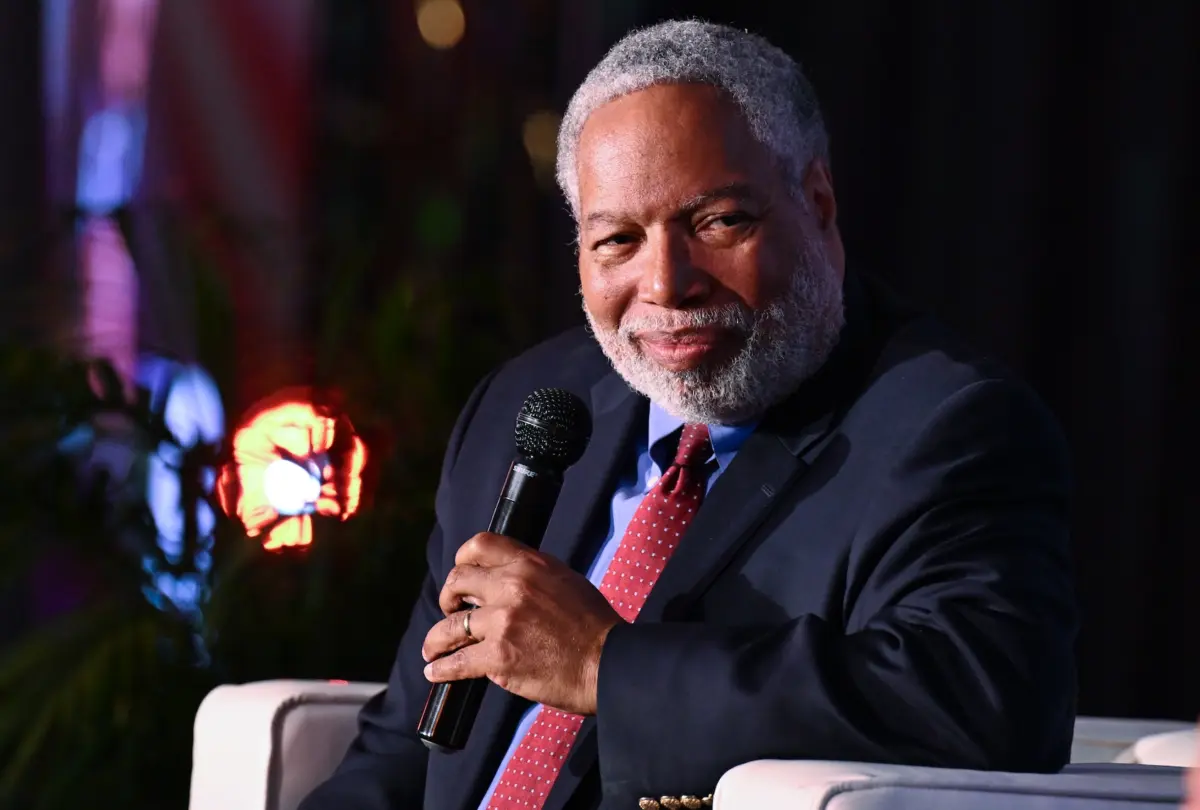
WASHINGTON — Lonnie G. Bunch III, the pioneering leader who broke a 173-year color barrier to become the 14th Secretary of the Smithsonian Institution, announced Tuesday that he will step down from his post at the end of the year.
Bunch’s departure marks the culmination of a tumultuous period defined by intense ideological battles with the Trump administration. The White House has repeatedly targeted the Smithsonian—a massive cultural and scientific nexus encompassing 21 museums, 21 libraries, the National Zoo, and numerous research centers—accusing its leadership of advancing partisan agendas. Bunch’s retirement sets the stage for a high-stakes transition that could fundamentally alter the governance and curatorial direction of America’s premier cultural trust.
Executive Overview
The announcement, delivered via an official statement on September 8, 2026, brings to a close a historic tenure for Bunch, who made history in 2019 as the first Black man and first historian to lead the institution. Having spent nearly half of his professional life within the Smithsonian ecosystem—including serving as the founding director of the acclaimed Smithsonian National Museum of African American History and Culture—Bunch leaves behind an expansive legacy of attendance growth, facility modernization, and inclusive public programming.
However, his final years at the helm have been overshadowed by unprecedented political crosscurrents. The Trump administration has intensified its scrutiny of federal cultural institutions, casting the Smithsonian’s educational frameworks as partisan and "woke." With the White House releasing a scathing evaluation of the institution’s leadership just weeks prior, Bunch’s exit underscores the growing vulnerability of nonpartisan cultural guardians in an era of polarized public discourse.
Detailed Chronology: A Legacy Under Siege
To understand the weight of Bunch’s retirement, it is necessary to trace the convergence of his historic career with the escalating political friction of recent years:
- May 2019: Lonnie G. Bunch III is unanimously elected by the Smithsonian Board of Regents to serve as the 14th Secretary, succeeding David J. Skorton. Having successfully built the National Museum of American History and Culture from the ground up, Bunch is widely heralded as a unifying and visionary leader.
- August 2025: As cultural policy becomes a central battleground in federal politics, the Trump administration launches a public critique of Smithsonian exhibits. The administration points to institutional messaging surrounding race, immigration, slavery, LGBTQ+ identity, and disability as evidence of ideological drift.
- July 2026: The conflict reaches a legislative and administrative boiling point with the publication of a formal White House report titled "Saving America’s Story." The document explicitly labels Smithsonian leadership as untrustworthy "radicals." It takes particular aim at the National Museum of American History, accusing the institution of falling victim to "institutional capture by a radical, activist ideology that is fundamentally opposed to telling the noble, honest story of the great country we know and love."
- September 8, 2026: Citing personal reflection and a desire to secure a smooth transition, Bunch announces his retirement, effective at the close of the year. Cultural analysts immediately begin speculating on the identity of his successor and whether the Board of Regents will face pressure to install leadership more aligned with the administration’s vision.
Supporting Context & Metrics: The Smithsonian Under Bunch
The Smithsonian Institution is not merely a collection of tourist attractions; it is the physical repository of American identity, holding over 155 million artifacts, works of art, and specimens. Under Bunch’s leadership, the institution navigated monumental modern challenges, most notably the COVID-19 pandemic, a massive digital expansion, and the ongoing reimagining of how historical narratives are presented to the public.
Key Milestones and Metrics of Bunch’s Tenure:
- Historical Firsts: As the first historian and first African American to lead the world’s largest museum and research complex, Bunch brought deep academic rigor to the secretary’s office.
- The NMAAHC Triumph: Before taking the top job, Bunch’s masterwork was the opening of the National Museum of American History and Culture in 2016, which welcomed tens of millions of visitors and instantly became one of Washington’s most sought-after cultural destinations.
- The Scope of the Trust: Bunch managed a vast empire comprising:
- 21 world-class museums.
- The National Zoo.
- 9 research facilities across the globe.
- Over 6,000 federal and trust employees.
- An annual operating budget exceeding $1.7 billion (a mix of federal appropriations and private fundraising).
Despite these operational successes, the institution’s curatorial choices became lightning rods for debate. Exhibits addressing the complex legacies of the American Civil War, indigenous displacements, and the civil rights movement drew praise from historical scholars for their nuance and comprehensive scope, but faced sharp rebukes from conservative critics who argued they minimized national achievements in favor of grievance narratives.
Official Statements and Reactions
The announcement of Bunch’s departure elicited immediate responses from cultural leaders, historians, and political figures alike, highlighting the deep divisions surrounding the future of American public memory.
In his retirement statement, Bunch struck a reflective and deeply personal note, emphasizing his enduring affection for the institution:
"It is with very mixed emotions and heartfelt gratitude that I announce my retirement," Bunch said. "I have spent nearly half of my life working at and being part of the Smithsonian family, and what a privilege it has been. There is no place like the Smithsonian—it has been one of the great loves of my life, and I am extraordinarily proud of what we have accomplished together. I leave with pride and sadness, gratitude and joy, and with enormous confidence in the people who will carry this remarkable institution forward."
Conversely, administration officials and congressional allies who supported the White House’s July report framed the transition as an opportunity for institutional renewal. Proponents of the administration’s stance have argued that federal institutions must return to what they term a more traditional, patriotic framework that emphasizes unifying national narratives over social critique.
Independent museum associations and academic unions, however, expressed profound concern over the circumstances of his departure. Organizations such as the American Historical Association released preliminary statements warning against political interference in museum curation, emphasizing that historical integrity requires autonomy from shifting political tides.
Future Outlook: What Lies Ahead for the Smithsonian?
As the Smithsonian Institution prepares for the departure of its 14th Secretary, the immediate future centers on the search for a successor. The process is overseen by the Smithsonian Board of Regents—which includes the Chief Justice of the United States, the Vice President, members of the U.S. Senate and House of Representatives, and nine citizen members appointed by joint resolution of Congress.
Given the composition of the Board and the political climate in Washington, the selection process is guaranteed to be intensely scrutinized. Key questions facing the institution include:
- Curatorial Independence: Will the incoming leadership face structural mandates or policy shifts regarding how sensitive historical topics—such as slavery, civil rights, and systemic inequality—are presented to the public?
- Federal Funding Dynamics: With the White House actively criticizing institutional priorities, the upcoming federal budget cycles may see legislative battles over appropriations for Smithsonian operations and capital improvements.
- Public Trust and Engagement: As cultural institutions navigate a divided America, the new secretary will face the immense challenge of maintaining broad public trust while fulfilling the Smithsonian’s congressionally mandated mission to "increase and diffuse knowledge."
For now, Lonnie G. Bunch III remains at his post through the end of the year, steering the institution through its final months of transition. His legacy will be debated for decades—viewed by supporters as a transformative figure who democratized the nation’s attic, and by critics as a focal point in a broader cultural war over how America tells its own story.