

Executive Overview
The fraught relationship between the Trump administration and the mainstream American media has reached a critical legal juncture. CNN warned the Department of Justice on Monday that it is prepared to launch additional legal maneuvers if the White House persists in barring its journalists from core presidential transit spaces, notably Air Force One and the Oval Office. This ultimatum comes on the heels of an ongoing federal lawsuit filed by CNN, Politico, and MS NOW following a sweeping September directive that initially locked out several premier news organizations.
While a preliminary injunction temporarily restored baseline entry to certain White House grounds, the administration has consistently bypassed compliance regarding the rotating travel "pool"—the coordinated collective of journalists responsible for documenting the president’s movements on behalf of the broader public. Consequently, major mainstream networks have found themselves locked out of high-profile presidential travel itineraries, opening the door for alternative, conservative-leaning outlets to occupy coveted pool slots.
Simultaneously, the administration’s contentious relationship with the press extends beyond physical travel restrictions. Recent reports reveal that President Donald Trump has actively contemplated an architectural and symbolic erasure of the traditional press corps by converting the historic White House press briefing room back into an indoor swimming pool. Together, these developments mark an escalating confrontation between executive authority and the constitutional norms of a free press, unfolding against a rapidly evolving media consumption landscape where platforms like TikTok increasingly rival traditional outlets for the public’s attention.
Detailed Chronology of the White House Access Crisis
The current standoff between the executive branch and premier news organizations is rooted in a series of targeted access restrictions implemented during the second Trump administration. The timeline below charts the escalation of these tensions, moving from broad bans to ongoing legal battles and persistent travel exclusions.
- September 18: The Trump administration implements a ban blocking reporters from CNN, Politico, and MS NOW from entering the White House. The unprecedented move prompts a swift joint lawsuit from the three media organizations.
- Late September: A federal judge issues a preliminary injunction, granting the outlets partial relief and forcing the administration to restore baseline access to specific White House grounds. However, friction immediately persists regarding movement within executive transit spaces.
- Mid-October: The White House bypasses the independent White House Correspondents’ Association to take direct control of the press pool assignments, systematically excluding outlets critical of the administration—including The Associated Press, CNN, Politico, and MS NOW—from boarding Air Force One.
- The October Weekend Prior to the Ultimatum: CNN is systematically barred from covering presidential travel to Georgia and Florida. In an unprecedented show of solidarity or logistical distancing, the four other major broadcast networks (ABC, CBS, Fox, and NBC) decline to fill CNN’s vacant pool position. Consequently, Trump travels without mainstream television coverage, save for the conservative network Real America’s Voice, which steps in via the "secondary TV" slot—a privilege routinely awarded to the network whenever CNN is locked out.
- Monday, October 20: CNN’s outside counsel, Ted Boutrous, issues a sternly worded letter to the Department of Justice, characterizing the administration’s access policies as "mistaken, counterproductive, and unlawful." Boutrous sets a strict Thursday evening deadline for the DOJ to confirm that the White House will abandon its exclusionary practices.
- Tuesday, October 21: Details emerge regarding President Trump’s private discussions with former Press Secretary Karoline Leavitt concerning the potential conversion of the press briefing room back into an indoor swimming pool, elevating fears of a permanent, symbolic spatial ban on the media.
Supporting Context & Metrics: Access, Power, and Changing Media Habits
To fully grasp the gravity of the White House’s travel restrictions, one must examine where modern presidential interactions actually occur. According to media analyses and legal filings submitted by CNN’s counsel, the physical geography of executive communication has shifted decisively away from the traditional press briefing room.
Since the inception of his second term, President Trump has engaged substantively with the press—answering more than 4,700 questions—predominantly within three primary locations: the Oval Office, aboard Air Force One, and along airport tarmacs. By contrast, the official White House press briefing room has hosted a mere 150 questions over the same timeframe. Because access to the Oval Office and Air Force One is mediated through the rotating press pool, barring a major news network from these spaces effectively denies its audience meaningful, direct accountability journalism.
This spatial restriction coincides with a profound transformation in how the American public consumes news. According to a landmark Pew Research Center survey released in October 2026, 1 in 5 Americans (20%) now regularly gets their news on TikTok. This figure represents a meteoric rise from just 3% six years prior.
The generational and demographic divides within this digital shift are stark:
- Age Discrepancies: Approximately 39% of Americans aged 18 to 29 rely on TikTok for news regularly, compared to 25% of those aged 30 to 49, 11% of those aged 50 to 64, and a mere 4% of adults 65 and older.
- Demographic Splits: Roughly 32% of Black adults and 35% of Hispanic adults turn to TikTok regularly for news updates, dwarfing the 14% participation rates found among both White and Asian adults.
- Partisan Margins: Slight variances exist along party lines, with 22% of Democrats and Democratic-leaning independents utilizing the platform for news, compared to 15% of Republicans and Republican-leaning independents.
While citizens increasingly turn to short-form, decentralized video platforms for information, the institutional watchdog role performed by traditional journalists at the seat of executive power remains uniquely irreplaceable—making the struggle over physical access all the more contentious.
Official Statements and Legal Posturing
The legal standoff hinges on constitutional interpretations of the First Amendment, the equal protection doctrine, and the historical precedents governing White House press credentials.
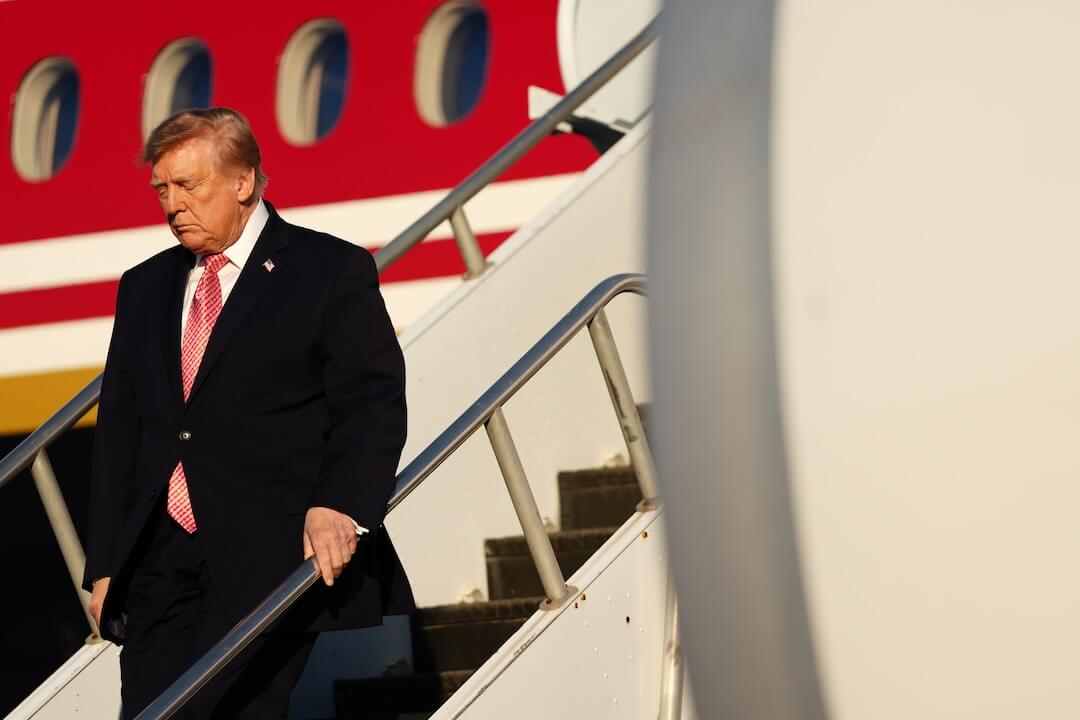
In his correspondence with the Department of Justice, attorney Ted Boutrous—who serves as outside counsel for CNN, Politico, and MS NOW in their consolidated federal litigation—did not mince words. Boutrous explicitly demanded that the DOJ provide official written confirmation by Thursday evening guaranteeing that the administration will "abandon any policy of excluding CNN from the Oval Office and Air Force One." Failing this assurance, CNN stands poised to petition the federal judiciary for contempt proceedings, injunction enforcement, or supplementary legal remedies.
The Department of Justice maintained a calculated silence, declining all press inquiries for comment regarding the ultimatum.
Meanwhile, the executive branch’s broader communications strategy has been championed by White House Communications Director Steven Cheung. When pressed by national outlets regarding the administration’s long-term plans to potentially dismantle the press briefing room and alter structural media access, Cheung offered a guarded, non-committal response:
"All options remain on the table, and we will make an announcement when appropriate."
This calculated ambiguity extends to the management of daily press operations. By seizing the administration of the press pool—a function historically administered independently by the White House Correspondents’ Association—the administration has operationalized access as a reward-and-punishment mechanism. Outlets critical of executive policies find themselves relegated or barred entirely, while friendly digital creators, nonpartisan niche sites, and conservative podcasting networks are ushered into newly created "new media" seats and secondary TV slots.
Future Outlook: The Symbolic and Practical Implications for Journalism
The converging crises of physical access bans and architectural threats to the press room signal a deeply precarious era for American political journalism.
Should the administration follow through on President Trump’s persistent ambitions to tear out the press briefing room—a space originally constructed as an indoor swimming pool by Franklin D. Roosevelt before Richard Nixon converted it for journalistic use—the move would carry monumental symbolic weight. The proximity of the press corps to the Oval Office has historically served as a tangible architectural monument to democratic accountability. Removing journalists from the West Wing perimeter entirely would formalize an adversarial divide, pushing the Fourth Estate further into the periphery of government operations.
On the immediate legal front, Thursday evening’s deadline represents a pivotal inflection point. If the Department of Justice fails to provide assurances that CNN will be readmitted to Air Force One and Oval Office pool rotations, federal courts will likely be forced to adjudicate the boundaries of executive discretion versus constitutional protections against viewpoint discrimination.
As traditional media outlets battle for physical access in the nation’s capital, the broader information ecosystem continues to fragment. With younger and more diverse audiences migrating en masse to algorithmic platforms like TikTok, the ongoing marginalization of institutional journalism risks deepening public cynicism, polarization, and a fundamental erosion of shared, verified facts concerning executive power.