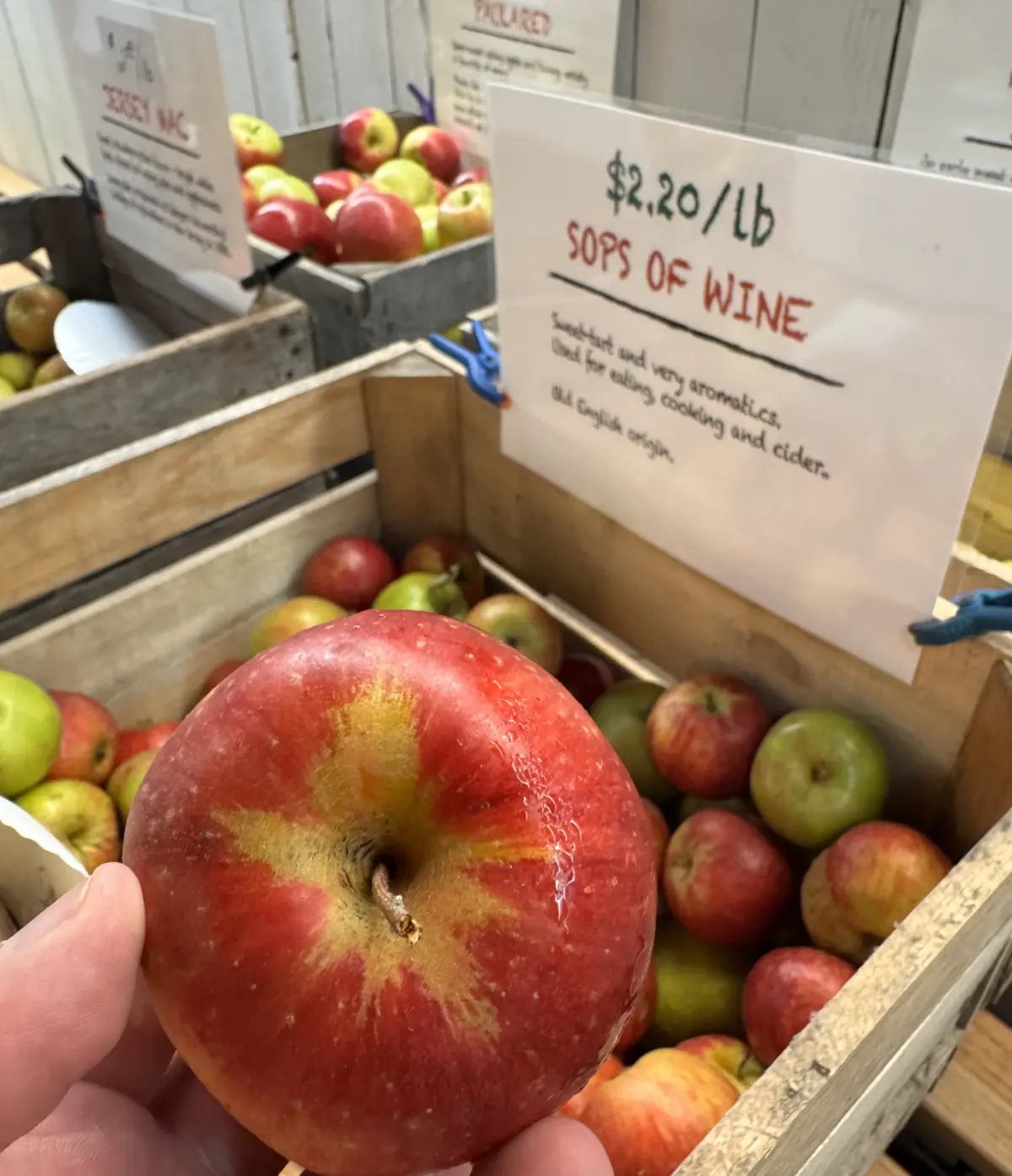
The ongoing seasonal pomological evaluation—colloquially championed by the burgeoning digital collective of the "Apple Snack Gang"—has entered its critical second phase. Following an initial batch of fruit profiles, this latest audit casts a discerning eye across seven distinct apple varieties: Kickapoo Spice, St Edmunds Pippin, Sops of Wine, Fenceline Surprise, Americus Crab, Campfield (False?), and the muscular Graham.
Conducted through a rigorous lens of sensory analysis, historical contextualization, and uncompromising taste-testing, this report highlights the erratic nature of contemporary orchard yields. Findings range from the botanical triumph of the St Edmunds Pippin to the structural disaster of the Fenceline Surprise. As the industry braces for an influx of regional harvests from New York, New England, and cross-border Canadian territories, this comprehensive review synthesizes the highs, lows, and outright biochemical anomalies of the current pomological landscape.
1. Executive Overview
Pomology, the science of fruit cultivation, rarely intersects with the unvarnished, visceral theater of modern snack-journalism. Yet, the ongoing evaluation of seasonal cultivars provides crucial data points for consumers and horticulturists alike. The central thesis of the current audit is clear: the modern consumer navigates a culinary minefield where historical legacy, storage duration, and genetic expression collide in unpredictable ways.
During this reporting period, evaluators analyzed seven specific apple cultivars. The metrics evaluated include structural density, skin texture, aromatic profile, moisture retention, and post-consumption aftertastes.
Cultivar Name
Primary Flavor Notes
Structural Integrity
Assigned Score (/10)
Kickapoo Spice
Nutmeg, cinnamon, clove, cut grass
Dense, unjuicy
6.9
St Edmunds Pippin
Fennel pollen, herbal, tart-sweet
Crisp, sharp-breaking
8.3
Sops of Wine
Vanilla, spice, subacid
Mealy, gritty
3.5
Fenceline Surprise
Faint pear mist
Mushy, sandy
1.0
Americus Crab
Savory, high tannin, tough
Rigid, unyielding
2.5
Campfield (False?)
Tannic, overly sweet
Chewy, industrial
4.1
Graham
Unmistakable Juicy Fruit gum
Glacier-hard, ultra-dense
8.0
The data reveals a stark bifurcation in fruit quality. While heritage varieties such as the St Edmunds Pippin and the eccentric Graham deliver exceptional, albeit physically demanding, sensory experiences, modern or mistreated specimens like the Fenceline Surprise demonstrate the catastrophic effects of premature harvesting and suboptimal cold storage.
2. Detailed Chronology and Cultivar Profiles
To understand the trajectory of the 2026 apple season, one must examine each cultivar on an individual basis. The following breakdown chronicles the physical encounters, aromatic discoveries, and quantitative ratings assigned to each specimen during the recent evaluation cycle.
Kickapoo Spice: The High-Spice Contender
The evaluation commenced with the Kickapoo Spice, a cultivar whose nomenclature immediately evokes nostalgic cultural touchstones. Physically characterized as a "dense boy" and a "weird friend," this apple prioritized aromatic pungency over raw hydration.
Sensory Profile: The spice component dominated the tasting notes, registering heavy concentrations of nutmeg, supported by secondary waves of cinnamon and clove. True to its taxonomic descriptor, the spice profile was authentic.
Flaws and Anomalies: The specimen demonstrated a total lack of juiciness. Furthermore, an unexpected aftertaste reminiscent of freshly cut grass lingered on the palate. Horticulturists note that such defects often stem from improper storage timing—some apples mature off the tree, while others experience rapid degradation post-harvest.
Verdict: Despite its shortcomings in moisture, the Kickapoo Spice remains an intellectually engaging fruit, earning a respectable 6.9 out of 10.
St Edmunds Pippin: The Gold Standard of the Season
As the first "proper" apple consumed in the early seasonal window, the St Edmunds Pippin set an exceptionally high benchmark.
Tactile and Auditory Experience: The skin possessed a rough texture, playfully compared to tactile encounters with marine wildlife. However, upon biting, the fruit delivered an explosive pop and crunch, satisfying structural expectations.
Flavor Complexity: Far from a one-note sweetness, the St Edmunds Pippin offered a complex, herbal profile characterized by distinct fennel pollen vibes, balanced harmoniously by a sharp-breaking tartness.
Verdict: Achieving an elite score of 8.3 out of 10, this cultivar represents the pinnacle of balance between traditional funk and modern crispness.
Sops of Wine: Historical Echoes and Textural Disappointment
The Sops of Wine introduced psychological elements into the sensory audit, invoking historical and literary phantasms within the taster’s consciousness.
Aromatics and Genetics: While bearing promising flavor notes of vanilla and subtle spice—classified by pomologists as "subacid" (more sweet than tart)—the fruit suffered from a deeply compromised texture, described as mealy and gritty due to excessive post-harvest aging.
Taxonomic Confusion: Historical accounts of the Sops of Wine vary wildly. Some botanical texts describe red-fleshed specimens or white flesh streaked with crimson, while others suggest the name acts as an umbrella term for several disparate heritage types.
Verdict: Hampered by structural breakdown, the Sops of Wine finished with a disappointing 3.5 out of 10.
Fenceline Surprise: A Masterclass in Botanical Failure
If the St Edmunds Pippin represents triumph, the Fenceline Surprise embodies tragedy.
Texture and Taste: Marketed cryptically on signage as a "firm apple," the reality was a stark contrast. The fruit offered a bland, mushy consistency accompanied by a fleeting, ghostly mist of pear flavor that evaporated almost instantly. The enduring mouthfeel was likened to chewing beach sand.
Pathology: Analysts concluded the specimen was likely subjected to cold storage long past its expiration date, transforming a theoretically sound fruit into biological detritus.
Verdict: Awarded a near-zero score of 1.0 out of 10, surviving solely on the aesthetic grace of its name and appearance.
Americus Crab: The Industrial Curio
Stepping outside the realm of casual table fruit, the Americus Crab introduced the audit team to the formidable world of crabapples.
Culinary Utility: Possessing a robust, steampunk-adjacent nomenclature, the Americus Crab is fundamentally unsuited for casual, out-of-hand consumption.
Chemical Composition: The fruit is aggressively savory, intensely tart, physically tough, and overloaded with natural tannins. It is a product engineered for culinary processing, cider-making, or daring ingestions rather than routine snacking.
Verdict: For the specialized consumer willing to brave its defenses, it registers as a 2.5 out of 10.
Campfield (False?): The Puritan Legacy
Labeled cautiously with the modifier "(false)," the Campfield presented an enigma wrapped in tannins.
Mastication and Chemistry: Evaluated as a chewy, callus-textured experience, the Campfield delivered an excessive sweetness counterbalanced by an overwhelmingly high tannin concentration, creating the uncanny sensation that the fruit was consuming the consumer. As a recognized cider apple, this aggressive astringency is chemically appropriate.
Historical Provenance: Archival research links the Campfield name to Matthew Canfield, an anti-royalist Puritan arriving from England in 1637 during the Great Puritan Migration. Canfield’s historical footprint spans New Haven, Norwalk, and Newark—where his municipal duties famously included evaluating swine damage, examining fences, and mandating the cultivation of four-acre fruit tree plots.
Verdict: As a table fruit, it earns a 4.1 out of 10, though its historical lineage commands profound respect.
Graham: The Jaw-Smashing Phenom
The final contender, the Graham, pushed human mastication to its absolute biological limits.
Structural Integrity: The Graham was so dense and hard that evaluators seriously considered its potential to induce temporomandibular joint (TMJ) disorders. Breaking like a calving glacial shelf, it demanded extraordinary force.
The Flavor Revelation: Upon successfully breaching its armor, the fruit delivered an astonishing, unadulterated flavor profile: authentic, straight-up Juicy Fruit gum.
Verdict: This surreal sensory reward elevated the Graham to an 8.0 out of 10, narrowly missing top honors due to the sheer dental hazard involved in its consumption.
3. Supporting Context and Pomological Metrics
The evaluations underscore a vital truth of modern fruit consumption: the lifecycle of an apple is an ephemeral, highly volatile window. Factors influencing the 2026 ratings include:
Storage Pathology: The delta between an optimal harvest date and consumption day directly correlates with the proliferation of mealy textures (as seen in the Sops of Wine) or sand-like degradation (exemplified by the Fenceline Surprise).
Tannin Concentrations: Varieties designed for industrial cider production—such as the Campfield and Americus Crab—possess defensive biochemical profiles rich in tannins, making them hostile to uninitiated human palates.
Genetic Drift and Nomenclature: Historical mislabeling and umbrella categorization continue to plague heritage orchards, complicating efforts to trace lineage back to foundational colonial figures.
4. Official Statements and Future Outlook
As this phase of the audit concludes, the broader pomological community looks toward the immediate horizon. The evaluation team has officially announced an expansion of fieldwork, with upcoming expeditions scheduled across New York, New England, and Canadian provinces.
In an official statement released ahead of the upcoming travel itinerary, leadership confirmed:
"Given the geographic target of our upcoming expeditions next week, consumers can rest assured that we intend to aggressively sample regional harvests. Members of the public and orchard proprietors are formally invited to consult appearance schedules and participate in the ongoing exchange of domestic pomological specimens."
The upcoming cross-border phase promises to introduce new variables into the data set, testing whether northern climates can yield cultivars that surpass the structural resilience of the Graham while avoiding the pitfalls of the Fenceline Surprise.
5. Conclusion
The 2026 seasonal apple audit serves as both a celebration of agricultural heritage and a cautionary tale regarding supply chain timing. From the herbal brilliance of the St Edmunds Pippin to the confectionery shock of the Graham, the season proves that apples remain one of nature’s most unpredictable and fascinating canvases. As the audit moves into its northeastern and Canadian phases, consumers are reminded to approach unverified orchard offerings with equal parts curiosity, historical awareness, and dental insurance.