

Executive Overview
The autumn harvest of 2026 has brought with it an unprecedented wave of pomological scrutiny. As orchards reach peak yield across North America, consumers and connoisseurs alike are navigating an increasingly complex landscape of heirloom varieties, experimental hybrids, and cider-grade specimens masquerading as table fruit.
In this second installment of our comprehensive seasonal review, we turn a critical eye toward a fresh batch of seven distinct cultivars. From the heavy nutmeg profile of the Kickapoo Spice to the jaw-shattering resilience of the Graham, this investigation examines the structural integrity, flavor profiles, historical anomalies, and overall gastronomic viability of today’s market.

While certain varieties—such as the St. Edmunds Pippin—continue to set high standards for balance and texture, others have exposed alarming inconsistencies in supply chain longevity, storage decay, and culinary deception. This report synthesizes sensory evaluations, historical archives, and structural metrics to provide the definitive assessment of the current pomological climate.
Detailed Chronology of the Tasting Trials
The evaluation process followed a rigorous, multi-stage protocol designed to test each apple under optimal conditions shortly after acquisition. The tasting timeline encompassed structural inspection, skin-to-flesh resistance testing, olfactory profiling, and secondary aftertaste assessment.

1. Kickapoo Spice
- Initial Impression: Compact, dense architecture accompanied by an immediate evocation of classic American folk-rock iconography.
- Sensory Profile: Exhibiting a remarkably high spice component dominated by heavy notes of nutmeg, supported by secondary layers of cinnamon and clove. Juiciness was notably absent; instead, the flesh yielded a dry, herbaceous aftertaste reminiscent of freshly cut turf.
- Maturity Analysis: Pomological indicators suggest the specimen suffered from improper post-harvest storage duration. The dichotomy between tree-ripened potential and retail degradation remains a persistent variable in heritage fruit distribution.
- Rating: 6.9 / 10
2. St. Edmunds Pippin
- Initial Impression: The inaugural seasonal sample set a formidable benchmark, presenting an aggressively textured exterior described colloquially as "like licking a shark backward."
- Sensory Profile: Upon breaching the skin, the fruit delivered an audible, sharp-breaking pop, yielding a crisp, exceptionally juicy interior. Flavor notes leaned herbal, carrying distinct fennel pollen undertones harmonized by a robust natural sweetness.
- Maturity Analysis: A masterclass in balancing high acidity with complex sugars. Despite its rough exterior, the internal mechanics represent peak seasonal health.
- Rating: 8.3 / 10
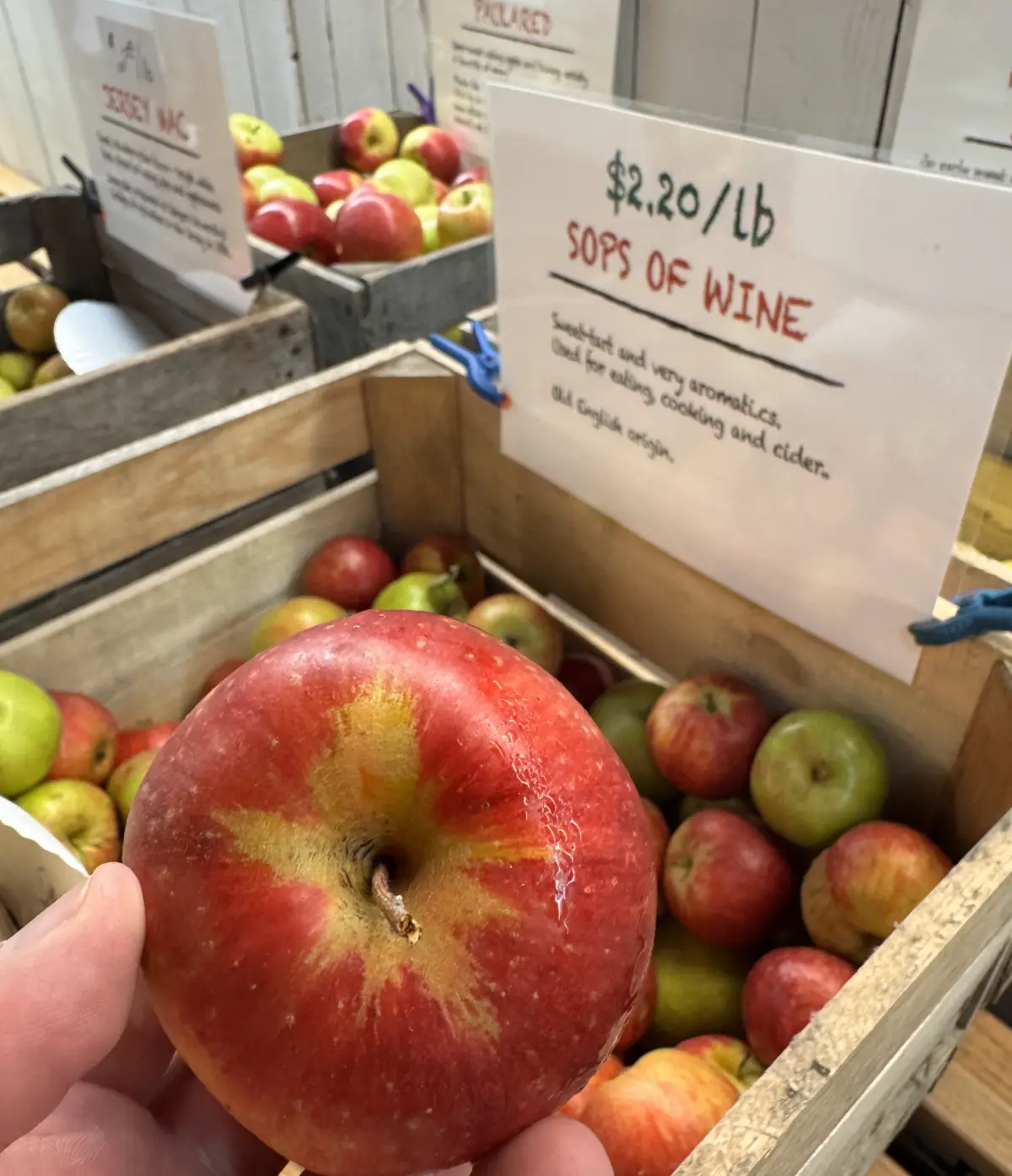
3. Sops of Wine
- Initial Impression: Plagued by persistent auditory associations with cinematic tragedy, this cultivar immediately conjured historical weight and literary drama upon inspection.
- Sensory Profile: While olfactory and flavor indicators promised a sophisticated subacid profile—notable for subtle vanilla and spiced accents—the physical structure was severely compromised. The texture registered as mealy, gritty, and structurally advanced toward breakdown.
- Maturity Analysis: Confusion persists regarding the taxonomy of the Sops of Wine moniker, which frequently serves as a catch-all umbrella for diverse historical iterations rather than a singular genetic lineage.
- Rating: 3.5 / 10
4. Fenceline Surprise
- Initial Impression: A linguistic curiosity inviting French pronunciation, yet delivering an unmitigated sensory disappointment.
- Sensory Profile: The flesh offered a bland, mealy consistency with a fleeting, ghost-like whisper of pear juice before dissolving entirely into a sensation akin to masticating beach sand.
- Maturity Analysis: Marketed ostensibly as a "firm apple," empirical testing confirmed advanced cellular collapse, suggesting the fruit was well past its biological expiration date prior to retail placement.
- Rating: 1.0 / 10
5. Americus Crab
- Initial Impression: Evocative of turn-of-the-century speculative fiction or localized vigilante justice, this botanical outlier demands respect based purely on nomenclature.
- Sensory Profile: As a true crabapple, it rejects conventional culinary consumption. The profile is intensely savory, aggressively tart, highly tannic, and structurally unforgiving.
- Maturity Analysis: Strictly unsuited for raw, out-of-hand consumption by the uninitiated, reserving its utility for adventurous culinary alchemists.
- Rating: 2.5 / 10
6. Campfield (False?)
- Initial Impression: Labeled enigmatically with the caveat "(false)," this specimen provoked immediate suspicion regarding its authenticity and genetic pedigree.
- Sensory Profile: A chewy, callused tactile experience. The flavor profile exhibited an overabundance of sugar balanced abruptly by punishing tannin levels that created an astringent, bi-directional mouthfeel.
- Maturity Analysis: Officially recognized as a dedicated cider apple rather than a table fruit, its chemical composition demands cellular alteration via fermentation before human consumption is advisable.
- Rating: 4.1 / 10
7. Graham
- Initial Impression: Impossibly dense and structurally reinforced, presenting a physical challenge capable of testing the limits of human dentition.
- Sensory Profile: Biting into the Graham resembled the physical dynamics of a calving glacier. However, the structural hostility yielded to a shockingly vibrant, unadulterated flavor profile bearing an uncanny resemblance to commercial Juicy Fruit chewing gum.
- Maturity Analysis: Exceptional juice-to-density ratio, though demanding significant mastication effort from the consumer.
- Rating: 8.0 / 10
Supporting Context & Metrics
To contextualize the sensory evaluations, we must examine the broader economic and agricultural factors governing the 2026 harvest. Heirloom and heritage orchards face mounting pressures from shifting climate patterns, labor shortages in specialized pruning, and consumer disconnect regarding cider varieties versus table fruit.
| Cultivar Name | Primary Flavor Notes | Texture Rating (1-10) | Structural Integrity | Recommended Use |
|---|---|---|---|---|
| Kickapoo Spice | Nutmeg, Clove, Cut Grass | 5.0 | Dense / Dry | Baking / Spice Infusion |
| St. Edmunds Pippin | Fennel Pollen, Bright Herbal | 9.0 | Crisp / Juicy | Fresh Consumption |
| Sops of Wine | Vanilla, Subacid Spice | 3.0 | Mealy / Gritty | Historical Curiosity |
| Fenceline Surprise | Faint Pear Whisper | 1.5 | Mushy / Sandy | Avoid |
| Americus Crab | Savory, Tart, Tannic | 4.0 | Tough / Woody | Culinary / Processing |
| Campfield (False) | Astringent Tannins | 3.5 | Chewy / Dense | Cider Production |
| Graham | Juicy Fruit Gum | 9.5 | Rock-Solid | Fresh / Novelty |
The data indicates a stark divergence in modern orchards: while heritage preservation efforts are successfully reviving rare genetic strains, the lack of standardized post-harvest guidelines for non-commercial cultivars leads to dramatic inconsistencies in consumer experience.

Official Statements & Historical Archives
The historical record surrounding heritage orchards often provides more color than modern agricultural manifests. Of particular note during this audit is the provenance of the Campfield apple, whose genealogical roots trace deep into the foundational era of American colonial history.
Historical documentation regarding the Campfield lineage highlights the stringent municipal requirements placed upon early New Haven and Newark landholders:

"He pays his portion toward the erection of a corn mill in town and buys ‘three barrels of good cider made of winter fruit,’ and he represents the general court continuously for twelve years where he’s a judge and a collector of customs… [requiring] that he plant all but one of the four acres in fruit trees."
This archival evidence underscores an inconvenient truth modern consumers frequently overlook: many heirloom apples currently sampled at seasonal markets were never engineered for pleasant, raw snacking. They were biological engines designed to fuel the colonial cider economy, optimized for alcohol conversion, tannic backbone, and winter preservation rather than immediate sweetness.

Future Outlook
As the pomological community looks toward the remainder of the 2026 harvest season, attention shifts northward. Upcoming field expeditions into the orchards of New York, New England, and Canada promise to unearth further anomalies, regional variations, and potential market disruptors.
Key trends to monitor in the coming quarters include:

- The Rise of Heritage Fermentation: Increased consumer interest in single-varietal hard ciders is expected to drive demand for historically neglected varieties like the Campfield and Americus Crab, rescuing them from table-fruit obscurity.
- Storage Protocol Modernization: The stark drop-off observed in cultivars like Fenceline Surprise and Kickapoo Spice highlights an urgent need for optimized cold-chain logistics tailored specifically to heirloom physiology.
- Consumer Education Initiatives: Bridging the gap between aesthetic appeal (such as the deceptive allure of the "false" Campfield or the striking geometry of the Graham) and functional utility will be paramount for orchardists bringing rare stock to market.
The 2026 apple season has proven that the intersection of history, agriculture, and sensory evaluation remains as unpredictable as it is rewarding. As the audit moves into its next regional phase, consumers are advised to approach every unfamiliar moniker with equal parts curiosity and caution.