

Executive Overview
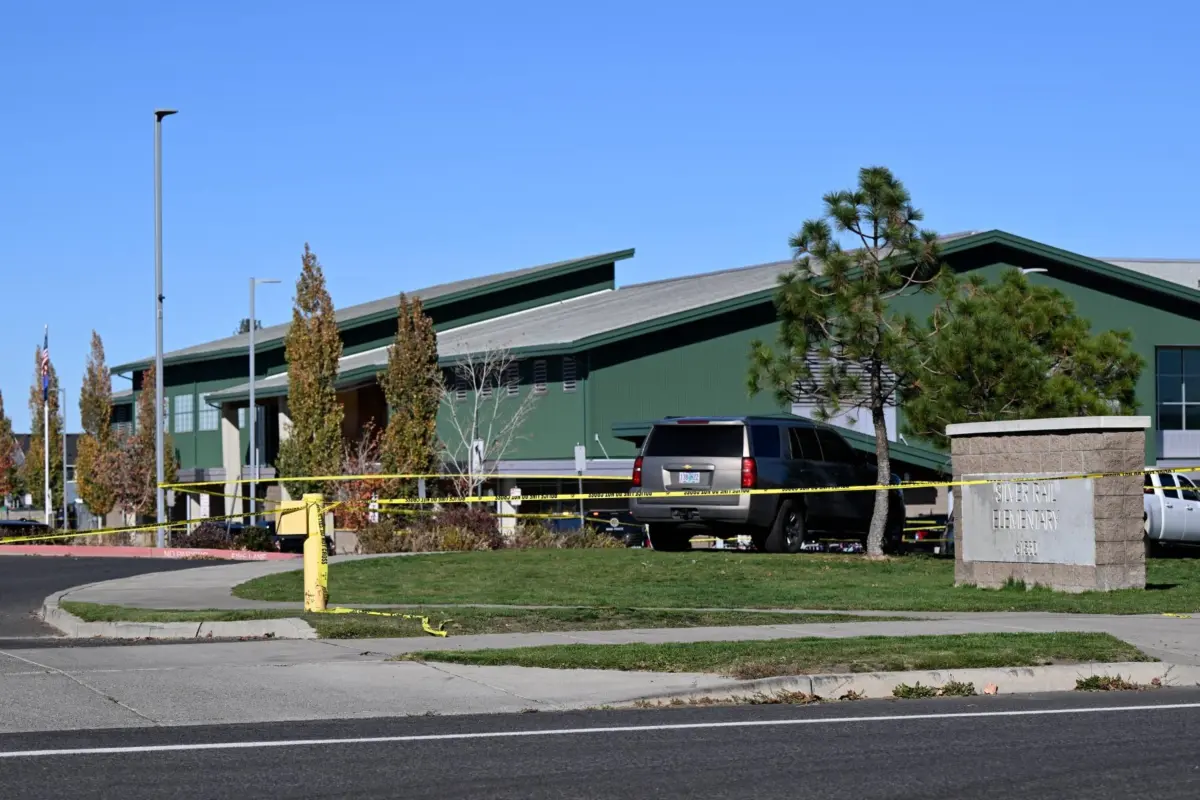
BEND, Ore. — In what has become an agonizingly familiar yet deeply shocking American tragedy, a Thursday afternoon shooting at Silver Rail Elementary School left four people dead and two others fighting for their lives. The horrific incident, which unfolded in the typically tranquil Central Oregon city of Bend, claimed the lives of three children—aged five, eight, and eleven—and one adult teacher.
The 16-year-old male suspect, a local resident armed with a long gun, was fatally shot at the scene by an armed community member who bravely intervened as the rampage began. According to local law enforcement, the rapid response of both the unidentified armed bystander and responding police units likely prevented an even higher death toll at the campus, which was immediately thrown into chaos as the first shots rang out just moments before 1:00 p.m.
The attack has sent shockwaves through the Pacific Northwest and reignited nationwide debates surrounding school safety, youth access to firearms, and the complex dynamics of armed intervention in active shooter scenarios. As investigators comb through digital footprints, witness accounts, and forensic evidence to piece together the motive behind the bloodshed, a grief-stricken community is left searching for answers. Local, state, and federal officials have mobilized resources to support the victims’ families, while leaders across the political spectrum grapple with yet another preventable loss of innocent lives in an educational sanctuary.
Detailed Chronology of Events
The sequence of events on Thursday, as detailed by Bend Police Chief Mike Krantz during a tense and emotional evening press conference, highlights a terrifyingly swift escalation from an ordinary school day to a mass casualty event.
The Initial Shots
The crisis began at approximately 12:58 p.m., when the Bend Police Department received a frantic 911 call. The caller, speaking from a moving vehicle, reported being targeted and fired upon multiple times by an individual brandishing a long gun near the perimeter of the Silver Rail Elementary School grounds.
Within seconds of the initial dispatch, emergency communications centers were flooded with a barrage of calls. Witnesses inside and outside the facility reported that an active shooter had breached the perimeter and entered the main school building.
The Lockdown and Intervention
At precisely 1:00 p.m., dispatchers issued an urgent tone alert to all local law enforcement officers, signaling an active shooter in progress. One minute later, at 1:01 p.m., school administrators and emergency coordinators officially directed Silver Rail Elementary to enter an immediate, full-scale lockdown—a protocol practiced in schools nationwide, though rarely tested under such brutal circumstances.
Simultaneously, a local community member who had witnessed the suspect’s initial assault near the parking area took decisive action. Recognizing the immediate threat to the children inside, the armed bystander pursued the 16-year-old suspect directly into the school building. A confrontation ensued, resulting in an exchange of gunfire in which the armed citizen fatally shot the teenage assailant, neutralizing the active threat before police units could breach the interior.
First Responder Arrival and Triage
First responders arrived at the scene mere minutes after the initial emergency calls. Officers swarmed the building, securing classrooms, evacuating traumatized students, and securing the perimeter.
Upon entering the designated hallways and classrooms, law enforcement and emergency medical services (EMS) encountered scenes of unimaginable devastation. Three children—identified by authorities only by their ages of five, eight, and eleven—alongside an adult faculty member, were pronounced dead at the scene. Two other victims, a seven-year-old child and a second teacher, were found with critical injuries. They were rapidly triaged and transported under police escort to regional medical facilities, where they remain in critical condition as surgical teams work around the clock.
Supporting Context & Metrics
The tragedy at Silver Rail Elementary underscores a grim statistical reality regarding gun violence, educational institutions, and youth radicalization or mental health crises in the United States.
The Anatomy of Modern School Shootings
According to data maintained by organizations tracking gun violence in America, school shootings have steadily risen over the past decade, leaving communities across the nation vulnerable. While mass casualty events frequently capture national headlines, the involvement of minor suspects—such as the 16-year-old perpetrator in this case—highlights a deeply concerning trend in juvenile access to high-powered firearms.
Investigators in Bend are currently examining how a minor acquired the long gun utilized in the attack. Under Oregon law, firearms must be securely stored away from minors, yet straw purchases, illicit trafficking, and unsecured domestic weapon caches remain major vectors for youth access to lethal armaments.
The Debate Over Armed Bystanders
The intervention by an armed community member at Silver Rail Elementary has injected new fuel into the polarized national conversation regarding "good guys with guns." Proponents of the Second Amendment and armed self-defense argue that civilian intervention in active shooter scenarios can reduce response times when seconds mean the difference between life and death. They point to the swift neutralization of the Bend suspect as a prime example of an armed citizen halting a mass casualty event before police could arrive.
Conversely, law enforcement and public safety experts frequently caution against civilian intervention, noting that armed bystanders can complicate police response, increase the risk of friendly fire incidents, and escalate chaos in high-stress environments. While Chief Krantz acknowledged the role played by the bystander in stopping the shooter, federal law enforcement agencies continue to emphasize that running, hiding, and fighting—in that order—remain the gold standard for civilian survival during active shooter incidents.
Official Statements & Community Response
The emotional fallout of the tragedy has reverberated from local city hall chambers all the way to the Oregon State Capitol, as leaders expressed profound sorrow and called for unity.
Chief Mike Krantz, Bend Police Department
During the Thursday evening press briefing, a visibly shaken Chief Mike Krantz addressed the public, balancing professional transparency with deep empathy for the grieving families.
"Please know that we are working hard to ensure that we conduct a thorough investigation," Krantz stated, addressing reporters and a stunned local populace. "This is a time that we know this deeply impacts the community. We ask everyone to lean on each other and be there for each other."
Krantz confirmed that the families of all victims—including the deceased children and teacher, as well as those critically injured—have been formally notified by death notification teams. Out of respect for the families and to protect the integrity of the ongoing multi-agency investigation, police withheld the names of the victims, the teenage suspect, and the armed bystander during the initial press conference.
Governor Tina Kotek
Oregon Governor Tina Kotek released a compassionate and resolute statement addressing the state following the massacre. The governor emphasized both the immediate need for collective mourning and the inevitable reckoning over policy solutions to prevent future bloodshed.
"There is going to be time for answering all those questions we all have right now, and searching for more ways to prevent this from happening in the future," Governor Kotek said. "Pero for now, let’s hold each other close in grief and put as much love into the world as possible."
State agencies, including the Oregon Department of Education and the Oregon Health Authority, have deployed crisis response teams, grief counselors, and trauma specialists to Bend to assist students, teachers, and families grappling with the psychological scars of the event.
Future Outlook: Healing, Investigation, and Policy Reform
As the shockwaves of the Silver Rail Elementary shooting begin to settle into a painful reality, the city of Bend faces a long and arduous road to recovery. The immediate future will be defined by three critical pillars: the criminal investigation, community mental health support, and the broader policy debate.
The Continuing Investigation
The Bend Police Department, alongside the Federal Bureau of Investigation (FBI) and state crime laboratories, is executing a meticulous forensic review of the crime scene. Investigators are executing search warrants on the suspect’s digital devices, social media profiles, and home residence to uncover any potential manifesto, warning signs, or accomplices. While preliminary findings suggest the 16-year-old acted alone, authorities are leaving no stone unturned to determine whether warning signs were missed by peers, family members, or school counselors.
Psychological and Educational Recovery
For Silver Rail Elementary School and the wider Bend-La Pine Schools district, reopening classrooms will require an unprecedented mobilization of mental health professionals. School district officials have announced that classes will remain suspended while facilities undergo forensic cleaning and safety audits. When students do return, they will be greeted by grief counselors, therapy dogs, and enhanced security protocols designed to rebuild a sense of physical and emotional safety.
The Policy Horizon
In the halls of the Oregon Legislature and across national political forums, the Bend tragedy will undoubtedly serve as a catalyst for renewed legislative battles. Lawmakers are expected to re-examine state laws pertaining to secure firearm storage mandates, age restrictions on long gun purchases, and early-intervention mental health programs in public schools.
For now, however, the focus in Central Oregon remains fixed on the families who will never see their children come home from school, and a community forced to confront the harsh fragility of life in an era of unchecked gun violence. As the candles flicker outside Silver Rail Elementary, Bend stands united in sorrow, vowing to honor the memory of the lives lost on a dark Thursday afternoon.