

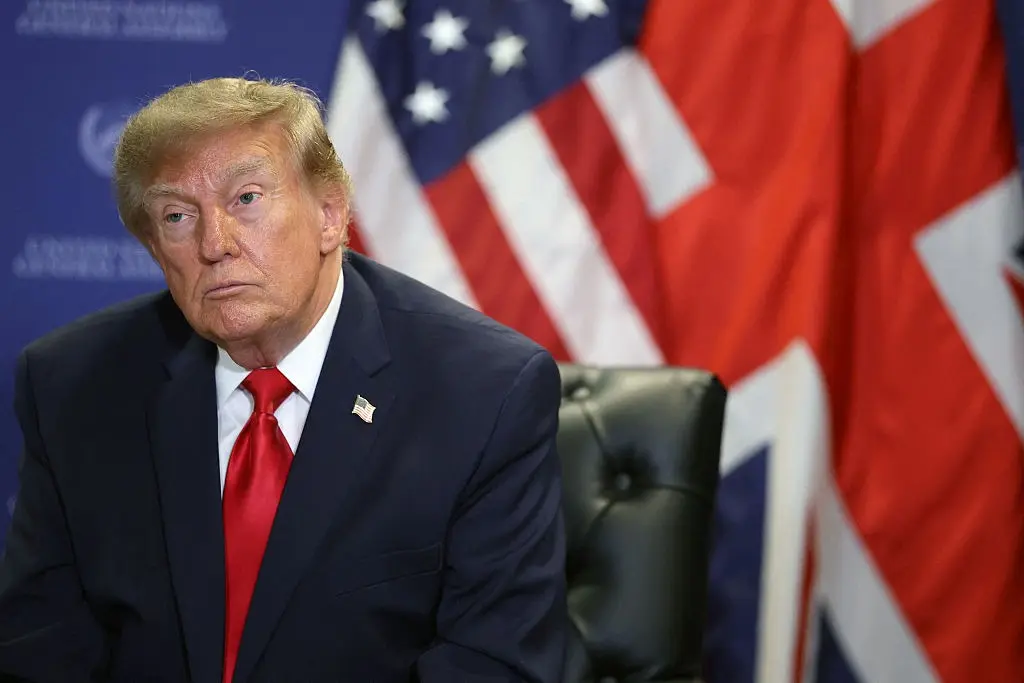
WASHINGTON — President Donald Trump confirmed on Saturday that he has formally rejected a comprehensive Iranian diplomatic proposal that would have secured the reopening of the critical Strait of Hormuz within seven days and initiated an immediate regional ceasefire.
The rejection comes 210 days into a grinding military conflict that has reshaped global energy markets, upended maritime trade, and dominated geopolitical discourse. It arrives on the heels of high-stakes diplomatic maneuvering at the United Nations General Assembly (UNGA) in New York, where Trump had publicly demanded that Tehran reopen the vital trade corridor or face total "annihilation."
Despite the president’s abrupt dismissal of the roadmap—delivered via regional intermediaries—indirect channels of communication remain open. However, intelligence and administration leaks suggest that the White House views the current diplomatic pause as a temporary measure, with expectations mounting that active military operations will resume following the upcoming November midterm elections.
Executive Overview
The rejection of Iran’s seven-day de-escalation plan represents a critical turning point in the protracted U.S.-Iran war. The proposed framework offered a pragmatic, rapid solution to one of the conflict’s most economically punishing choke points: the closure of the Strait of Hormuz, through which a vast share of the world’s petroleum is transported.
Under the rejected terms, Tehran proposed:
- A complete reopening of the Strait of Hormuz to international maritime traffic within one week.
- A verified regional ceasefire, pausing active combat operations across multiple theaters.
- The immediate initiation of comprehensive bilateral and multilateral negotiations.
In exchange, the Iranian government demanded verifiable relief from the crippling economic measures imposed by Washington, including the lifting of the U.S. naval blockade on Iranian ports, targeted sanctions relief, and unencumbered access to billions of dollars in frozen sovereign assets overseas.
Instead of seizing the diplomatic opening, President Trump summarily dismissed the overture. Speaking to reporters outside the White House, Trump offered a blunt assessment of the initiative: "They made a proposal, but I rejected it." The move undercuts his own aggressive rhetoric from earlier in the week at the UNGA, where he insisted he was seeking an immediate deal to stabilize international commerce or else prepare to obliterate Iran’s military infrastructure.
Detailed Chronology: From the UN Podium to White House Rejection
The breakdown of the latest diplomatic opening unfolded over a frantic week of back-channel negotiations and public posturing in New York and Washington.
The UNGA Showdown
At the United Nations General Assembly, President Trump utilized his address to project absolute authority, presenting Tehran with a stark binary choice: negotiate an immediate settlement that would permit national reconstruction, or face unprecedented military escalation.
"I have a big decision to make," Trump told world leaders, framing the choice as an ultimatum. He explicitly called on Iranian leadership to lift the closure of the Strait of Hormuz immediately, warning that failure to reach terms would invite catastrophic retaliation.
The Iranian Counter-Proposal
In response to public American pressure, Iranian Foreign Minister Abbas Araghchi, working alongside diplomatic mediators from Qatar and Oman, transmitted the seven-day roadmap to Washington. The proposal was designed to test whether the White House’s public demands for a reopening of the strait were genuine or merely a pretext for continued hostilities.
Iranian President Masoud Pezeshkian reinforced this diplomatic track during his address to the UN General Assembly. Pezeshkian signaled that while Tehran remained fundamentally open to a negotiated settlement, it would categorically refuse to submit to coercion or negotiate under the immediate threat of annihilation.
Mediated Diplomacy and Back-Channel Talks
Despite the public standoff, third-party mediators reported constructive engagements throughout the week. Secretary of State Marco Rubio characterized the indirect communications as notable, even as skeptical voices within the national security apparatus cautioned that substantial gaps remained between the two belligerents.
However, The Wall Street Journal first reported that U.S. officials understood the president’s posture to be uncompromising. According to leaked internal assessments, Trump indicated to close advisors that he anticipated holding off on major escalation until after the November midterms, while simultaneously planning for a renewed and intensified bombing campaign once the domestic political calendar cleared.
The "Trump Strait" and the White House "No"
Demonstrating his characteristic unorthodox communication style, President Trump took to Truth Social on Friday to share a heavily altered map of the Middle East, which relabeled the contested waterway the "TRUMP STRAIT."
By Saturday, any lingering ambiguity regarding the administration’s stance was cleared away when Trump officially confirmed to the press corps that the Iranian roadmap had been discarded. While low-level channels coordinated by regional partners remain technically active, the primary framework for ending the maritime blockade within a week has been decisively closed.
Supporting Context & Metrics: The Economic and Strategic Toll
The closure of the Strait of Hormuz, now entering its seventh month, has exerted a heavy toll on the global economy. As one of the world’s primary energy arteries, the waterway normally handles a significant percentage of globally traded petroleum liquids.
Macroeconomic Fallout
- Energy Market Volatility: The extended blockage has triggered sustained spikes in global crude prices, feeding inflationary pressures across Western economies.
- Supply Chain Disruption: International shipping firms have been forced to reroute vessels or suspend operations in the upper Persian Gulf, driving up maritime insurance premiums and cargo delivery times.
- Humanitarian and Economic Strain in Iran: The U.S. naval blockade and sweeping sanctions have severely restricted Iran’s import of vital medical supplies, industrial goods, and food staples, forming the core rationale behind Tehran’s urgent demand for asset unfreezing and port access.
Strategic Calculations Ahead of Midterms
Political analysts note that the timeline of the conflict is increasingly intersecting with domestic American politics. With the November midterm elections fast approaching, the White House appears sensitive to the political optics of major foreign policy shifts. Reports that the administration is eyeing a post-election intensification of military operations suggest that foreign policy decisions are being weighed against domestic electoral cycles, a dynamic that Tehran’s leadership has sought to exploit through timed diplomatic initiatives.
Official Statements and Diplomatic Posture
The divergence between public rhetoric and private decision-making has left international observers parsing the statements of key stakeholders:
- President Donald Trump: Maintaining his dual-track approach of maximalist pressure combined with intermittent openness to deals, Trump’s public statements have oscillated between threats of total destruction and claims that a comprehensive agreement remains possible at a later date. His Saturday confirmation—"They made a proposal, but I rejected it"—underscores his preference for terms dictated entirely on American conditions.
- Iranian Foreign Ministry (Abbas Araghchi): Emphasizing Tehran’s compliance with diplomatic norms, Araghchi confirmed that the comprehensive framework was delivered via trusted intermediaries. Iranian officials maintain that they are awaiting a formal, written U.S. response, asserting that the ball remains in Washington’s court.
- President Masoud Pezeshkian: In his UNGA address, Pezeshkian drew a hard line against capitulation. By stating that Iran values diplomacy but rejects coercion, the Iranian administration has sought to frame any future escalation as a consequence of American intransigence rather than Iranian refusal to negotiate.
- Secretary of State Marco Rubio: Navigating the delicate balance of administration messaging, Rubio has acknowledged the significance of back-channel talks facilitated by Gulf partners, while backing the president’s hardline stance on regional security enforcement and maritime freedom.
Future Outlook: What Lies Ahead After 210 Days of War
As the conflict passes its 210-day milestone, the rejection of the seven-day reopening plan locks the United States and Iran into a dangerous holding pattern.
- Continued Maritime Hazard: The Strait of Hormuz will remain effectively closed or heavily contested, keeping energy markets on edge and ensuring that shipping costs remain elevated.
- Increased Risk of Miscalculation: With formal peace paths temporarily blocked and military assets postured for potential post-midterm escalation, the risk of accidental kinetic engagement between U.S. naval forces and Iranian patrols in the Gulf is at an all-time high.
- The Post-Midterm Horizon: All eyes will turn to the domestic political calendar in the United States. If internal administration reports hold true, the weeks following the November midterms could witness a sharp resurgence in aerial bombardment and naval skirmishing, rendering the current diplomatic stalemate merely the prelude to a more violent phase of the conflict.
For now, the overarching question raised by Iran’s overture—whether a rapid, negotiated peace was attainable—has been answered in the negative. The protracted war in the Middle East grinds on, governed less by strategic roadmaps and more by the unpredictable calculus of the Oval Office.