

Executive Overview
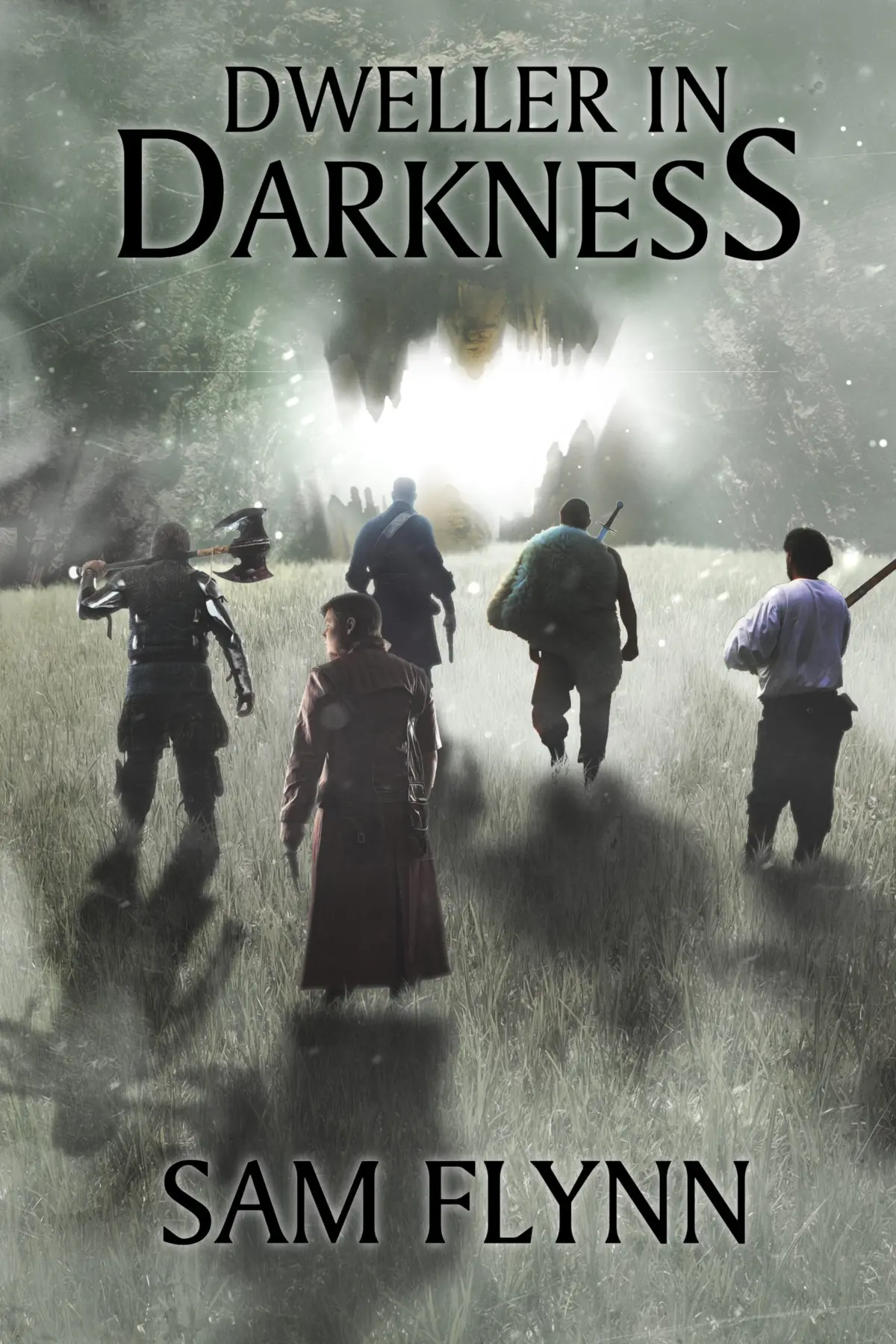
The landscape of modern dark fantasy and cosmic horror is shifting, making room for lean, atmospheric narratives that prioritize existential dread over bloated worldbuilding. At the vanguard of this literary movement is author Sam Flynn, whose critically acclaimed Deadlights Duology reaches its terrifying conclusion with the release of Dweller in Darkness (published by Timber Ghost Press).
Following the success of his debut novella, The Mystery of the Pale King—which earned a coveted spot on Grimdark Magazine’s best reads of 2024 list—Flynn returns with a continuation that trades traditional heroic tropes for a deeply personal, politically charged, and emotionally visceral descent into the abyss.
Set in the plagued realm of Hathur, Dweller in Darkness follows sixteen-year-old Cassius Marius, a young man whose entire existence has been engineered by the Church of the Pale King. Destined to join the "Lightbringers"—seven youths sacrificed or sent to hunt a chthonic entity beneath the earth—Cassius’s journey shatters his worldview, pitting him against the very deity he was raised to worship. Behind the scenes, Flynn’s creative journey mirrors his protagonist’s rebellion. Conceived during a workshop at Futurescapes 2022 after abandoning a massive, doorstopper epic fantasy manuscript, the Deadlights Duology represents a masterclass in narrative efficiency, genre hybridity, and artistic resilience.
Detailed Chronology: From Concept to Catharsis
The genesis of the Deadlights Duology is a testament to the unpredictable nature of the creative process. To understand how Dweller in Darkness came to fruition, one must trace the trajectory of Sam Flynn’s writing career from grand ambition to focused, high-impact execution.
Phase 1: The Pivot from Epic to Intimate (Spring 2022)
For years, Flynn poured his energy into a sprawling, traditional epic fantasy novel—a common rite of passage for many speculative fiction writers. However, upon attending the Futurescapes Writers’ Workshop, reality set in. Industry agents and editors delivered a sobering truth: the contemporary traditional publishing market rarely takes chances on debut authors offering massive, multi-volume doorstopper manuscripts.
Facing this crossroads, Flynn found himself despondent yet spurred toward reinvention. During a pivotal comps class taught by literary agent Elizabeth Copps, students were challenged to reverse-engineer a story from a pair of comparative titles. Inspiration struck through serendipity. Flynn was concurrently reading Robert W. Chambers’ classic weird-fiction masterpiece The King in Yellow and had recently tumbled down a historical Wikipedia rabbit hole regarding Gilles de Rais, the medieval French nobleman and notorious serial killer. Both narratives converged on a mysterious, potentially occult play.
This unlikely pairing—The King in Yellow meeting Gilles de Rais—sparked the blueprint for what would become his dark fantasy-horror novellas. The hundreds of thousands of words spent on his previous epic fantasy were far from wasted; they served as the grueling engine training Flynn to write with newfound structural precision.
Phase 2: Building the World and the Box
With his thematic fuel secured, Flynn turned his attention to the mechanics of speculative worldbuilding. Rejecting the notion that realist literary standards apply to the extraordinary, Flynn emphasizes that speculative authors must first establish strict rules to orient the reader.
In Dweller in Darkness, this principle operates through character "misbelief." Protagonist Cassius Marius is raised to revere the Pale King and a historical namesake who, as readers soon discover, is an outright villain. By establishing a rigid baseline of societal indoctrination, Flynn sets up an inevitable psychological rug-pull. The protagonist’s growing awareness of the truth operates as a slow-acting poison, mirroring the very cosmic dread that defines the duology.
Phase 3: Writing Through the Political Turmoil (2024–2026)
Originally, Dweller in Darkness was not intended to follow its current narrative path. The structural blueprint of the sequel shifted drastically following the 2024 U.S. presidential election. Struck by a wave of societal rage, disgust, and collective fear, Flynn utilized the blank page as a therapeutic crucible.
The resulting narrative transformed into an intentionally angry story—an artistic exorcism designed to confront the authoritarian impulses of a world built on systemic deception. Rather than succumbing to nihilism, however, Flynn deliberately laced the dark fantasy with a bruised, stubborn romanticism: a flickering flame refusing to be extinguished by the surrounding dark.
Supporting Context & Metrics: The Anatomy of Cosmic Horror
To fully appreciate the cultural and literary weight of Dweller in Darkness, it is necessary to examine the structural pillars that support Flynn’s writing philosophy.
The Compendium of Influences
- Literary Lineage: Robert W. Chambers’ The King in Yellow (providing an aura of occult dread and unsettling art) meets the dark historical legacy of Gilles de Rais.
- Critical Reception: The Mystery of the Pale King established a high benchmark, recognized by Grimdark Magazine among the elite fantasy, horror, and science fiction releases of 2024.
- Publisher Partnership: Both novellas are proudly brought to market by Timber Ghost Press, an independent publisher carving out a vital space for dark, speculative fiction.
Narrative Mechanics Explored by Flynn
- Dread over Shock: Flynn argues that while horror relies on momentary disgust or startling shocks, true cosmic horror relies on sustained inertia. Drawing inspiration from ambient trip-hop pioneers like Massive Attack, he views dread as a force that creeps—an unstoppable recognition of human insignificance in an indifferent universe.
- The "Bead on the String" Theory: Storytelling momentum is visualized as a single bead sliding across a taut, horizontal string. The thematic axis (the X-axis of what a story is about) must intersect precisely with the emotional axis (the Y-axis of how a story feels). Speculative elements—monsters, institutional corruption, and apocalyptic world-states—function as physical manifestations of internal character conflicts.
- Character-Driven Worldbuilding: Rather than prioritizing lore dumps, Flynn anchors every macro-level societal structure to personal stakes. In Dweller in Darkness, the horrific tradition of sending seven Lightbringers underground is inextricably linked to Cassius’s own mother, bridging the gap between grand political machinery and intimate family tragedy.
Official Statements & Insights from the Author
In reflections on his creative evolution, Sam Flynn has spoken candidly about the intersection of sociopolitical realities and speculative fiction.
Addressing the core philosophy behind his latest release, Flynn notes:
"God-killing seemed a lofty ambition. Then again, is that not what we’re here to do in our hunt for the Dweller in Darkness?"
Expounding on the thematic necessity of imagination in contemporary fiction, Flynn offers a sharp critique of authoritarianism through an artistic lens:
"Fascists abhor creativity and art because imagination is anarchic. Imagination allows our minds to go anywhere we choose, inhabit anyone’s POV (empathy, another fascist weakness), and dream better worlds. Fascists have no imagination and their jealousy frustrates them to no end."
This ideological friction forms the beating heart of Dweller in Darkness. By turning the narrative lens toward institutional corruption and inherited dogma, Flynn transforms a supernatural monster-hunt into a metaphor for systemic liberation.
Future Outlook: What Lies Beyond the Pale
As Dweller in Darkness hits bookshelves and digital storefronts on September 22, the release marks a critical milestone for Sam Flynn’s burgeoning literary career. Having successfully transitioned from unpublished epic novelist to an award-nominated voice in dark fantasy and horror, Flynn demonstrates that artistic pivots are often the key to unlocking true creative voice.
For readers, the conclusion of the Deadlights Duology leaves a lasting impression on the modern weird-fiction landscape. It proves that novellas can pack the emotional and worldbuilding wallop of doorstopper volumes when executed with surgical precision. Looking forward, fans of Flynn’s work can anticipate further explorations into the macabre, anchored by the same uncompromising commitment to dread, psychological depth, and resilient hope.
Essential Links & Availability
- Author Platform: Sam Flynn’s Official Website | Patreon | Newsletter
- Dweller in Darkness (Releasing Sept. 22): Timber Ghost Press | Amazon | Goodreads
- The Mystery of the Pale King (Available Now): Timber Ghost Press | Bookshop.org | Amazon | Goodreads