

ST. PETERSBURG, Florida — In a move designed to directly confront the persistent talent retention and burnout crises sweeping through modern newsrooms, The Poynter Institute has officially released its complete slate of leadership training programs for 2027. By dropping its entire annual curriculum simultaneously rather than rolling out courses piecemeal, Poynter is offering media organizations and individual professionals an unprecedented, panoramic view of an entire career leadership track.
This strategic shift aims to help journalists, project managers, and media executives map out their professional trajectories years in advance. It allows prospective candidates to evaluate their current managerial competencies and select specific, highly tailored cohorts that align with their distinct organizational responsibilities and career aspirations.
The announcement comes at a precarious juncture for the global media ecosystem. As news organizations navigate the relentless headwinds of digital transformation, shifting revenue models, artificial intelligence integration, and polarized public discourse, the demand for resilient, empathetic, and strategically minded leadership has never been more urgent. Yet, for decades, the media industry has relied on an outdated default: promoting its best individual contributors—star reporters, sharp editors, and gifted producers—into management positions without providing them with the fundamental operational tools required to succeed.
Poynter’s 2027 curriculum seeks to dismantle that historical cycle of trial-and-error management, replacing it with a structured, people-first pedagogical framework built on over half a century of media instruction experience.
Executive Overview: A Paradigm Shift in Newsroom Management
For generations, the standard trajectory in journalism was straightforward: write compelling stories, edit copy efficiently, and eventually, if you stayed long enough, you were handed the keys to the department. Unfortunately, being a Pulitzer-winning investigative reporter or a master copy editor does not automatically equip someone with the skills needed to design performance reviews, manage difficult workplace conflicts, navigate corporate budgeting, or mitigate team burnout.
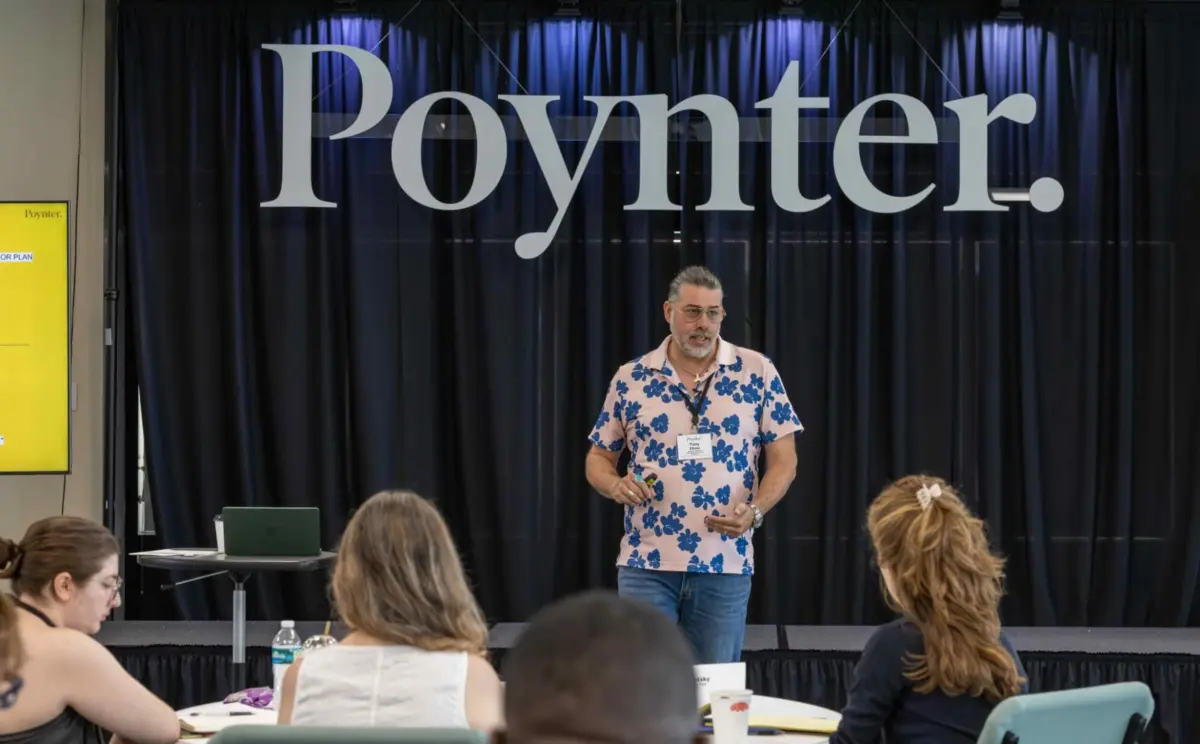
Tony Elkins, a veteran Poynter faculty member and leadership instructor who has personally trained approximately 500 journalists-turned-managers, argues that this oversight has long acted as a silent tax on the industry.
"I often joke that journalism punishes some of its best and brightest by making them managers," Elkins said. "We take people who become highly skilled in an area, and because we want to keep them in our organizations, give them a big raise and promotion, and with it the added responsibility of leadership. If you do not train them, it leads to burnout, animosity, and they might even leave."
Poynter’s 2027 catalog is built on the foundational premise that leadership is not an innate, mysterious trait reserved for a chosen few, but rather a teachable, refinable craft. By opening applications for all six distinct program iterations across its portfolio at once, the Institute is encouraging a holistic approach to organizational development. Rather than viewing professional development as a reactive patch applied during a crisis, media companies can now integrate Poynter’s curriculum into long-term human resources and retention strategies.
The Institute’s overarching methodology prioritizes empathy, active listening, and human-centric operational strategy over rigid, top-down corporate commands. In doing so, Poynter hopes to create a ripple effect that stabilizes newsrooms from the top down.
Detailed Chronology: The 2027 Curriculum and Program Breakdown
The 2027 schedule is meticulously organized to address distinct stages of professional maturity, ranging from individual contributors attempting to drive change without formal authority to senior executives overseeing massive multi-platform operations.
Below is the comprehensive chronology of Poynter’s 2027 leadership offerings, complete with programmatic scopes and critical application deadlines.
1. Lead With Influence (Virtual Program)
- Offered twice in 2027:
- Cohort 1: February 2 – March 9, 2027 (Application Deadline: January 8, 2027)
- Cohort 2: September 1 – October 6, 2027 (Application Deadline: July 9, 2027)
Program Scope:
Designed specifically as a six-week virtual intensive, Lead With Influence caters to project leaders, product managers, data analysts, and other media professionals who find themselves tasked with driving complex initiatives forward without direct reports or formal executive authority. In modern newsrooms, cross-functional collaboration is paramount; audience engagement teams must work alongside engineering, and commercial departments must coordinate with newsrooms.
Participants in this program explore their individual leadership styles, sharpen their interpersonal communication dynamics, and learn tactical methodologies for building consensus, persuading stakeholders, and securing buy-in across disparate organizational silos.
2. Essential Skills for New Managers (In-Person: St. Petersburg, Florida)
- Offered twice in 2027:
- Cohort 1: March 1 – 5, 2027 (Application Deadline: August 16, 2026)
- Cohort 2: November 8 – 12, 2027 (Application Deadline: December 7, 2026)
Program Scope:
Moving from a peer and colleague to a boss is one of the most psychologically jarring transitions in a professional’s career. This five-day immersive bootcamp is tailored for managers with up to three years of experience, as well as high-potential individual contributors who are actively preparing to step into their first formal supervisory roles.
The curriculum zeroes in on the operational bedrock of people management: mastering constructive feedback, effective delegation, baseline communication, and managing the delicate interpersonal dynamics of authority. A core differentiator of this program is its integration of evidence-based assessment frameworks, including the renowned CliftonStrengths evaluation and Poynter’s proprietary 360-degree feedback instrument, ViewPoynt, which provides participants with a holistic, confidential view of how their leadership style is perceived by superiors, peers, and direct reports alike.
3. Poynter Leadership Academy (In-Person: St. Petersburg, Florida)
- Dates: April 12 – 16, 2027 (Application Deadline: January 18, 2027)
Program Scope:
A flagship offering within the Institute’s portfolio, the Poynter Leadership Academy is an intensive, five-day residential program engineered for seasoned and senior managers who have logged more than three years in leadership positions. As managers graduate from fighting day-to-day tactical fires to steering long-term organizational strategy, their challenges shift dramatically.
This academy focuses on high-level strategic alignment, organizational culture design, institutional ethics, advanced personnel management, and navigating complex corporate transformations. It provides a confidential, highly collaborative sounding board where veteran leaders can deconstruct systemic industry challenges with peers facing identical pressures.
4. Leadership Academy for Women and Nonbinary Media Professionals (In-Person: St. Petersburg, Florida)
- Dates: May 3 – 7, 2027 (Application Deadline: February 8, 2027)
Program Scope:
Recognizing the enduring structural barriers, systemic biases, and cultural hurdles that persist within media leadership pipelines, Poynter’s Leadership Academy for Women is a transformative five-day immersive experience designed for experienced women and nonbinary managers with over three years of leadership tenure.
Beyond delivering advanced executive development instruction, the program establishes a uniquely supportive, candid peer network. Participants engage in deep-dive discussions addressing executive presence, negotiation tactics, career advancement, and strategies for dismantling institutional roadblocks, all while fostering a resilient community of changemakers dedicated to reshaping the broader journalism landscape.
Supporting Context & Metrics: Why Leadership Training is an Economic and Cultural Imperative
To view professional development merely as an employee perk is to fundamentally misunderstand its role in modern media economics. In an industry plagued by chronic financial tightening, layoffs, and historic attrition rates, leadership training functions as a vital risk-mitigation strategy.
When untrained managers are thrust into supervisory roles, the financial and human costs manifest rapidly. Miscommunication festers into toxic departmental culture; unclear expectations breed systemic inefficiency; and a lack of emotional intelligence from leadership drives top-tier talent out of the organization entirely—or worse, reduces them to disengaged shadow workers counting down the hours to resignation.
Tony Elkins emphasizes that investing in a single manager yields an exponential organizational return.
"By investing in training, you’re setting them up for success," Elkins explained. "And it’s not just for them. It cascades down to everyone they manage and even other teams they collaborate with."
When a manager learns how to conduct empathetic performance reviews, de-escalate workplace conflict, or protect their team’s bandwidth against scope creep, the psychological safety of the entire newsroom rises. Psychological safety, in turn, directly correlates with higher journalistic output, deeper investigative rigor, lower turnover costs, and more creative product experimentation.
Furthermore, media organizations that actively sponsor their staff to attend elite residential programs like those at Poynter signal a tangible commitment to internal mobility and employee well-being—a crucial differentiator in competing with big tech and corporate communications for top-tier intellectual capital.
Official Statements and Institutional Heritage
Drawing upon more than five decades of specialized experience in media education and institutional development, The Poynter Institute remains uniquely positioned to bridge the gap between academic theory and newsroom reality. The Institute’s faculty members are not career theorists isolated from the pressures of daily publishing; they are seasoned practitioners, executive coaches, conflict-resolution experts, and veteran journalists who deeply understand the rhythms and pressures of the deadline-driven media world.
Every program in the 2027 catalog is anchored in practical, experiential learning modules designed for immediate implementation upon a participant’s return to their newsroom. Just as importantly, the deliberate construction of closed-cohort learning environments fosters lifelong professional networks that often sustain participants through decades of industry upheaval.
Media Contact and Inquiries
For media organizations seeking institutional partnerships, group discounts, or individual journalists wishing to secure nomination and application details regarding the 2027 leadership catalog, inquiries can be directed to:
- Jennifer Orsi
Vice President, Publishing and Local News Initiatives
The Poynter Institute
Email: [email protected]
Future Outlook: Safeguarding the Future of the Free Press
The release of the 2027 leadership curriculum arrives at a critical inflection point for the global information ecosystem. As an international nonprofit organization, The Poynter Institute houses some of the most vital watchdogs and standard-bearers in modern media, including the International Fact-Checking Network (IFCN), PolitiFact, MediaWise, and the Newmark Ethics Center.
The health of these specialized entities—and indeed, the health of independent journalism writ large—depends entirely on the competence, integrity, and resilience of the people running the institutions. A free and robust press in a functioning democracy requires more than just courageous reporters; it requires visionary, stable, and deeply empathetic leaders who can protect newsroom independence, foster public trust, and steer complex corporate entities through turbulent financial waters.
By comprehensively mapping out the 2027 leadership track, Poynter is doing more than advertising upcoming educational workshops. It is laying down structural scaffolding designed to professionalize media management, professionalize newsroom culture, and ensure that the journalists of tomorrow are never left to navigate the complexities of leadership alone.
To explore individual course descriptions, review detailed prerequisites, or submit applications for the 2027 cohorts, visit the official Poynter Institute Leadership Training Portal.