

Executive Overview
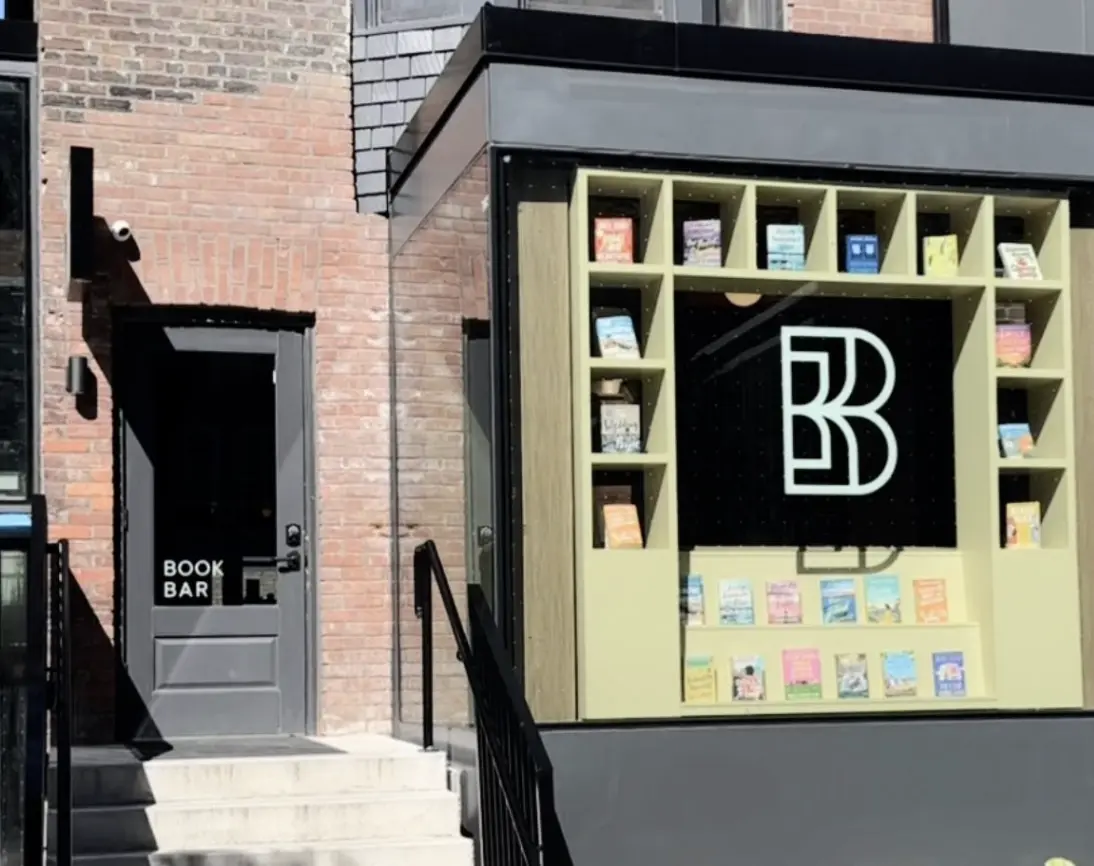
Nearly two months after its high-profile unveiling within Toronto’s newly redeveloped Mirvish Village, Book Bar—a novel, liquor-licensed bookstore—has rapidly morphed from a viral social media curiosity into a institutional anchor for the city’s literary community. Occupying a carefully restored, multi-level Victorian rowhouse, the establishment bridges the historically separate realms of independent bookselling and boutique hospitality.
Founded by hospitality veteran Tom Freeman and mental health professional Robin Storfer, the 2,600-square-foot concept addresses a changing post-pandemic urban landscape wherein consumers increasingly seek immersive, experiential "third places"—spaces separate from home and work that facilitate unstructured social connection. Despite early digital indicators suggesting that viral genres such as romance and fantasy would drive revenue, real-world foot traffic powered by the nearby University of Toronto and local publishing circles has established high-brow literary fiction as the store’s dominant commercial driver.
By securing a hybrid liquor license, curating high-profile author engagements, and implementing a strict "laptop-free" policy after 6:00 p.m., Book Bar has engineered an environment designed to combat modern digital fatigue. However, its rapid rise has not been without operational friction. From clearing up public confusion regarding its independence from similarly named American entities to educating patrons on how to navigate a hybrid retail-lounge ecosystem, Book Bar offers a compelling case study in contemporary urban retail, adaptive architectural reuse, and the enduring commercial viability of physical print literature.
Detailed Chronology: From Concept to Neighborhood Cornerstone
[Inception] ──> [Field Research & Mentorship] ──> [Site Selection & Design] ──> [Digital Buzz] ──> [Launch & Market Reality]
 Neighbours       NYC & Canadian Indie            Mirvish Village                 TikTok /         Literary Fiction Outpacing
 Conceptualize   Bookseller Research              Victorian Rowhouse              Bookstagram      Social Media Expectations
The Conceptual Spark
The origins of Book Bar date back to a series of informal conversations between neighbors Tom Freeman and Robin Storfer. Freeman, who possessed an extensive operational background in the city’s fast-paced hospitality sector, and Storfer, an ADHD-specialized mental health clinician, realized they shared a frustration with Toronto’s nightlife and retail offerings. Both sought a venue that combined intellectual engagement with a refined, relaxed social atmosphere—a space where one could enjoy a craft cocktail alongside a thoughtful novel without the noise of a conventional bar or the sterile quietude of a public library.
Research, Mentorship, and Canadian Precedents
Recognizing that hybrid retail concepts require precise execution, Storfer embarked on an extensive research tour. Her investigation led her to New York City’s East Village, home to Book Club Bar. Its founders, Erin Neary and Nat Esten, took on advisory roles, hosting Storfer during two research trips to break down operational mechanics, inventory turn rates, and beverage inventory management.
To ensure the concept felt organically tailored to the Canadian retail climate, Storfer conducted field studies across Ontario and British Columbia. She visited acclaimed independent booksellers, including:
- Blue Heron Books (Uxbridge, Ontario) – evaluating local community programming and curation.
- Cedar Canoe Books (Huntsville, Ontario) – analyzing small-footprint merchandising and regional inventory dynamics.
- Iron Dog Books (Vancouver, British Columbia) – examining operational efficiency in competitive urban markets.
Site Selection and Architectural Realization
With the business model finalized, the co-founders secured a prime 2,600-square-foot footprint within Westbank’s ambitious Mirvish Village development—a multi-block urban regeneration project occupying the historic site of the former Honest Ed’s department store.
The physical environment was entrusted to the Toronto-based interior architecture firm DesignAgency. Their challenge was to integrate modern hospitality infrastructure into a converted Victorian-era rowhouse. The resulting layout spans two floors:
- The Ground Floor: Features custom curved wooden shelving, warm architectural lighting, and a central polished stone bar servicing both beverage and book transactions.
- The Mezzanine ("The Green Room"): A versatile upper-level space designed with modular lounge furniture that converts into a 30-chair, theater-style auditorium for formal readings, lectures, and private gatherings.
Launch and Market Adjustment
Months prior to physical construction wrapping up, Book Bar built a formidable online presence. Content strategy focused on visual platforms like TikTok and Instagram—specifically targeting the "BookTok" and "Bookstagram" subcultures—generating widespread anticipation.
When the doors opened in late summer, operations managers anticipated an overwhelming rush on romance, young adult, and high-fantasy titles. However, sales metrics from the first eight weeks revealed a notable pivot: the surrounding neighborhood demographic shifted demand overwhelmingly toward contemporary literary fiction and backlist classics, prompting real-time inventory reallocations.
Supporting Context & Metrics: Market Dynamics and Demographics
               BOOK BAR FLOOR PLAN & METRICS
 _______________________________________________________
|                                                       |
|  [ GROUND FLOOR ]                                     |
|  - 2,600 Sq. Ft. Total Footprint                      |
|  - Curvaceous Custom Shelving & Retail Display        |
|  - Polished Stone Bar (Craft Cocktails & Espresso)    |
|  - Greeter Station for Customer Orientation           |
|_______________________________________________________|
|                                                       |
|  [ MEZZANINE: "THE GREEN ROOM" ]                      |
|  - Dual Lounge / 30-Chair Theater Event Layout        |
|  - Laptop-Free Enforcement After 6:00 PM             |
|_______________________________________________________|
Demographic Drivers and Realized Demand
Book Bar’s location inside Mirvish Village places it at the intersection of several distinct urban sub-populations:
- Academic Density: The proximity to the University of Toronto’s St. George campus brings a steady stream of faculty, graduate scholars, and undergraduate students.
- Publishing Sector Cluster: The surrounding Annex and Palmerston-Little Italy neighborhoods historically house a high concentration of editors, literary agents, authors, and media professionals.
- Residential Density: The newly constructed Mirvish Village residential towers bring thousands of new urban dwellers seeking walkable, localized entertainment.
This convergence explains why literary fiction has outstripped genre fiction. Assistant Operations Manager Daniel Roberts—a veteran of Toronto’s celebrated Book City chain—notes that local reading habits reflect the neighborhood’s academic and literary history rather than broad algorithmic trends online.
Expected vs. Actual Sales Performance (First 60 Days)

Genre/Category        Projected Demand    Actual Revenue Contribution
---------------------------------------------------------------------
Literary Fiction      Moderate            Primary Driver (Top Seller)
Romance/Fantasy       High (BookTok)      Secondary/Niche Demand
Non-Fiction/Academic  Moderate            Steady Baseline
Sideline Merch        Secondary           High Margin / Virality Driver
Hybrid Operational Metrics
Operating a dual-purpose establishment introduces unique economic advantages along with real-world spatial constraints:
- Footprint Efficiency: At 2,600 square feet, the footprint is optimized for high inventory turnover per square foot alongside premium profit margins generated by beverage service.
- Evening Monetization: Traditional bookstores experience a sharp decline in foot traffic after 5:00 p.m. By introducing a cocktail program and enforcing a laptop-free rule after 6:00 p.m., Book Bar converts retail shoppers into lingering hospitality patrons, boosting average transactional values (ATV).
- High-Margin Merch: Custom retail items account for significant organic marketing and profit. Standout items include:
- Custom Book Bar Candles: Infused with notes of vanilla, leather, and sandalwood.
- The "Book Boyfriend" Candle: Designed with masculine notes mimicking cologne and soft cotton.
- Branded Canvas Totes: Functioning as mobile street advertisements across the city.
Addressing Identity Confusion and Spatial Navigation
The hybrid model has also presented operational challenges. The store is frequently misidentified as an official expansion of New York’s Book Club Bar (which operates a second location in Bushwick, Brooklyn). Co-owner Robin Storfer has repeatedly clarified that Book Bar is an independent, original Canadian corporate entity with no cross-border equity ties.
Furthermore, consumer unfamiliarity with the hybrid retail-bar environment requires hands-on customer onboarding. Operations Manager Sarah Labrie—whose industry background includes executive roles at Kids Can Press, Penguin Random House, and Scholastic—established a greeting protocol at the front threshold. Staff actively educate patrons on spatial etiquette, clarifying that book inventory is for purchase, beverages may be carried throughout the store, and seating areas carry specific social expectations depending on the hour.
Official Statements & Perspective Analysis
On Retail Identity and Local Demographics
Daniel Roberts, Assistant Operations Manager, highlighted the dynamic between social media predictions and real-world sales patterns:
"It turns out that actually our biggest seller is still literary fiction… What makes a city vibrant isn’t the Harvey’s and the Wendy’s on the corner. It’s the mom-and-pop places. People know that, and they’re supporting us and they’re supporting books again. Books are cool. Books really are cool."
Roberts’s commentary underlines a broader shift in urban consumer sentiment. In a real estate market long dominated by corporate chains and high-rent commercial developments, consumers demonstrate a measurable preference for unique, localized retail concepts. Furthermore, Roberts uses the store’s social channels to promote forgotten or underrated literature, recently linking William Maxwell’s 1979 masterwork So Long, See You Tomorrow to fans of John Williams’s classic novel Stoner, reinforcing the store’s position as an authoritative curator.
On Space, Mentorship, and Conceptual Autonomy
Co-owner Robin Storfer emphasized the deep research phase and the critical distinction between inspiration and ownership:
"We would talk about how much we loved the idea of a good book, a good conversation and a good drink, but couldn’t quite find a place that brought all those things together… [Book Bar is] an independently owned and operated, original Canadian concept—not at all an extension of anywhere else."
Storfer’s insights reflect a methodical approach to retail design. By leveraging her background in mental health and ADHD treatment, she prioritized environmental factors—such as organic wood textures, clear physical pathways, and intuitive lighting—to create a physical environment that reduces sensory overload while encouraging focused reading and calm social interaction.
On Customer Behavior and Operational Mechanics
Operations Manager Sarah Labrie detailed the unique challenges of managing first-time visitors in a novel commercial space:
"Customers regularly ask whether the shelved books are for decoration, whether they can read one at a table and put it back, or take one home without paying. Our concept really is new to them."
Labrie’s observations underline how firmly separated retail and hospitality frameworks have traditionally been in the consumer mindset. Bridge concepts must actively retrain public behavior, using welcoming greeters to balance clear boundaries with an inviting atmosphere.
       OPERATIONAL STAKEHOLDERS & EXPERTISE
 ______________________________________________________
| STAKEHOLDER     | BACKGROUND         | RESPONSIBILITY|
|-----------------|--------------------|---------------|
| Robin Storfer   | Mental Health /    | Co-Owner,     |
|                 | ADHD Specialist    | Concept Design|
| Tom Freeman     | Hospitality        | Co-Owner,     |
|                 | Operations         | Beverage/Ops  |
| Sarah Labrie    | Kids Can Press,    | Operations    |
|                 | PRH, Scholastic    | Management    |
| Daniel Roberts  | Book City Veteran  | Inventory &   |
|                 |                    | Curation      |
|_________________|____________________|_______________|
Programming Strategy & Cultural Integration
To maintain financial stability and secure its position within Toronto’s cultural scene, Book Bar relies on a balanced event calendar that spans high-profile publisher launches, social gatherings, and scholarly talks.
Key Programming Pillars
- High-Profile Literary Events: The store launched its public programming by hosting Canadian commercial juggernaut Carley Fortune during a opening media junket. Later this month, international bestselling thriller writer Shari Lapena will host the official launch of her new novel, Getting Away with Murder.
- Targeted Social Networks: Book Bar serves as the exclusive Canadian partner for Bored of Dating Apps (BODA), an international organization that hosts phone-free, real-world singles mixers. The venue’s curated, low-lit environment provides a natural alternative to traditional dating scenes.
- Intellectual Series: The store regularly hosts Sip & Scholar, a recurring series of lectures where academics present research to the general public in an accessible, informal environment.
               EVENINGS AT BOOK BAR
 ____________________________________________________
|                                                    |
|  6:00 PM: LAPTOP-FREE POLICY TAKES EFFECT          |
|  - Transition from daytime work/study hub          |
|  - Dimmable warm lighting engaged                  |
|                                                    |
|  BEVERAGE PROGRAMMING                              |
|  - "The Rosemary's Baby"                           |
|    (Rosemary-infused cocktail / Ira Levin homage)  |
|  - "The Frida"                                     |
|    (Arts-inspired Mezcal Margarita)                |
|                                                    |
|  CULTURAL EVENT SPACE                              |
|  - Author Launches (Carley Fortune, Shari Lapena)  |
|  - BODA Singles Mixers (Exclusive Canadian Partner)|
|  - "Sip & Scholar" Academic Lectures               |
|____________________________________________________|
Food and Beverage Integration
Rather than relying on gimmicky literary tropes, the food and beverage program subtly references art and literature. The cocktail menu balances classic mixology with low-key cultural nods:
- The Rosemary’s Baby: A rosemary-infused cocktail named after Ira Levin’s iconic 1967 horror novel, representing the venue’s single direct literary homage.
- The Frida: A mezcal margarita inspired by Mexican visual artist Frida Kahlo, emphasizing artful mixology over heavy-handed thematic menus.
Future Outlook: The Evolution of Toronto’s Literary Landscape
Long-Term Commercial Viability
As independent bookstores face rising commercial rents and thin margins on print media, the hybrid retail-hospitality model offers a clear path toward financial resilience. By combining the steady, predictable margins of retail books with the higher profit margins of craft spirits, coffee, and specialty food, Book Bar protects itself against the pressures that often challenge single-concept independent booksellers.
  Traditional Indie Bookstore          Book Bar Hybrid Model
 _____________________________      _____________________________
| Print Sales (Low Margin)    |    | Print Sales (Base Traffic)  |
| Fixed Retail Hours          |    | Evening Cocktail Margins    |
| High Rent Pressure          |    | High-Margin Specialty Merch |
| Limited Night Foot Traffic  |    | Monitored Event Ticketing   |
|_____________________________|    |_____________________________|
Urban Development and the Mirvish Village Model
Book Bar’s early success validates Westbank’s strategy for Mirvish Village, which prioritized non-chain, artisanal businesses to preserve the neighborhood’s artistic roots. If Book Bar maintains its growth, it will likely serve as a blueprint for future urban renewal developments across North America looking to integrate independent retail anchors into dense residential projects.
Expansion of Cultural Footprint
Looking ahead, Book Bar plans to expand its publishing partnerships, increase the frequency of its Sip & Scholar lectures, and launch curated seasonal reading subscriptions.
As Toronto continues to densify, the success of Book Bar highlights a fundamental truth about modern urban spaces: even in an increasingly digital world, physical books, well-crafted drinks, and face-to-face conversation remain deeply compelling anchors for community life.