

Executive Overview
The landscape of freelance writing has undergone a profound structural shift over the past half-decade. Historically, aspiring and established scribes relied heavily on saturated job boards, tedious cold-email pitching campaigns, and content mills to sustain their pipelines. Today, however, the gravity of the industry has pivoted decisively toward social-professional ecosystems. At the epicenter of this transformation stands LinkedIn.
No longer merely a digital rolodex or a repository for static résumés, LinkedIn has evolved into a powerhouse networking hub and the premier inbound lead-generation platform for independent content creators. According to industry surveys and insights from seasoned digital entrepreneurs, a vast majority of successful freelancers now attribute their primary client acquisition channels to LinkedIn—surpassing traditional job boards by a wide margin.
Yet, simply creating a profile and publishing sporadic updates is no longer sufficient. Amid evolving platform algorithms that penalize automated spam and reward genuine niche authority, freelancers must approach LinkedIn with the rigor of a professional media strategist. This comprehensive blueprint outlines the core shifts in LinkedIn’s algorithmic philosophy and details five actionable, updated strategies designed to help freelance writers secure high-value clients, build an authoritative personal brand, and secure sustainable, long-term income.
Detailed Chronology: The Evolution of Freelancer Lead Generation
To understand why LinkedIn currently reigns supreme, it is helpful to trace how freelance client acquisition has evolved over the past fifteen years:
- The Era of Content Mills and Forums (Early 2010s): In the nascent days of the modern gig economy, writers found work through low-barrier platforms and online forums. While accessible, these environments were characterized by a race-to-the-bottom pricing model, often devaluing professional writing.
- The Rise of Job Boards and Cold Pitching (Mid-to-Late 2010s): As digital marketing matured, curated job boards became the gold standard. Simultaneously, aggressive cold-email outreach emerged as a viable tactic. While effective for those with thick skin, these methods often felt like a perpetual hamster wheel, requiring constant, manual prospecting to maintain cash flow.
- The Inbound Paradigm Shift (2020–Present): The pandemic-era remote work boom catalyzed an explosion of B2B content marketing. Companies realized they needed sophisticated thought leadership to stand out. Simultaneously, social platforms like LinkedIn refined their algorithms to prioritize organic, high-value, niche-specific conversations over promotional noise. For freelance writers, this meant the rules flipped: instead of chasing clients, the goal became positioning oneself so that clients naturally came looking.
Supporting Context & Metrics: What the Algorithm Demands Today
Before diving into tactics, writers must acknowledge that LinkedIn’s underlying code has fundamentally changed. Tactics that worked five years ago—such as dropping external links in every post or tagging dozens of unrelated users—are heavily penalized by the modern algorithm, which aims to keep users consuming native content within the app.
What the Algorithm Rewards Now:
- Dwell Time: Posts that keep users reading, clicking "see more," and spending time consuming thoughtful text or carousels.
- Conversational Comments: Threads where the author actively engages with commenters, turning a broadcast into a dialogue.
- Topical Consistency: Accounts that consistently post about a specific, tightly defined niche, signaling clear expertise to the platform’s categorization bots.
- Native Formats: Clean text posts with strong hooks, formatting white space, and document-style PDFs.
What Gets Penalized:
- External Links in the Primary Post: Dropping a blog or portfolio link directly in the caption severely suppresses reach. (Best practice: place links in the comments or edit them in later).
- Engagement Bait: Asking for likes or comments via manipulative prompts ("Comment below for my free PDF!") without substantial underlying value.
- Inauthentic Tagging: Mass-tagging peers who have no relevance to the post topic simply to artificially boost visibility.
Armed with this contextual baseline, let us examine the five pillars of mastering LinkedIn as a freelance writer.
Five Strategies to Master LinkedIn as a Freelance Writer
1. Write to Potential Clients, Not Other Freelancers
A classic trap for emerging independent creators is falling into the "peer echo chamber." It is comfortable and community-driven to connect with other writers, share tips on invoicing, and commiserate over client revisions. However, while peer networking builds camaraderie, it rarely pays the bills.
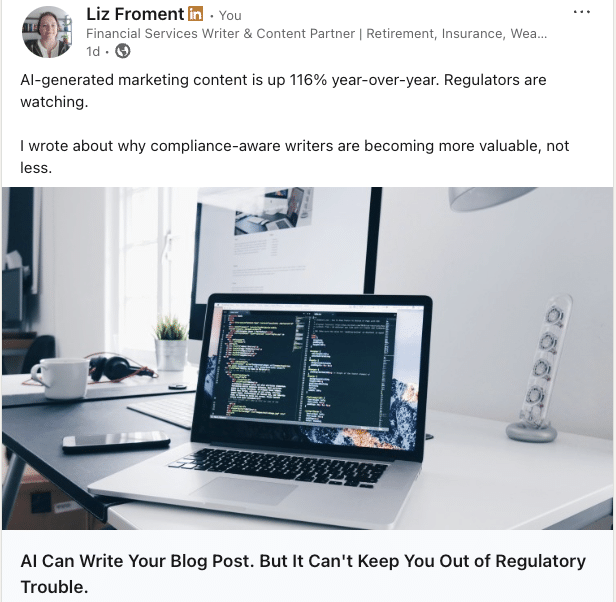
If a hiring manager or marketing director lands on your profile and sees ninety percent of your content dedicated to helping other writers find gigs, you have positioned yourself as a competitor in a writing group, not an indispensable business asset.
Execution Plan:
- Audit Your Last Ten Posts: Review your recent feed. If the majority of your topics are geared toward freelance tips, execute an immediate pivot.
- Identify Core Client Pillars: Pinpoint three to five pain points that keep your ideal clients awake at night. If you specialize in freelance medical writing, your pillars might include regulatory compliance hurdles, translating clinical trials into digestible brand narratives, or overcoming health-tech content bottlenecks. For financial services, focus on fintech scalability, compliance, or customer retention strategies.
- Share Project Insights: Discuss industry trends, break down why a competitor’s content strategy succeeded (or failed), or share high-level lessons learned from recent projects—always maintaining client confidentiality. The goal is to prove you understand their corporate ecosystem better than anyone else.
2. Overcome Posting Anxiety Through Sustainable Cadence
The internet is rife with conflicting advice insisting that you must publish three times a day, run a daily newsletter, and produce short-form video content to succeed. For a solo freelancer already juggling client deadlines, invoicing, and administrative tasks, this advice is a fast track to burnout and imposter syndrome.
The truth is much more forgiving: consistency beats volume every single time. Posting once or twice a week with high-intent content over a sustained period yields vastly superior results compared to an erratic blitz of daily posts that fades after a fortnight.
Execution Plan:
- Choose a Realistic Cadence: Commit to a schedule you can maintain indefinitely. Every Monday and Thursday, or even a single high-impact post every Wednesday, is entirely sufficient.
- Batch Your Creation: Block out 30 minutes every weekend. Draft your posts in a notes application, load them into LinkedIn’s native scheduler, and step away.
- Lean Into Proven Formats: You do not need graphic design skills or high-production video equipment. Well-formatted text posts featuring a compelling hook, short paragraphs, and a clear takeaway consistently capture the highest organic reach.
3. Focus on Engagement and "Walking the Marketing Dog"
Content creation is only half the battle. If posting is the engine of your LinkedIn machine, engagement is the fuel. B2B content strategist Sarah Greesonbach famously refers to this daily routine as "walking the marketing dog"—a non-negotiable daily stroll to keep your business healthy.

Spending 15 to 20 minutes actively engaging with target prospects is often far more effective than publishing your own content.
Execution Plan:
- Build a Prospect List: Compile a target roster of 20 to 30 marketing directors, content managers, and startup founders at companies you aspire to write for. Follow their profiles closely.
- Leave Thoughtful Comments: Abandon generic comments like "Great post!" or "So true!" Instead, add genuine value: expand on their thesis, offer a contrasting professional data point, or ask an insightful follow-up question.
- Adopt the Daily Method: Consider implementing a scaled routine inspired by industry veterans (such as Ed Gandia’s method): send three targeted connection requests, leave two thoughtful comments, and publish one post per day—or scale this down to whatever fits your operational capacity. When decision-makers repeatedly see your intelligent commentary in their notifications, your name becomes instantly recognizable when you eventually pitch them.
4. Optimize Your Profile to Function as a High-Converting Sales Page
Your LinkedIn profile should never read like a dry, chronological curriculum vitae. Instead, view it as a dedicated landing page designed for a single conversion goal: getting a prospect to book a discovery call or send a direct message.
Execution Plan:
- Craft a Value-Driven Headline: Erase the generic title "Freelance Writer." Replace it with a outcome-focused headline. For example: "I write high-converting B2B SaaS content that turns complex software features into pipeline revenue" or "Financial Services Content Writer | Trusted by [Client A], [Client B], and [Client C]."
- Write an Audience-Centric "About" Section: Address the reader directly in the second person ("you"). Outline the exact friction points you solve, the industry sectors you serve, and the measurable results you deliver. Close with a direct call to action (CTA) and a link to your portfolio website.
- Leverage the Featured Section: Pin your two or three finest writing samples, a compelling client case study, or a glowing testimonial directly beneath your bio.
- Detail Experience with Impact: Rather than listing vague duties, frame your past work quantitatively: "Authored 50+ authoritative long-form guides covering enterprise cloud security, API documentation, and developer marketing strategies."
5. Build an "Idea Brain" to Eliminate Writer’s Block
The greatest friction point for creators is staring at a blank screen wondering what to say. The antidote to writer’s block is systematic idea capture.
Execution Plan:
- The Daily Ten: Set a recurring daily reminder on your smartphone. Every morning or evening, open your notes app and rapidly jot down 10 raw ideas, observations, client questions, or industry grievances. Do not judge them; prioritize sheer volume.
- Weekly Curation: At the end of the week, review your list of 70 raw ideas. Typically, 5 to 10 will stand out as diamonds in the rough, ready to be expanded into full-fledged LinkedIn posts.
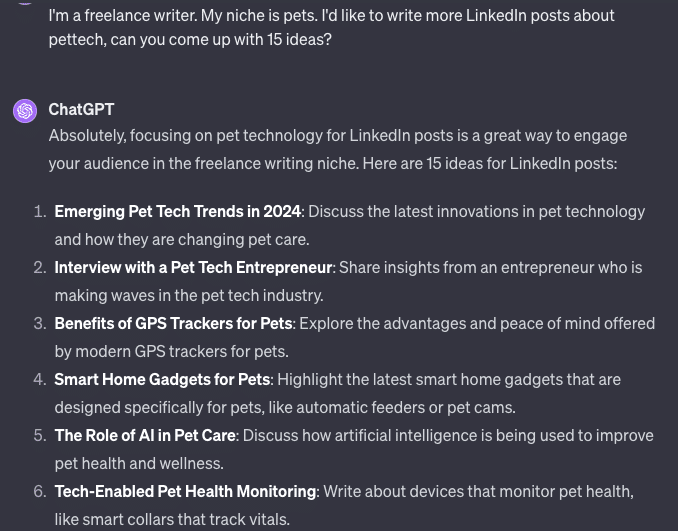
- Leverage AI as a Collaborative Sparring Partner: When inspiration completely dries out, utilize AI writing assistants like ChatGPT. Prompt the tool to generate 10 unique angles or contrarian takes on a specific sub-niche within your industry. Use the output as a foundational springboard rather than finished copy, filtering the ideas through your authentic voice and professional experience.
Official Statements & Industry Perspectives
Reflecting on the platform’s enduring value for independent professionals, digital business pioneer and Location Rebel founder Sean Ogle notes:

"If you can spend 20 to 30 minutes a day on LinkedIn as a freelancer, it will pay off exponentially. Most freelancers I talk to now say LinkedIn is their top source of inbound leads. A few years ago, it was job boards and cold pitching. But the platform has shifted, and building a network there provides not just immediate clients, but long-term income stability through referrals and community authority."
This sentiment is echoed across the modern digital economy. As companies increasingly prioritize verified human expertise over generic, mass-produced digital content, the writers who win are those who build visible, trustworthy reputations in public forums.
Future Outlook
The trajectory of the freelance writing industry is clear. As artificial intelligence continues to reshape the baseline production of internet content, generic wordsmithing is commoditizing rapidly. Consequently, companies are placing a massive premium on specialized, strategic thinkers who can bring unique insights, distinct industry expertise, and verified thought leadership to the table.
LinkedIn serves as the ideal proving ground for this new era of high-value freelancing. By stepping out of the peer echo chamber, adopting a structured and consistent engagement routine, optimizing profile assets for business conversion, and addressing real client pain points, independent writers can transform their digital presence from a passive online resume into a robust, automated inbound client machine.
The tools, algorithms, and methodologies are transparent. The only remaining variable is execution. Step away from the saturated job boards, optimize your digital storefront, and commit the next thirty days to mastering LinkedIn—your future freelance pipeline will thank you.