

Executive Overview
As the digital marketing landscape undergoes its most radical restructuring since the advent of social commerce, the traditional, linear purchasing funnel has officially collapsed. Today’s consumers move fluidly and unpredictably between algorithmic social feeds, influencer testimonials, peer-to-peer recommendations, and artificial intelligence-driven search engines. To capture attention and drive conversion in this hyper-fragmented ecosystem, modern brands can no longer rely on single-channel awareness campaigns. Instead, they must construct dynamic, interconnected marketing systems where performance media, social commerce, creator partnerships, and Generative Engine Optimization (GEO) operate as a unified growth engine.
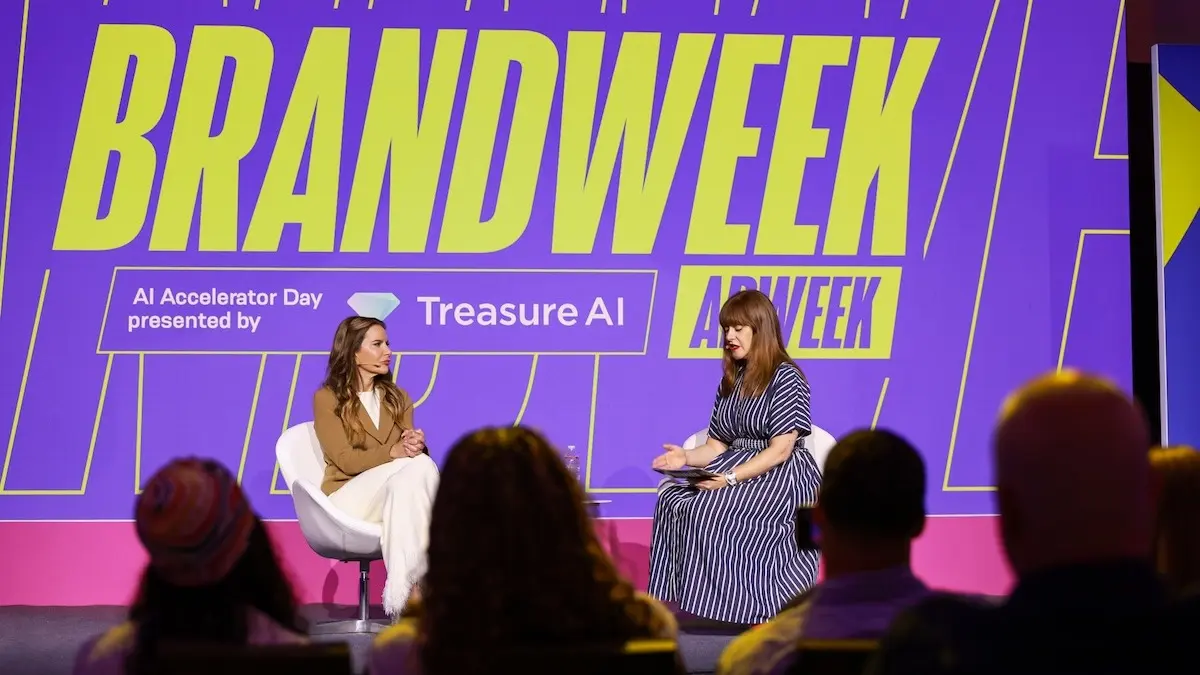
These vital shifts took center stage at Brandweek 2026 during a high-profile, three-day event series titled “Agencies Doing Cool Sh*t,” co-hosted by TikTok. Led by Emily Freed, General Manager of U.S. Agency at TikTok, the series brought together vanguard agency leaders—including Leslie Ann Hall, Founder and CEO of Iced Media, and Alex Yang, Co-Founder and President of Boost Engine—to dissect the mechanics of modern digital influence. Through deep dives into campaigns for beauty innovators like Rael and Moroccanoil, as well as household cleaning giant Bissell, the discussions illuminated a new playbook for brand survival. The core takeaway? Future market dominance belongs to brands that master the delicate intersection of machine-discoverable data and authentic human validation.
Detailed Chronology: Day-by-Day Breakthroughs at Brandweek 2026
The three-day residency at Brandweek 2026 served as a crucible for advanced social strategy, offering attendees a masterclass in modern agency execution, creator deployment, and technological adaptation.
Day One: Breaking Through the Noise in Beauty with Iced Media and Rael
The opening session of the series featured Leslie Ann Hall, Founder and CEO of beauty-specialized agency Iced Media, sitting down with TikTok for Business’s Emily Freed. Hall wasted no time addressing the harsh realities of the contemporary digital marketplace, using her agency’s recent work with Rael—a Korean holistic cycle care brand—as a prime case study.
When Rael prepared to launch an advanced microneedling serum, Iced Media faced a dual hurdle: the beauty vertical on TikTok is intensely saturated, and the product required the translation of complex dermatological science into digestible, engaging social content. Rather than relying on traditional banner advertising or conventional promotional spots, the agency engineered a breakthrough influencer strategy centered on "mega creator" Mikayla Nogueira.
By strategically aligning with Nogueira, Iced Media leveraged her immense digital authority to spark a secondary wave of conversation across a wider network of micro and mid-tier creators. This cascading effect transformed TikTok from a passive top-of-funnel awareness tool into an active, high-velocity demand engine.

"It’s about these connected systems where you’re combining performance media, social commerce, and then thinking about generative engine optimization, when you’re working with a creator like this," Hall explained to the Brandweek audience. "The best thing that we did was look at TikTok as a way to drive awareness to fuel omnichannel growth instead of as a single channel."
Day Two: Decoding the Non-Linear Consumer Journey and AI Integration
On the second day of the series, Hall returned to the stage to tackle one of the most pressing challenges facing modern CMOs: the fragmentation of the buyer’s journey. Highlighting Iced Media’s ongoing work with luxury hair care staple Moroccanoil, Hall emphasized that consumer decision-making has abandoned the predictable, straight-line path of the past.
Modern shoppers might discover a product via a viral TikTok video, pivot to an AI-powered conversational search engine or large language model (LLM) to verify its ingredients or efficacy, return to social media to read peer reviews, and finally execute a purchase via social commerce infrastructure—or vice versa.
To capture consumers across this unpredictable maze, brands must ensure their digital footprint is robust enough to intercept shoppers at every imaginable touchpoint. Crucially, Hall pointed out that platforms like TikTok and TikTok Shop are rapidly becoming primary data sources for the large language models powering next-generation search.
Emily Freed expanded on this phenomenon, noting that contemporary consumers increasingly lean toward AI-generated recommendations, provided those suggestions are backed up and validated by authentic human experiences.
"That combination of how you make sure that your data is structured in a way that is machine-discoverable and then how you make sure that you have content that is ready for human validation is really super important," Freed stated, underscoring the technical rigor required of modern creative agencies.

Day Three: Scaling the Creator Economy with Boost Engine and Bissell
The final installment of the “Agencies Doing Cool Sh*t” series shifted its focus from algorithmic search and beauty to large-scale creator activation and home goods. Emily Freed introduced Alex Yang, Co-Founder and President of Boost Engine, to explore how legacy brands can revitalize their messaging through mass creator collaboration.
Yang shared insights from Boost Engine’s campaign with Bissell, a household name in home cleaning. In a category historically dominated by predictable, highly stylized "before-and-after" demonstrations, Bissell made the bold decision to step back and give creators unprecedented creative freedom. By allowing digital talent to explore unique, unscripted, and unexpected content formats, the brand successfully broke through ad fatigue.
"For creators, if you really want to activate them and drive growth, having this mindset of exploring content in different formats and finding the winning format for your brand, for your audience profile will be crucial to success," Yang noted.
Furthermore, Yang advocated for moving away from boutique, one-off influencer campaigns in favor of scalable, high-volume affiliate networks. By partnering with thousands of creators simultaneously—effectively building an "army of affiliates"—brands can establish repeatable, highly profitable revenue systems. However, Yang cautioned that scaling this approach requires treating creators as genuine strategic partners rather than transactional advertising units.
Supporting Context & Metrics: The Paradigm Shift in Social Commerce
The urgency behind the strategies discussed at Brandweek 2026 is grounded in profound shifts in consumer behavior and digital infrastructure. For over a decade, social media marketing operated on a straightforward attribution model: impression, click, conversion. However, the rise of in-app shopping ecosystems—most notably TikTok Shop—has compressed the distance between discovery and checkout into a single tap.
The Convergence of Social Media and Search
Historically, social platforms were viewed purely as top-of-funnel discovery channels, while search engines (predominantly Google) captured intent at the bottom of the funnel. Today, that boundary has dissolved. Data indicates that a significant percentage of Gen Z and millennial consumers bypass traditional search engines entirely, turning instead to TikTok, Instagram, and Reddit to find product recommendations, reviews, and tutorials.

This behavioral pivot has forced agencies to adopt Generative Engine Optimization (GEO). Brands can no longer optimize solely for legacy search algorithms; they must ensure their products are frequently discussed, positively reviewed, and contextually categorized within social ecosystems that feed the underlying training data of modern AI search models.
The Math of Mass Affiliates
Yang’s emphasis on building an "army of affiliates" reflects a broader macroeconomic shift within influencer marketing. Micro-influencers and long-tail creators frequently outperform mega-celebrities in terms of engagement rate, trust, and conversion efficiency. By distributing media spend across thousands of specialized creators, brands insulate themselves against algorithm volatility while simultaneously generating a massive volume of diverse, authentic creative assets that can be repurposed into paid social campaigns.
Official Statements and Industry Insights
The dialogues facilitated by TikTok and its agency partners at Brandweek 2026 yielded critical axioms for the future of digital commerce. Industry leaders emphasized that marketing excellence in the latter half of the 2020s requires an unprecedented synthesis of left-brain data science and right-brain creative flexibility.
- On Omnichannel Synergy: Leslie Ann Hall stressed that treating social platforms in a silo is a fatal error. "The best thing that we did was look at TikTok as a way to drive awareness to fuel omnichannel growth instead of as a single channel."
- On the AI-Human Nexus: Emily Freed captured the essence of modern discovery by noting the symbiosis between machine intelligence and human trust: "That combination of how you make sure that your data is structured in a way that is machine-discoverable and then how you make sure that you have content that is ready for human validation is really super important."
- On Creator Empowerment: Alex Yang outlined the cultural shift required for successful mass-affiliate marketing: "To build that repeatable system, it’s very important that you are open to working with creators first, treating them with respect, and… giving them the right tools they need."
Future Outlook: What Brands Must Do Next
As the dust settles on Brandweek 2026, the mandate for brand leaders, CMOs, and agency executives is clear. Navigating the non-linear purchase journey demands immediate structural adaptations across three core pillars:
- Adopt Generative Engine Optimization (GEO): Brands must audit how their products appear across both social feeds and AI-driven answer engines. Ensuring that product information is machine-readable, widely discussed, and consistently reviewed across social commerce hubs will dictate whether a brand surfaces during high-intent consumer queries.
- Build Resilient Creator Ecosystems: Moving away from rigid creative briefs is no longer optional. Brands must empower creators to experiment with novel formats, treating them as core strategic partners rather than disposable content mills. Scaling through thousands of micro-affiliates will provide the volume and authenticity required to maintain momentum in crowded markets.
- Unify Performance and Social Commerce: The artificial divide between brand building and direct-response performance marketing must be permanently dismantled. Campaigns must be engineered from conception to drive simultaneous top-of-funnel cultural awareness and immediate, in-app conversion.
Ultimately, the insights shared by TikTok, Iced Media, and Boost Engine demonstrate that while consumer behavior will continue to evolve at breakneck speed, the fundamental drivers of commerce remain unchanged: visibility, trust, and authenticity. Brands that successfully marry data-driven discoverability with unscripted human connection will write the rules of commerce for the next decade.