For over a decade, Moz has served as a foundational pillar in the search engine optimization (SEO) toolset ecosystem. Renowned for its comprehensive all-in-one approach, Moz has empowered digital marketers, agencies, and enterprise organizations to execute keyword research, execute rigorous site crawls, analyze backlink profiles, track fluctuating rankings, and clean up messy local citations. Its proprietary metrics—Domain Authority (DA) and Page Authority (PA)—have long been the industry standard for estimating a website’s ranking potential.
However, the modern digital marketing landscape is shifting at a breakneck pace. As search engines like Google incorporate advanced machine learning, user intent models, and zero-click search features, the demands placed on SEO software have evolved dramatically. Consequently, Moz is no longer the definitive tool for every single user.
Marketers frequently cite specific friction points: pricing models that scale aggressively, lower data caps on essential entry-level plans, and user interfaces that can feel dated when compared to lightning-fast, highly visual modern competitors. Whether you are looking for deeper data pools, superior technical crawlers, more intuitive user interfaces, or purely budget-friendly options, the market is rich with alternatives.
This comprehensive guide analyzes the 10 best free and paid Moz alternatives, dissecting their core use cases, data capabilities, and direct comparisons to Moz.
Detailed Chronology & Evolution of SEO Toolsets
To understand why marketers are increasingly diversifying their software stacks away from monolithic solutions like Moz, it is helpful to look at how the industry has matured.
The Early Era (Pre-2010): SEO tools were primarily localized desktop scrapers and basic keyword counters. Optimization was largely mechanical, focusing on keyword density, basic meta-tag updates, and manual directory submissions.
The All-in-One Expansion (2010–2018): Platforms like Moz, Semrush, and Ahrefs shifted the paradigm toward cloud-based, comprehensive ecosystems. Companies began aggregating massive web indexes to track live backlinks and build proprietary keyword databases numbering in the hundreds of millions. During this phase, Moz cemented its reputation as an educational powerhouse and reliable mid-market all-in-one suite.
The Specialized & Data-Dense Era (2018–Present): The modern era is defined by extreme specialization and hyper-scale data processing. Competitors like Semrush and Ahrefs scaled their keyword databases into the tens of billions, while single-purpose tools like AccuRanker (for ultra-fast rank tracking), Surfer SEO (for natural language processing-driven content optimization), and Screaming Frog (for raw technical auditing) redefined best-in-class performance. Marketers are no longer forced to compromise within a single ecosystem; instead, they mix and match best-of-breed software.
Supporting Context & Metrics: All-in-One vs. Specialized Tools
When evaluating alternatives to Moz, digital marketers generally fall into two camps: those who want an all-in-one ecosystem replacement, and those seeking specialized tools to solve narrow operational bottlenecks.
1. Best All-in-One Moz Alternative: Semrush
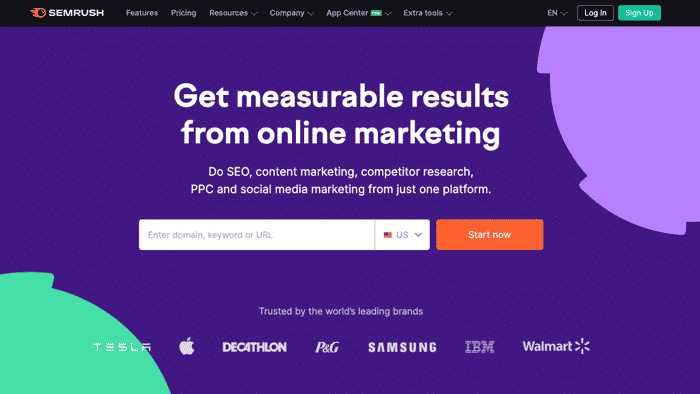
For organizations seeking a direct, powerhouse replacement for Moz without sacrificing breadth of features, Semrush is the undisputed market leader.
Scale and Power: Semrush boasts over 10 million users globally, including enterprise giants like Amazon, Tesla, and Walmart. Its infrastructure dwarfs many competitors, housing a keyword database of over 23 billion entries, 142 geo-locations, and an industry-leading backlink crawler tracking over 43 trillion historical connections.
Traffic Analytics: Unlike Moz, which focuses primarily on search engine rankings and on-site metrics, Semrush provides a "backstage pass" to competitors’ holistic traffic strategies. Users can analyze organic, paid, referral, and social channels for up to 200 websites simultaneously in a single batch report.
Rank Tracking & Technical Auditing: Semrush’s Position Tracking tool offers granular rank tracking from country level down to specific zip codes. Its Site Audit tool runs comprehensive health checks—identifying broken links, duplicate content, and orphaned pages—and features side-by-side audit comparisons to measure progress over time.
2. Best Moz Alternative for Beginners: Mangools
For users who find enterprise platforms overwhelming or too expensive, Mangools offers a refreshing alternative.
User Interface & Usability: Mangools provides arguably the most aesthetically pleasing and intuitive UI on the market. It bundles five essential tools—KWFinder (keyword research), SERPChecker (SERP analysis), SERPWatcher (rank tracking), LinkMiner (backlink analysis), and SiteProfiler (domain metrics)—into a unified, streamlined package.
Cost-Effectiveness: Trusted by brands like Airbnb and Adidas, Mangools delivers high-value data—such as Majestic’s trusted citation flow metrics and daily rank updates across tens of thousands of locations—at a fraction of the cost of larger suites.
3. Best Free Moz Alternative: Ubersuggest
Budgets are often tight for freelancers, small business owners, and early-stage startups. Ubersuggest, spearheaded by digital marketer Neil Patel, fills this gap.
Capabilities: Providing access to billions of keywords and content ideas, the free tier of Ubersuggest allows users to perform basic keyword research, topic research, backlink analysis, and top-level site audits.
Limitations: While free and low-cost paid plans ($29–$99/month) exist, users must contend with data caps, such as a limitation of 100 keyword results per search. Nevertheless, it remains an accessible entry point for basic SEO exploration.
If your workflow does not require an all-in-one suite, you can often achieve superior results by investing in specialized, single-purpose software solutions.
Backlink Analysis: Ahrefs Site Explorer
While Moz features a robust link index, Ahrefs operates the second most active web crawler on the internet after Google, boasting the largest live backlink index available. Ahrefs’ Site Explorer is the gold standard for link building, competitor backlink prospecting, and anchor text distribution analysis.
Rank Tracking: AccuRanker
For agencies and enterprise brands managing thousands of volatile keywords, traditional rank trackers can be sluggish. AccuRanker is built for speed, offering on-demand, real-time rank tracking across major search engines. Crucially, it allows users to tie ranking movements directly to traffic and conversion metrics.
Technical Audits: Screaming Frog and Sitebulb
Screaming Frog SEO Spider: A desktop-based crawler that acts as a Swiss Army knife for technical SEOs. It extracts raw data on indexation, meta tags, site speed, and broken links with unmatched flexibility.
Sitebulb: For those who find raw crawlers intimidating, Sitebulb offers visual, color-coded graphs and automated troubleshooting hints that explain why an issue matters and how to fix it.
Content Analysis: Surfer SEO
Content optimization has moved beyond simple keyword stuffing. Surfer SEO uses Natural Language Processing (NLP) to analyze top-ranking pages for a given keyword, providing real-time guidelines on word count, heading structures, and semantic terms. It integrates directly with Google Docs and WordPress workflows.
Local SEO: BrightLocal
While Moz offers commendable local citation tools, BrightLocal stands out as a dedicated local marketing platform. It specializes in building, cleaning, and removing citations, managing online reviews, auditing Google Business Profiles, and tracking hyper-local rankings for multi-location businesses.
Official Statements & Industry Perspectives
Industry veterans emphasize that the choice of SEO software ultimately depends on operational scale and specific organizational bottlenecks.
"There’s a reason enterprise brands and top-tier agencies lean toward platforms with massive data infrastructure like Semrush and Ahrefs," notes digital marketing strategist Robbie Richards. "However, the modern SEO stack is rarely about finding a single tool that does everything. It is about deploying specialized tools—like AccuRanker for velocity or Surfer SEO for content briefing—to execute specific campaigns with maximum precision."
While Moz continues to hold value for its educational resources (such as the Moz Academy) and reliable baseline tools, market trends indicate that practitioners prefer modularity. They want lightning-fast data updates, deeper API integrations (such as Google Data Studio connectors), and UI designs that reduce cognitive load.
Future Outlook
As we look toward the future of search engine optimization, the criteria by which we judge SEO software will continue to evolve.
AI and Semantic Search Integration: Traditional keyword volume metrics are increasingly complemented by intent-based data and AI-generated search result features (such as Google’s Search Generative Experience). Tools that adapt their auditing and content optimization engines to account for AI-driven SERPs will dominate the market.
Consolidation vs. Specialization: The software market is splitting down the middle. On one side, all-in-one platforms like Semrush continue to acquire and build adjacent toolkits (PPC, Social Media, Content Marketing). On the other, agile micro-SaaS tools continue to disrupt traditional workflows with superior user experiences in narrow niches.
Budget Optimization: As economic pressures force businesses to scrutinize software expenditures, toolsets that offer flexible, modular pricing tiers—or robust freemium models—will capture market share from legacy platforms that rely on rigid, expensive bundling.
Conclusion: Which Alternative Is Right for You?
If you require a direct, feature-heavy replacement for Moz that matches its all-in-one capabilities while delivering vastly superior data scale, Semrush is the premier choice. If you are operating on a tight budget, Mangools or Ubersuggest provide accessible entry points. Meanwhile, practitioners seeking to elevate specific workflows can seamlessly integrate specialized powerhouses like Ahrefs, AccuRanker, Surfer SEO, or BrightLocal into their existing operations. Assess your business requirements, leverage free trials, and build the custom tool stack that drives your digital growth.