

Executive Overview
The landscape of modern restorative dentistry is on the precipice of a seismic transformation. Researchers at the University of Texas at Dallas (UT Dallas) have successfully engineered a breakthrough technology that promises to bridge the historical gap between the unparalleled durability of zirconia and the rapid, patient-friendly convenience of same-day 3D printing. Funded in part by the National Science Foundation (NSF) and the U.S. Air Force Office of Scientific Research, this multidisciplinary initiative eliminates what has long been considered the most formidable bottleneck in additive manufacturing: the agonizingly slow post-processing phase known as debinding.
Zirconia—chemically known as zirconium dioxide—is widely acknowledged by dental professionals worldwide as the gold standard for permanent dental restorations. Revered for its exceptional mechanical strength, superior fracture toughness, biocompatibility, and natural aesthetic translucency, zirconia outclasses alternative materials such as composite resins and standard dental ceramics. However, harnessing this material via 3D printing has historically been crippled by a post-printing thermal processing requirement that can take anywhere from 20 to 100 hours. Consequently, patients requiring a permanent, high-strength crown, bridge, or veneer have faced extended wait times, temporary fittings, and multiple clinical visits.
By leveraging an innovative apparatus that combines advanced heat transfer dynamics, porous graphite felt, and specialized vacuum-assisted extraction, the UT Dallas research team has slashed the debinding phase from days to under 30 minutes. Published in the peer-reviewed journal Ceramics International, this breakthrough lays the groundwork for true chair-side production of permanent, all-ceramic zirconia restorations within a single clinical appointment. As the team transitions from academic discovery to commercial reality through a strategic partnership with Pan-AM Dental Laboratory and other industry collaborators, the dental industry is poised to move away from subtractive milling and enter a new era of highly personalized, efficient, and waste-reducing 3D manufacturing.
Detailed Chronology: Overcoming the Zirconia Dilemma
To fully comprehend the significance of the UT Dallas breakthrough, one must trace the historical evolution of dental restorations and the persistent engineering hurdles that have stymied the fusion of 3D printing and advanced ceramics.
The Material Paradox: Strength Versus Speed
For decades, dental practitioners have sought the holy grail of restorative materials: a substance that mimics the mechanical integrity of natural tooth enamel while offering seamless aesthetic integration and rapid manufacturing. Zirconia quickly emerged as the clear winner in terms of durability. Whether deployed for single-tooth protective caps (crowns) or multi-unit frameworks spanning missing teeth (bridges), zirconia withstands the immense occlusal forces exerted during mastication far better than standard polymer-based resins.
Yet, working with zirconia has always presented a manufacturing paradox. Until recently, dental practices desiring same-day turnaround times relied almost exclusively on subtractive manufacturing, commonly known as milling. In this workflow, a digital intraoral scan of the patient’s prepared tooth is fed into a computer-aided manufacturing (CAM) unit, which carves the restoration out of a pre-solidified, monochromatic block of zirconia.
While effective at producing strong restorations in a single visit, milling suffers from distinct structural and logistical limitations:
- Design Restrictions: Subtractive tools are physically constrained by the size and shape of the rotating burs, making it difficult to fabricate deeply intricate anatomical details or hollow internal geometries.
- Structural Compromise: The aggressive mechanical carving process inherently introduces microscopic surface flaws and micro-cracks. When subjected to the cyclic stress of chewing over time, these micro-fissures can propagate, leading to catastrophic structural failure.
- Material Waste: Milling carves away a significant majority of the expensive raw zirconia block, generating substantial waste and driving up operational overhead for dental practices.
The Rise of 3D Printing and Its Hidden Trap
Additive manufacturing (3D printing) offered a compelling solution to the flaws of milling. By building restorations layer by layer from a photopolymer resin infused with microscopic zirconia particles, manufacturers could achieve unprecedented geometric precision, exact color matching, and virtually zero material waste.
However, current chair-side 3D-printed crowns are predominantly restricted to ceramic-polymer composite resins. While these resins allow for same-day delivery, they fundamentally lack the long-term wear resistance, chemical inertness, and structural strength of pure, sintered ceramic zirconia.
Creating a permanent zirconia crown via 3D printing required developing a process to turn the printed "green body" (the fragile, resin-bound precursor) into a fully dense ceramic object. This transformation demands two mandatory, highly rigorous thermal steps: debinding and sintering.
The Debinding Bottleneck
Debinding is the critical thermal process wherein the printed object is heated slowly to evaporate and eliminate the organic binders—the polymers holding the ceramic particles together during the printing process. Historically, this phase required an agonizing 20 to 100 hours.
Dr. Majid Minary, professor of mechanical engineering in the Erik Jonsson School of Engineering and Computer Science at UT Dallas and corresponding author of the study, explained the core physics governing this obstacle:
"Debinding has been the bottleneck in the process. It must be done very slowly. If you speed it up, the polymer being burned off turns into gas, and if that gas cannot escape, the crown may crack or fracture. A debinding time of 20 to 100 hours is not practical for same-day dental service."
Because of this extreme thermal constraint, true 3D-printed permanent zirconia restorations remained locked inside academic laboratories and industrial plants, entirely inaccessible to the chair-side dental practitioner.
The UT Dallas Innovation
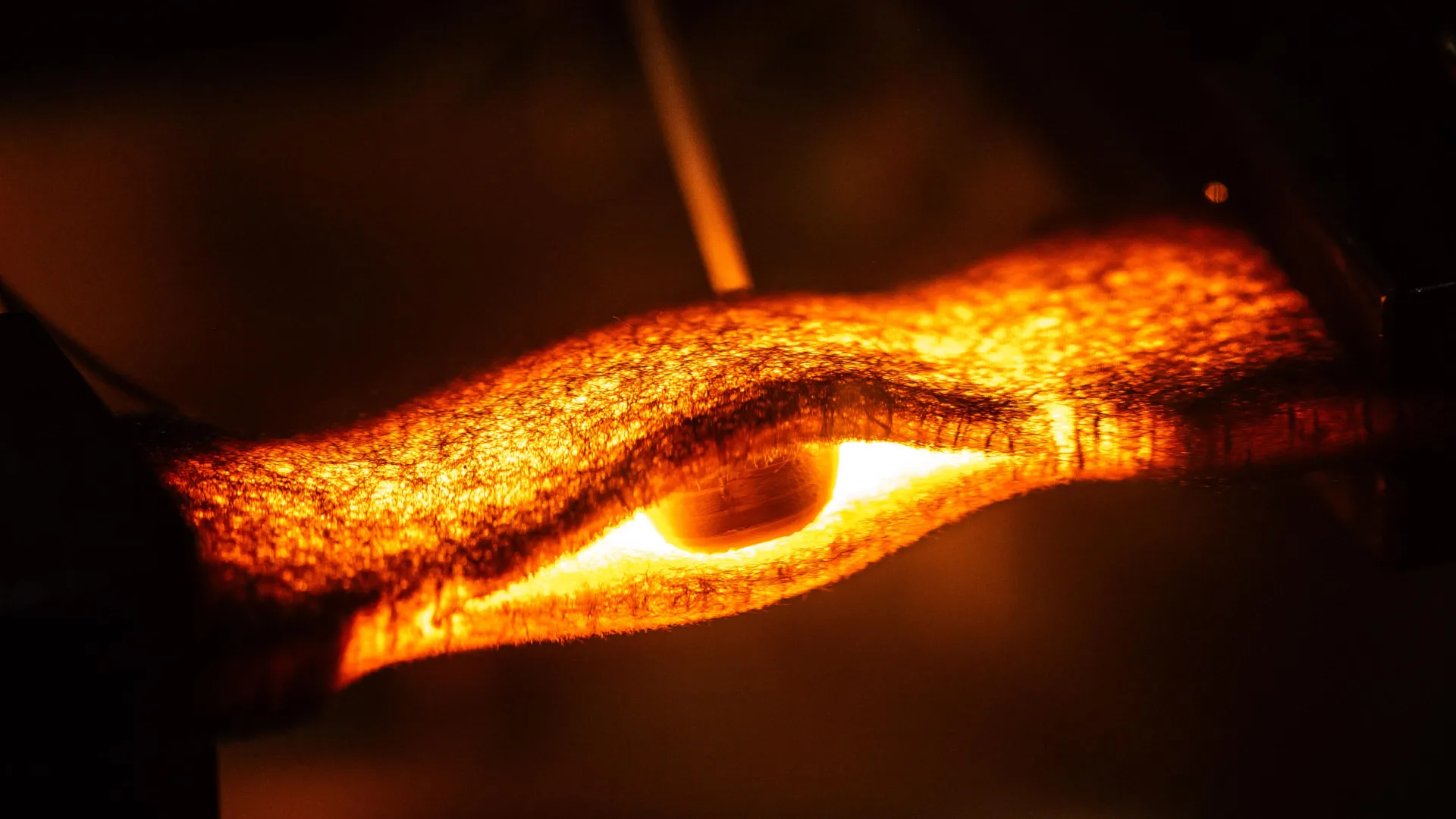
Recognizing that incremental adjustments to standard furnaces would never yield a clinically viable timeline, the UT Dallas team re-engineered the entire post-processing environment. Their newly patented methodology merges enhanced thermal transfer protocols with a custom-engineered enclosure of porous graphite felt capable of withstanding temperatures soaring above 2,550 degrees Fahrenheit.
When the freshly 3D-printed zirconia restoration is placed within this specialized thermal chamber, the porous graphite felt serves a dual purpose: it distributes heat with extreme uniformity while simultaneously providing microscopic channels for the vaporized polymer gases to safely dissipate. Operating in tandem with an integrated vacuum system, the apparatus actively sweeps the generated gases away from the ceramic matrix before pressure can build up and compromise the structural integrity of the crown.
By solving the physics of rapid binder burnout without inducing thermal shock or internal fracturing, the UT Dallas researchers successfully compressed the 20-to-100-hour debinding process down to a staggering less than 30 minutes. Followed by rapid sintering, the entire post-printing transformation can now be accomplished within a timeframe that fits comfortably inside a standard patient appointment.
Supporting Context & Metrics
To appreciate the market disruption this technology represents, it is necessary to examine the operational metrics, material science parameters, and economic factors shaping the contemporary dental restoration sector.
Comparative Workflow Metrics
| Manufacturing Method | Primary Material | Processing Time | Customization & Detail | Structural Risk | Material Efficiency |
|---|---|---|---|---|---|
| Traditional Milling | Sintered/Pre-sintered Zirconia Block | 1 to 2 hours | Moderate (restricted by bur size) | High (micro-cracking risk during carving) | Low (significant raw material waste) |
| Standard 3D Printing | Ceramic-Polymer Resins | 1 to 3 hours | High (exact anatomical precision) | Low (insufficient long-term strength) | High (minimal waste) |
| UT Dallas 3D Printing | Permanent Zirconia | Under 3 hours total (incl. <30 min debinding) | High (intricate geometries & color matching) | Minimal (uniform thermal/gas evacuation) | High (near-zero waste) |
Material Science of Zirconia
Zirconia utilized in modern dentistry is typically yttria-stabilized tetragonal zirconia polycrystal (Y-TZP). At room temperature, pure zirconia undergoes destructive crystalline phase transformations when subjected to stress. By doping the material with yttrium oxide, scientists stabilize the high-strength tetragonal crystal phase. When a crack begins to propagate through Y-TZP, the localized stress triggers a martensitic transformation—the crystal crystals shift from the tetragonal phase to the monoclinic phase, expanding by roughly 3% to 5% locally. This volumetric expansion pinches the crack shut, imparting extraordinary fracture toughness that has made zirconia the premier choice for posterior restorations where bite forces are most severe.
Economic and Clinical Implications
The integration of rapid zirconia 3D printing into standard dental practices stands to alter practice economics fundamentally:
- Inventory Reduction: Dental laboratories and clinics will no longer need to maintain vast inventories of pre-milled blocks in varying sizes and shades. Instead, digital resin vats and localized 3D printers can manufacture custom parts on demand.
- Chair-Side Efficiency: Eliminating the multi-day turnaround time imposed by external milling centers or slow laboratory debinding cuts out the need for temporary crowns, which frequently dislodge, fracture, or cause gingival irritation.
- Patient Satisfaction: The psychological and physical comfort of walking into a dental office with a damaged tooth and walking out hours later with a permanent, metal-free, highly aesthetic zirconia restoration cannot be overstated.
Official Statements and Institutional Perspectives
The collaborative nature of this breakthrough has brought together academic rigor, clinical insight, and commercial manufacturing expertise. Key stakeholders have emphasized the transformative nature of the research.
Dr. Majid Minary highlighted the patient-centric benefits of the technology during a recent institutional briefing:
"We are excited to be advancing the commercialization of chair-side 3D-printed, all-ceramic zirconia permanent dental restorations. Because the crowns can be custom-printed for each patient on the same day, this approach offers greater personalization, faster treatment and the convenience of receiving a permanent restoration in a single visit."
The research methodology and experimental validations were systematically documented in Ceramics International, drawing praise from materials science circles for its novel deployment of porous graphite felt and vacuum-assisted gas evacuation. Mahdi Mosadegh, a mechanical engineering doctoral student and first author of the research paper, noted that the breakthrough required a fundamental rethinking of thermodynamic limits in particulate ceramics.
Behind the academic push lies a robust coalition of industrial partners and clinical practitioners dedicated to bridging the "valley of death" between university research and market adoption. The commercialization initiative is spearheaded by a strategic alliance involving:
- Pan-AM Dental Laboratory: A key commercial partner working alongside the UT Dallas team to scale the hardware and software for real-world dental lab integration.
- 3DCeram Sinto Inc.: Based in Grand Ledge, Michigan, this pioneering ceramic 3D printing enterprise is lending its industrial manufacturing expertise to the project.
- Dr. Amirali Zandinejad: A prominent prosthodontist practicing in Arlington, Texas, and former associate professor at the Texas A&M University College of Dentistry, who provides critical clinical validation and workflow assessments.
Institutional backing has been instrumental in driving the project forward. In addition to primary financial sponsorship from the National Science Foundation—specifically through an active $550,000 award (Grant 2431684) administered via the NSF’s Partnerships for Innovation (PFI) – Technology Translation project—the research has also received vital funding and operational support from the U.S. Air Force Office of Scientific Research (AFOSR), reflecting the broader structural materials applications of rapid ceramic manufacturing.
Future Outlook and Commercialization Roadmap
While the technical proof-of-concept has been successfully established and published, the journey toward ubiquitous chair-side implementation involves a rigorous regulatory and clinical roadmap.
Regulatory Approval and Clinical Validation
Before a dentist can purchase a compact, rapid-debinding sintering unit for their practice, the technology must undergo comprehensive clinical trials and secure formal clearance from regulatory bodies such as the U.S. Food and Drug Administration (FDA). These validation studies will rigorously test the fatigue resistance, biocompatibility, marginal fit, and long-term intraoral survivability of rapid-debound 3D-printed zirconia crowns against the rigorous benchmarks established by decades of milled zirconia usage.
The Commercialization Horizon
The $550,000 NSF grant serves as fuel for the current translational phase. The UT Dallas team, working alongside Pan-AM Dental Laboratory and 3DCeram Sinto, is actively refining prototype hardware to create a compact, user-friendly tabletop unit suitable for clinical environments.
Future development milestones include:
- Hardware Miniaturization: Scaling the specialized graphite felt and vacuum furnace assembly down from laboratory dimensions to a footprint matching standard dental office sterilizers or milling units.
- Software Integration: Developing intuitive, plug-and-play software interfaces that seamlessly sync intraoral digital scanners directly with the 3D printer and rapid thermal processing unit.
- Multi-Material Expansion: Adapting the rapid debinding architecture to process other high-performance technical ceramics beyond dental zirconia, opening doors for biomedical implants, aerospace components, and electronic substrates.
Conclusion
The convergence of advanced materials science, thermodynamic engineering, and clinical collaboration at the University of Texas at Dallas marks the definitive death knell for the multi-day waiting period in restorative dentistry. By shattering the debinding bottleneck and reducing a 100-hour ordeal to a matter of minutes, the UT Dallas research team has unlocked the full potential of 3D-printed zirconia. As this technology navigates the final corridors of commercialization, regulatory clearance, and clinical adoption, the day when every dental patient can receive a permanent, indestructible, custom-crafted ceramic crown in a single afternoon is rapidly approaching.