In the hyper-competitive landscape of freelance writing, talent and a polished portfolio are merely table stakes. For the tens of thousands of digital nomads, side-hustlers, and independent contractors entering the market each year, the true bottleneck to profitability is not a lack of writing skill—it is client acquisition. Specifically, it is the breakdown of communication that occurs after the initial "send" button is pressed on a cold outreach email.
According to seasoned industry experts and sales analytics, the vast majority of freelance writers commit a fatal, growth-stunting error: they send a single, personalized letter of introduction (LOI), receive silence, and immediately abandon the lead. This single-touch approach ignores decades of sales psychology and empirical data demonstrating that lucrative contracts are rarely secured on the first impression.
This report investigates the mechanics of modern freelance outreach, dissecting why the gold standard of client acquisition relies heavily on a structured, respectful, and persistent follow-up cadence. By analyzing the psychological barriers of prospect engagement, examining the noise of AI-generated spam, and reviewing modern tracking tools—ranging from Gmail CRM extensions to conversational AI assistants—this piece provides an authoritative guide on how freelance writers can transform cold inboxes into predictable revenue streams.
Detailed Chronology: The Evolution of Freelance Cold Emailing
To understand where modern freelance outreach stands, one must trace its evolution from the era of blanket physical mailers and spam-heavy digital pitch letters to today’s hyper-personalized ecosystem.
Phase 1: The Wild West of Digital Pitching (Late 2000s – Early 2010s)
In the early days of the digital gig economy, cold emailing was largely a numbers game. Freelancers utilized automated scripts to blast generic, unpersonalized templates to hundreds of webmasters and editors daily. While conversion rates were abysmally low—often hovering well below 1%—the sheer volume of emails generated enough incidental responses to sustain a basic freelance income. However, as spam filters evolved and inboxes became saturated, this blunt-force approach suffered a steep decline in efficacy.
Phase 2: The Rise of Personalization (Mid 2010s)
As inboxes grew hostile to mass automation, industry leaders began championing targeted outreach. Freelancers were taught to research a prospect, read their recent articles, and craft a bespoke opening line. Conversion rates spiked for those who adopted these tactics. Yet, a secondary bottleneck quickly emerged: writers invested 15 to 30 minutes crafting a single email, received no reply due to bad timing, and dropped the lead entirely. The ROI on manual research plummeted because the outreach lifecycle was artificially cut short after a single touchpoint.
Phase 3: The AI Noise Crisis (Present Day)
Today, the accessibility of generative artificial intelligence has flooded the market with low-effort, synthetic outreach. Decision-makers at publications, agencies, and corporations are now besieged by hundreds of robotic pitches daily—many of which use transparently fake personalization. Consequently, modern freelance writing success no longer depends simply on writing one good email, but on cutting through the algorithmic noise through disciplined persistence, high-relevance follow-ups, and genuine human timing.
Supporting Context & Metrics: The Science of Persistence
The aversion to follow-up emails is frequently rooted in a psychological fear of rejection or a mistaken belief that persistence equates to harassment. However, empirical sales data thoroughly disproves this anxiety.
Sales and marketing benchmarks consistently show that human beings rarely make purchasing decisions or engage new vendors on first contact. The timing of a prospect’s internal needs almost never aligns with the precise moment an initial cold email lands in their inbox. A content director may not need a freelance writer today, but three to six months from now, budget allocations will shift, staff writers will depart, and content demands will surge.
Data compiled across B2B sales and freelance acquisition pipelines highlights critical benchmarks:
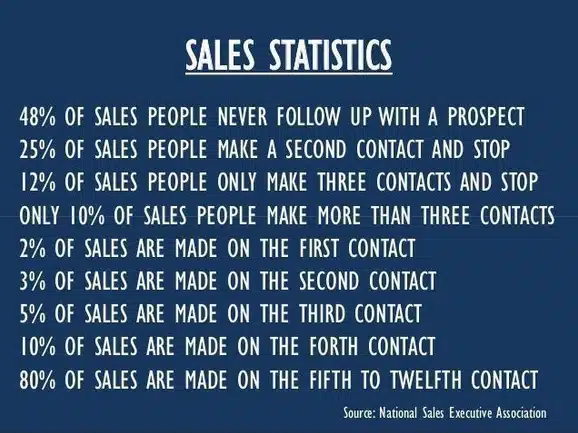
The Single-Touch Fallacy: A staggering percentage of freelancers stop after one email, effectively surrendering up to 80% of potential client interactions to competitors who maintain steady contact.
The Sweet Spot of Timing: Research indicates that the majority of closed deals require anywhere from five to twelve strategic touchpoints before a formal agreement is reached.
The Window of Receptivity: Following up too quickly (e.g., within 24 hours) damages credibility and feels pushy, while waiting months risks total obscurity. A disciplined cadence bridges this gap.
To maintain professionalism while aggressively pursuing accounts, successful freelancers implement a predictable outreach calendar. Rather than operating on random impulses, a structured cadence ensures steady presence:
Initial Outreach: A highly personalized Letter of Introduction (LOI) focusing on how the writer can solve a specific pain point for the client.
First Follow-Up: Executed 2 to 5 days later. This message should be brief, add a touch of new value (such as a relevant industry article or a fresh content idea), and include a frictionless "easy out" to lower the prospect’s psychological barrier to responding.
Mid-Range Check-Ins: Spaced out over subsequent weeks and months, shifting from immediate project pitches to value-add contributions.
Calendar-Aligned Quarterly Touches: Long-term nurturing using natural calendar triggers as talking points. Examples include:
Late Fall / Pre-Holiday: Offering assistance with end-of-year content backlogs or wrapping up unfulfilled publishing quotas.
Mid-January: Wishing the team a Happy New Year and inquiring about Q1/Q2 content roadmaps.
Spring & Summer Transitions: Checking in as seasonal marketing campaigns ramp up.
Official Perspectives: Navigating Ethics and Inbox Fatigue
Maintaining a delicate balance between persistent marketing and annoying spam is a central challenge for modern independent contractors. Industry veterans emphasize that true outreach is not an intrusion—it is an act of proactive problem-solving, provided it is executed correctly.
The Distinction Between Helpful Outreach and Spam
According to veteran online business mentor and Location Rebel founder Sean Ogle, the fundamental difference lies in personalization and respect for boundaries.
"I get so many crappy emails. They’re not personalized. Perhaps they were written by AI, and then you get follow-ups every day that are also not personalized, and it drives me crazy. Those people give a bad rap to the people who do it properly. Everyone hates getting cold emails, and those people are why."
Ogle notes that overcoming this stigma requires minimal effort that yields maximal differentiation: "That doesn’t mean you have to spend hours personalizing. Just customize the first sentence. That’s honestly all you need. So many people send out bad, generic emails that even a tiny bit of effort helps you rise to the top."
Furthermore, the ethics of follow-up outreach require absolute compliance with user preferences. If a prospective client explicitly requests to be removed from a contact list, compliance must be immediate. When approached respectfully, however, follow-up emails are frequently welcomed by busy executives. In many cases, a well-timed check-in rescues a harried project manager who simply lost the original email in a flooded inbox.
Future Outlook: Technology, CRM, and AI in Freelance Logistics
As the freelance economy matures, the administrative burden of tracking multi-touch outreach campaigns is shifting away from manual spreadsheets toward intelligent automation. The future of freelance writing success belongs to those who leverage modern tool stacks to act as their own administrative assistants.
Streamlining the Pipeline: Tools of the Trade
Freelance writers no longer need enterprise-level sales software to manage hundreds of client relationships. Two primary technological workflows have emerged as industry standards:
Gmail-Integrated CRMs (e.g., Streak): Tools that integrate directly into a standard email client transform an ordinary inbox into a robust customer relationship management platform. These solutions allow freelancers to track open rates, schedule automated reminder sequences, organize leads by pipeline stages (e.g., Contacted, Follow-Up 1, Meeting Booked), and maintain detailed notes without switching tabs.
Conversational AI Assistants (e.g., Claude or ChatGPT): For freelancers who find traditional spreadsheets tedious, advanced AI models offer a conversational alternative. By feeding an AI assistant a chronological log of outreach dates, target company names, and response statuses, writers can maintain a living database. Prompts can be deployed to query weekly or monthly performance analytics—such as tracking the exact number of cold emails required to secure a discovery call versus a paid contract.
+-----------------------------------------------------------------+
|                    The Modern Outreach Stack                    |
+------------------------+----------------------------------------+
| Initial Research       | LinkedIn, Corporate Media Kits         |
| Core Pitch             | Personalized LOI (Custom 1st Sentence) |
| Tracking & Automation  | Streak for Gmail / Custom AI Log       |
| Cadenced Nurturing     | Quarterly Calendar Check-ins           |
+------------------------+----------------------------------------+
Conclusion: The Cost of Quitting Too Soon
Ultimately, the barrier separating struggling freelancers from those hitting high-income milestones is rarely writing talent. It is structural discipline. Thousands of words of portfolio samples, hours of meticulous prospect research, and expertly crafted pitch letters are rendered useless the moment a writer decides a single unanswered email constitutes a final rejection.
By embracing structured follow-up schedules, utilizing modern tracking systems, and infusing authentic, human personalization into every touchpoint, freelance writers can shift from passive waiting to proactive client acquisition—turning cold digital real estate into a sustainable, long-term business.