

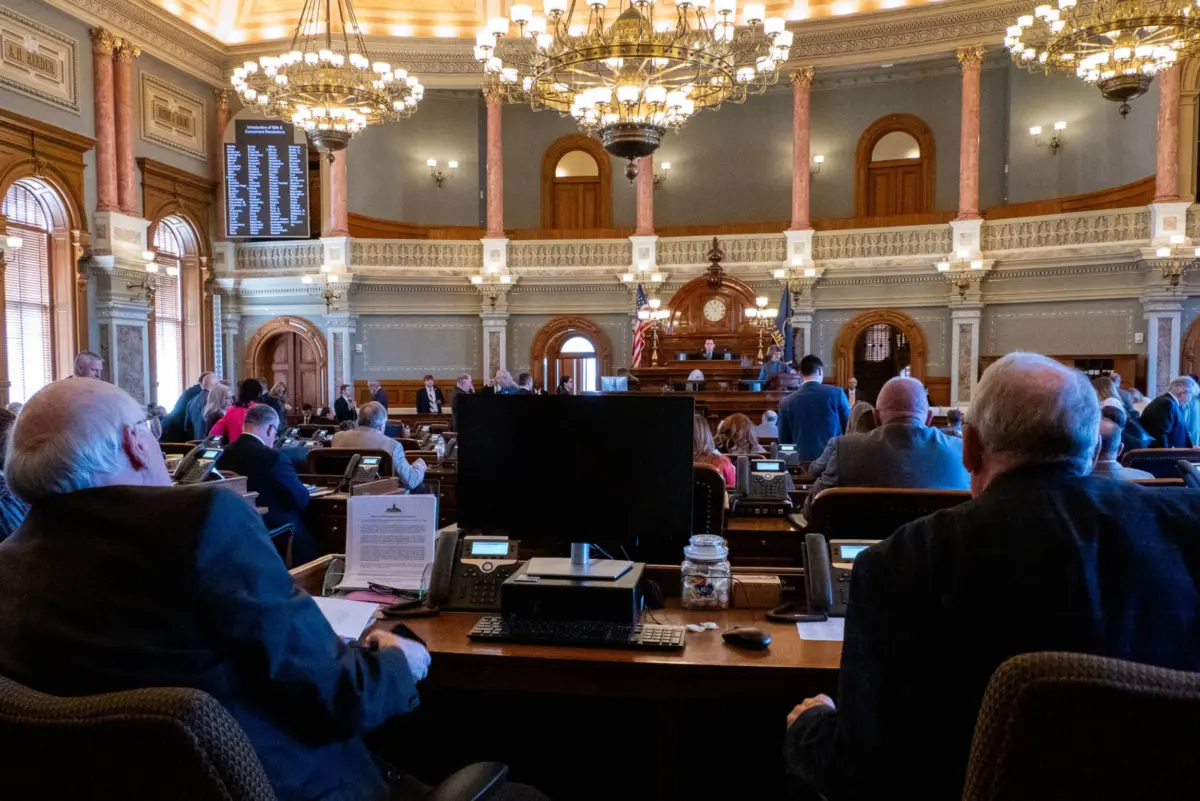
While major national legal battles—such as those waged by CNN, Politico, and MS NOW against White House credential restrictions—capture public attention, an equally critical, underreported struggle is quietly unfolding across America’s local governments and state capitals. From Utah to Miami, and Kansas to Iowa, independent and local journalists are fighting systemic, coordinated efforts by public officials to restrict press access, limit public records, and penalize critical reporting.
Far from isolated incidents, these actions reflect a dangerous, nationwide trend of weaponized access. Driven by intense political polarization, a hollowed-out local news landscape, and trickle-down hostility toward the media from national figures, public officials are increasingly bypassing independent watchdogs to control their own narratives. The result is a chilling effect on the First Amendment, leaving the public with less transparent governance and diminished oversight.
Executive Overview: The Erosion of Local Press Freedom
The traditional relationship between the press and the government has always been adversarial. Designed to serve as a public watchdog, journalism inherently invites friction from those in power. However, local and state reporters note that this friction has fundamentally deteriorated over the past decade.
Many point to 2016 as a watershed moment when public rhetoric against the press escalated into active hostility. Others cite the disruptions of the COVID-19 pandemic. Today, the convergence of social media, deep political polarization, and the collapse of traditional local newspapers has emboldened public officials to shut out—and at times actively antagonize—local reporters.
As independent journalist Bryan Schott of Utah Political Watch notes, the logic driving these restrictive policies is straightforward:
"Why do we need to have our message filtered through a reporter, a journalist, an outside organization when just as easily, we can decide what is said about our policies? Why should we give equal access to the media who might not report things the way that we want?"
This philosophy is materializing in statehouses and city halls nationwide. Officials are enacting policies that deny press credentials to independent outlets, close legislative caucuses to the public, enforce strict "no-comment" rules for municipal employees, and hike rent on statehouse press offices as a retaliatory measure for unfavorable coverage.
Detailed Chronology: Escalating Restrictions Across the Country
The systematic rollback of press access has accelerated rapidly over recent years, marked by specific policy changes, legal battles, and retaliatory measures across multiple states.
Utah: The Fight for Capitol Credentials
The battle in Utah dates back to the beginning of 2024, when Bryan Schott—a veteran political journalist and former Salt Lake Tribune reporter—sought press credentials for the 2025 legislative session under his new independent outlet, Utah Political Watch.
Capitol media liaisons Alex Musselman and Aundrea Peterson denied the request, stating flatly: "Utah Capitol media credentials are currently not issued to blogs, independent or other freelance journalists."
The timing was telling. Days before the denial, Peterson sent Schott a text message criticizing an investigative piece he published about a local nonprofit accusing Senate President J. Stuart Adams of campaign finance violations, dismissing Schott as "someone who claims to be a journalist."
Schott filed a federal lawsuit in January 2025, alleging viewpoint-based discrimination under the First Amendment. Over the summer, a panel of federal judges revived the lawsuit, sending it back to a lower court for review—a case Schott views as the local counterpart to national press access litigation. In the meantime, Schott remains barred from governor’s press briefings, legislative press areas, and email lists, forcing him to rely on delayed video recordings and social media to cover state governance.
Kansas: Restricting the Statehouse Floor and Caucuses
In Kansas, the press corps has faced a series of institutional restrictions implemented by legislative leadership. Sherman Smith, editor-in-chief of the nonprofit digital outlet Kansas Reflector, describes a stark decline in full-time statehouse coverage compared to when he started reporting in 2018.
Following the 2024 elections, Kansas House Republicans instituted several measures to curb transparency:
- Floor Access Denied: In January 2025, House Speaker Dan Hawkins stripped journalists of their designated workspace on the House floor, relegating them to a distant back wall. Reporters are now barred from taking notes or approaching lawmakers for impromptu interviews on the floor.
- Secret Caucuses: House Republicans began holding routine caucus meetings behind closed doors—a practice that was once vanishingly rare. This allows lawmakers to debate and shape policy in the dark before casting votes on the floor without public explanation.
- Retaliatory Rent Hikes: State Sen. Virgil Peck proposed hiking statehouse press office rent from a nominal flat rate of $100 per year to $1 per square foot per month, which would have cost the remaining outlet offices a collective $16,000 annually. Peck made no secret of his motivation, complaining in public forums about journalists who write "inaccurate stories."
Miami: Weaponizing a 2011 Media Policy
In Florida, the Coconut Grove Spotlight has faced severe stonewalling from city hall. When the outlet launched in 2024, it brought a level of scrutiny to Miami City Hall that had been absent for years, compounded by deep layoffs at the Miami Herald.
Simultaneously, the city began aggressively enforcing a dormant 2011 media policy prohibiting municipal employees from speaking with the press without prior authorization from the communications department. As a result, interview requests are routinely ignored, and the city’s communications team frequently meets inquiries with silence.
In June, the Spotlight sued the city of Miami, arguing that the policy violates employees’ First Amendment rights and cripplingly obstructs independent newsgathering. The parties are slated for a court-ordered mediation conference.
Iowa: Credentialing Hurdles and Open Records Battles
Independent political journalist Laura Belin, editor of Bleeding Heartland, spent five years fighting the Iowa House leadership for press credentials. Despite altering her publication’s structure, adopting the Society of Professional Journalists’ Code of Ethics, and even taking on a role with a local radio station, House clerk Meghan Nelson repeatedly denied her credentials, claiming she was "a member of the public" rather than a journalist.
Belin filed a federal lawsuit in January 2024, which immediately prompted the House to grant her credentials for the remainder of the session. While credentialed, Belin still faces exclusion from campaign events, partisan blacklists, and frequent freezes at Gov. Kim Reynolds’ press conferences, where she is routinely blocked from asking questions.
Furthermore, Belin and other Iowa journalists were forced to sue Gov. Reynolds in 2021 over open-records violations after her office ceased fulfilling public records requests for over a year. The lawsuit ended in a settlement requiring the state to pay attorney fees, highlighting a broader pattern of administrative evasion.
Supporting Context & Metrics: The Crisis in Local Journalism
The systematic exclusion of independent and legacy reporters occurs against the backdrop of a catastrophic collapse in local news infrastructure.
- Shrinking Newsrooms: According to a landmark 2026 study by Muck Rack and Rebuild Local News, the number of full-time local journalists in the United States has plummeted by 75% since 2002.
- Statehouse Voids: While a 2022 Pew Research Center study noted that the raw headcounts of statehouse reporters fluctuated, fewer reporters are dedicated to the beat full-time, leaving crucial legislative votes and committee hearings entirely uncovered.
- The Rise of Independent Outlets: As traditional legacy newspapers downsize or shutter, independent digital outlets and nonprofit newsrooms have stepped up to fill the void. However, because they lack the legal and financial backing of massive corporate media conglomerates, these independent journalists are disproportionately targeted by hostile officials seeking to delegitimize them.
When fewer watchdogs are in the room, public officials lose institutional familiarity with being questioned. When local newsrooms disappear, accountability evaporates, leaving communities vulnerable to unchecked corruption and opaque policy-making.
Official Statements and Perspectives
While affected journalists and press freedom advocates have been vocal about these constitutional violations, institutional leaders defending these restrictions have largely stonewalled public inquiries.
- Bryan Schott (Utah Political Watch): Emphasizing the broader constitutional stakes, Schott stated: (It) is pretty much the same argument that’s happening right now in the CNN versus Trump case on a national level.
- Sherman Smith (Kansas Reflector): Reflecting on the lost era of robust statehouse accountability, Smith noted: "There were times when it’s like, we have to get an explanation out of this person. You could form a wall of reporters and make sure they weren’t going to leave this room until they answered everybody’s questions together. And we don’t have that really anymore."
- David Villano (Coconut Grove Spotlight): Describing the legal battle in Miami, Villano explained the core demand of their lawsuit: "What we are insisting upon is some sort of proactive language within some policy document that advises and reminds employees of their rights under the Constitution to speak freely on matters of their expertise with the media without prior approval."
- The Opposition: Representatives from the offices of Kansas House Speaker Dan Hawkins, Iowa Gov. Kim Reynolds, the city of Miami, and Utah legislative staff either declined to comment or failed to respond to repeated interview requests. However, public comments from lawmakers like Kansas Sen. Virgil Peck reveal an underlying contempt for critical press coverage, with Peck openly defending punitive rent hikes by accusing journalists of publishing inaccuracies.
Future Outlook: The Resilience of the Watchdog
Despite the growing array of legal, financial, and administrative hurdles, the journalists fighting these access battles share a defiant consensus: "They can’t stop me from continuing to report on them."
However, these systemic barriers fundamentally alter the quality and cost of journalism. Stories that rely on timely access, leaked documents, or immediate official commentary take longer to produce, cost significantly more in legal fees and public records retrieval, and are occasionally shelved indefinitely. When public officials deliberately isolate reporters—such as Arizona town council members removing press tables in Fountain Hills to "send a message"—the true victim is the electorate, which is left in the dark about the decisions shaping their daily lives.
As these landmark First Amendment lawsuits wind their way through federal and local courts—from Utah to Miami—their outcomes will establish crucial legal precedents. For now, independent watchdogs across the country remain on the front lines, navigating closed doors and locked gates to ensure that the public’s right to know remains intact.