

By The Student Press Report Desk
Executive Overview
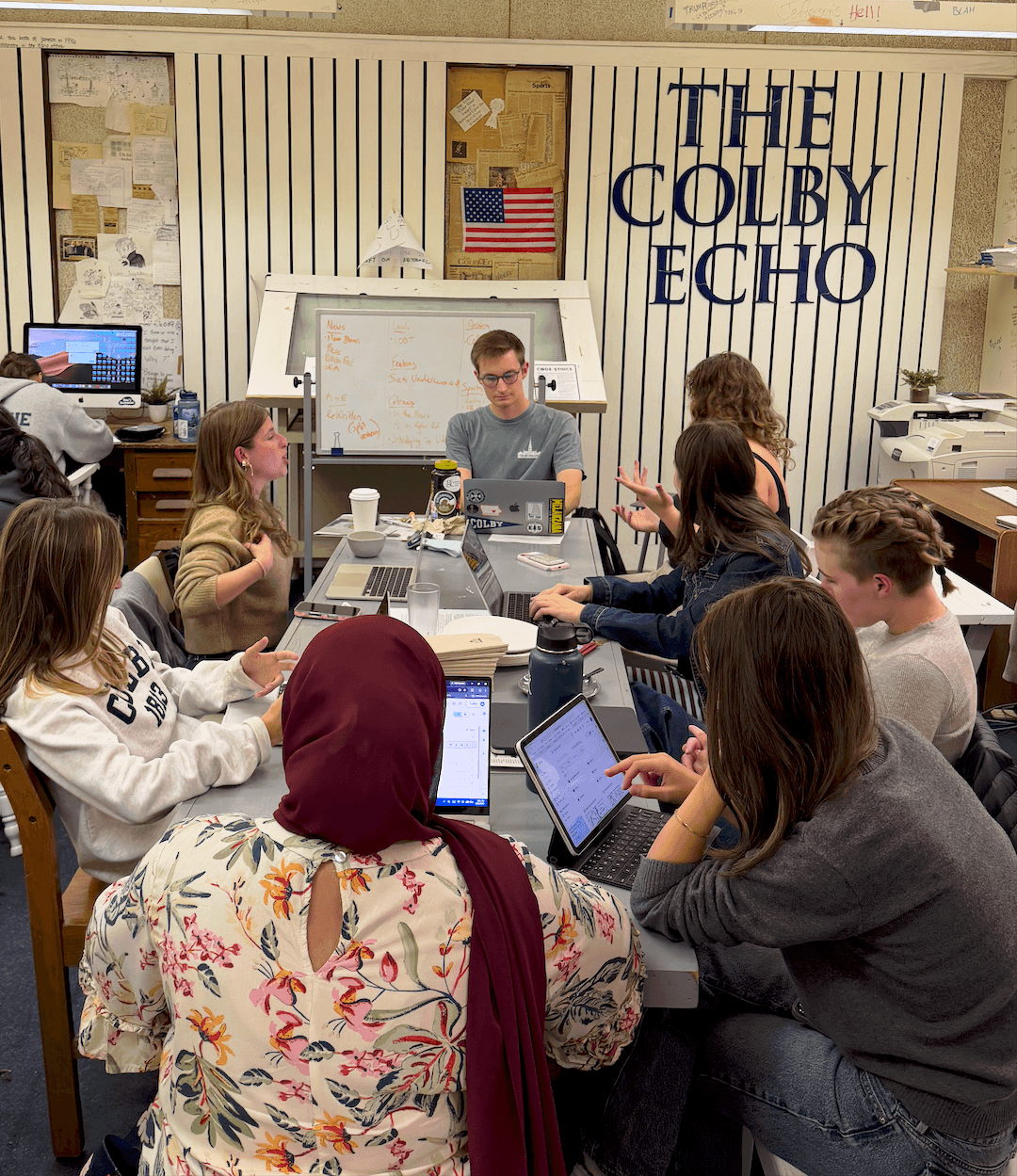
Just before 7 p.m. every Monday during the academic year, Elias Kemp makes the familiar walk to The Colby Echo newsroom. He settles in for a grueling night of editing, anchoring the weekly production cycle of Colby College’s independent student newspaper.
In January, Kemp—now a senior philosophy major—stepped into the role of co-editor-in-chief. Like many of the country’s most prominent and decorated student publications, The Echo operates at a small, elite liberal arts institution in Waterville, Maine, that boasts a rigorous curriculum but offers no journalism program whatsoever.
Across the United States, of the roughly 1,100 college newspapers currently in circulation, fewer than half are backed by academic journalism departments. According to the National Center for Education Statistics, only about 450 institutions offer journalism degrees, with a mere 120 holding national accreditation from the Accrediting Council on Education in Journalism and Mass Communications (ACEJMC). Yet, some of the nation’s most storied and influential student media outlets—including UCLA’s Daily Bruin, The Michigan Daily, The Harvard Crimson, The Cornell Daily Sun, and the University of Chicago’s The Chicago Maroon—thrive precisely in environments devoid of formal journalism instruction.
While the absence of a journalism major presents distinct challenges—ranging from a lack of institutional scaffolding to ethical navigation without faculty oversight—it fosters a unique culture of self-reliance. Without academic gatekeeping, these newsrooms lower the barrier to entry, attracting diverse thinkers from across campus disciplines. What emerges is an intensive, trial-by-fire form of experiential learning where students teach themselves the craft out of a deep-seated civic drive and an enduring love for the game.
Detailed Chronology
The Production Cycle: From Monday Nights to Thursday Delivery
For Elias Kemp and his staff at The Colby Echo, the rhythm of the week is dictated by print deadlines. Monday is production night. Kemp and his team spend hours editing incoming copy, vetting facts, and laying out the pages for the paper’s Thursday distribution.
Because The Echo has been unable to recruit a dedicated distributor from Colby’s 2,400-person student body, Kemp’s responsibilities extend far beyond the newsroom. Every Thursday morning at 5:30 a.m., he wakes up to manually stock the campus newsstands himself.
This relentless routine repeats week after week, culminating around 11 p.m. on production nights when Kemp finally walks back to his dorm. The role demands hours that could otherwise be dedicated to his philosophy coursework, job applications, or the traditional social milestones of a senior year.
Trial by Fire: Breaking News and High-Stakes Coverage
The pressures of running an independent paper without institutional guidance are magnified exponentially during moments of campus crisis. When major civic unrest or administrative friction occurs, student editors are often forced to handle complex, high-stakes reporting with zero prior training.
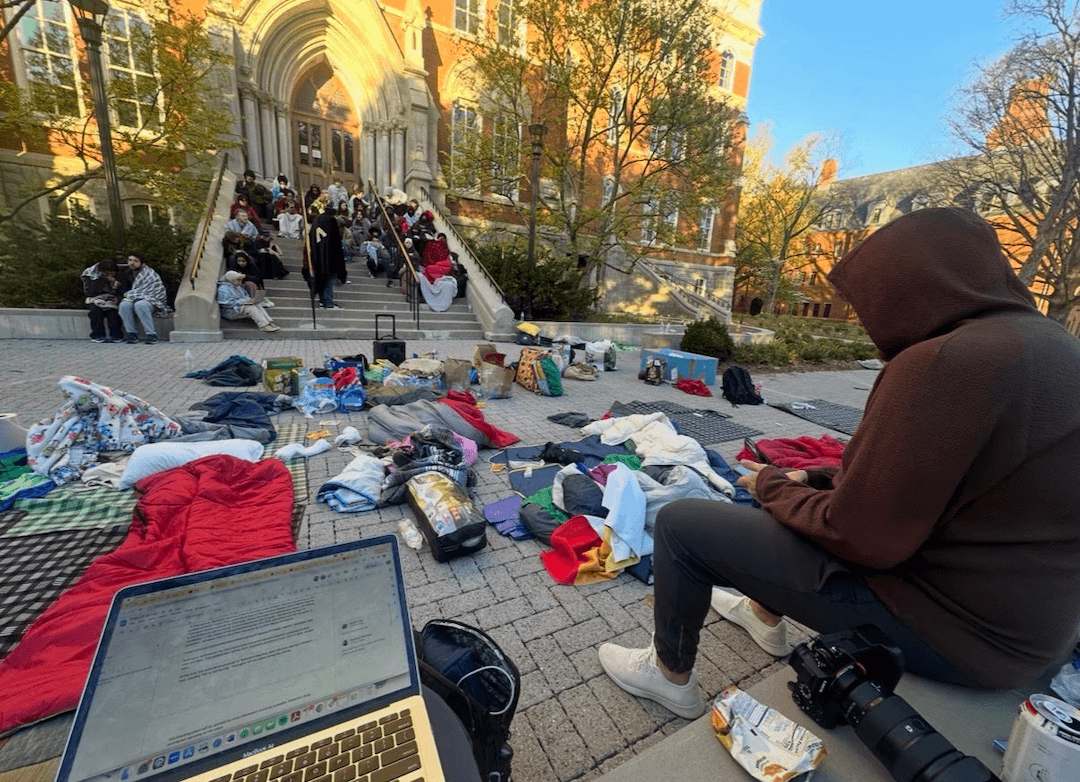
Consider the experience of Jorie Fawcett, the 2024 editor-in-chief of The Vanderbilt Hustler. Fawcett took the helm in the spring semester of her junior year, thrust immediately into the chaos of covering pro-Palestine student protests on campus. The demonstrations at Vanderbilt University eventually included a high-profile sit-in at Kirkland Hall, an administrative building that resulted in three arrests.
Having worked on the paper for two and a half years, Fawcett understood the logistical mechanics of covering a breaking news event, but her tenure was defined by "a whole lot of not sleeping." Despite the exhaustion, the experience forged her professional resilience. Though she ultimately chose a career path in student affairs rather than journalism, her years of practical execution outweighed the lack of a formal degree.
A similar transformation occurred at the University of Chicago. Nathaniel Rodwell-Simon entered college as a history and education major with zero background or interest in journalism. Joining The Chicago Maroon as a freshman photographer, he spent 16-hour days in the spring of 2024 documenting the pro-Palestine encampments that erupted across campus.
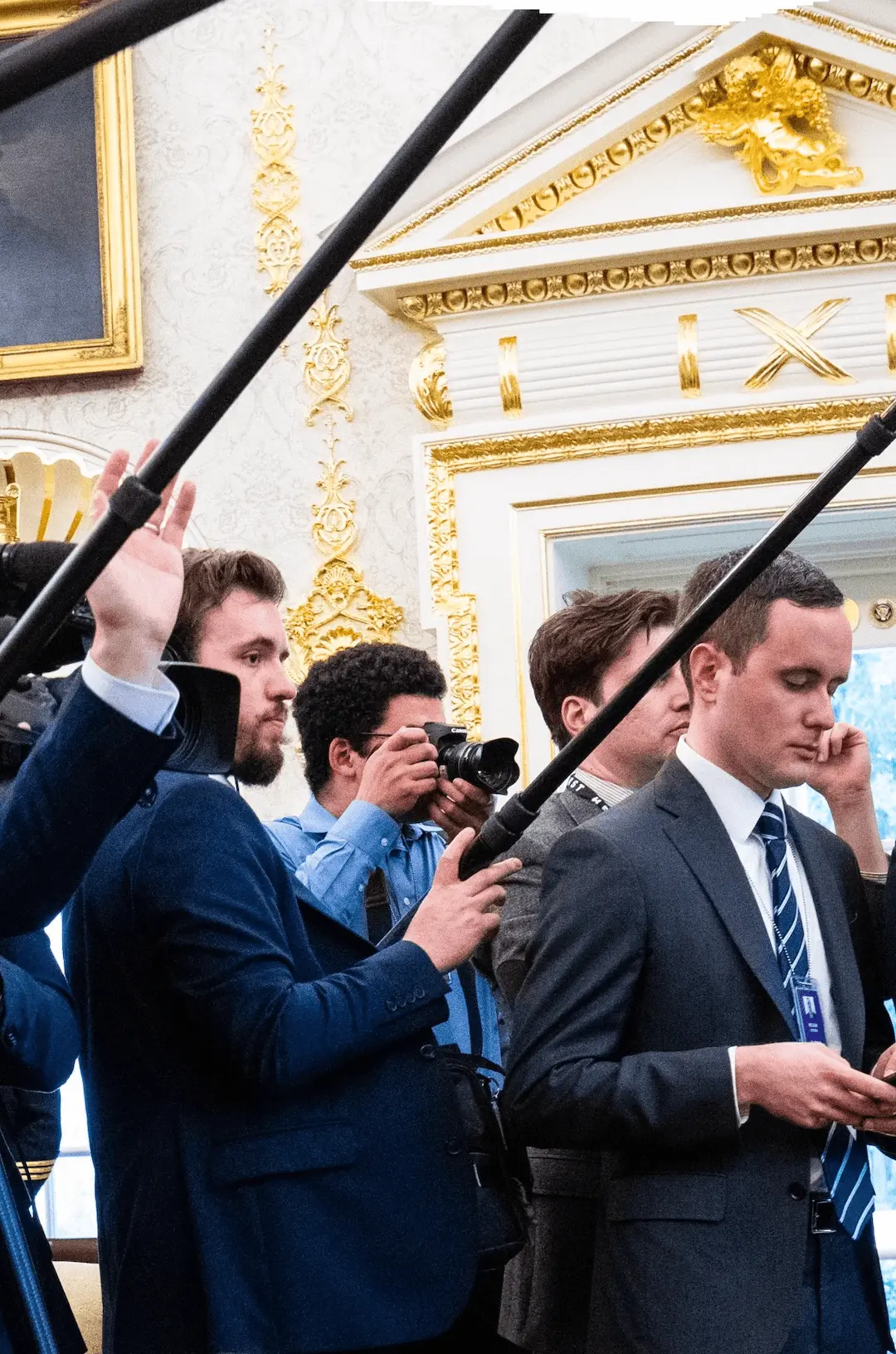
Sensing untapped potential, senior editors pushed Rodwell-Simon to begin writing news updates and reporting stories. Overnight, a hesitant photographer was thrust onto the front lines of campus journalism, eventually leading him to cover national political figures like Alexandria Ocasio-Cortez and photograph the Oval Office of the White House.
Supporting Context & Metrics
The Landscape of American Higher Education Journalism
The structural divide in American college media is stark. A quantitative look at journalism education reveals the following breakdown:
- Total College Newspapers: Approximately 1,100 active publications nationwide.
- Institutions Offering Degrees: U.S. News & World Report identifies roughly 330 schools offering undergraduate journalism majors, while the National Center for Education Statistics cites approximately 450.
- Accredited Programs: Only about 120 programs nationwide hold formal ACEJMC accreditation.
- The "No-Program" Elite: Many legacy publications—such as The Harvard Crimson, The Michigan Daily, and The Daily Bruin—operate entirely independently of academic departments.
The Trade-Offs of the Self-Taught Model
Operating without a journalism school creates distinct vulnerabilities for student staffs:
- Procedural Blind Spots: Jorie Fawcett noted that when new writers asked why editorial processes were structured a certain way, veteran editors often lacked historical context. Conventions were preserved simply through replication rather than critical pedagogical theory.
- Ethical Navigation: Aidan Marks, former editor-in-chief of The Davidsonian at Davidson College in North Carolina, observed that his newsroom often felt "ill-equipped to navigate ethical dilemmas" due to a lack of faculty mentors. Staff members relied on personal research and high school publication habits to resolve editorial crises.
- Bandwidth Limitations: Staff size directly restricts output. The Davidsonian operates with a lean core of roughly six staff writers and 15 editors who contribute double-duty. Because of this restricted bandwidth, the staff rarely has the capacity to pursue long-term investigative projects, remaining locked into the immediate demands of weekly print deadlines.
- Professional Transition Deficits: Hailey Weiner, news editor at The Hustler and a summer intern with The Atlanta Press Club, pointed out that she was one of very few students at her paper with professional newsroom experience, reflecting a broader trend where only a fraction of independent student journalists pursue the industry professionally.
The Hidden Advantages of Lower Barriers to Entry
Paradoxically, the absence of an academic journalism program can benefit a student publication. At institutions like Northwestern University, the University of Missouri, or Arizona State University—where prominent journalism schools exist—newsrooms can feel intimidatingly professionalized, often dominated by pre-professional majors.
In contrast, schools without journalism curricula feature a notably lower barrier to entry. Elias Kemp noted that he likely would not have had the confidence to apply to The Echo as a freshman if he felt he had to compete against formally trained journalism majors.
This accessibility yields two critical advantages:
- Accidental Discoveries: It allows students like Nathaniel Rodwell-Simon to stumble into talents they never knew they possessed.
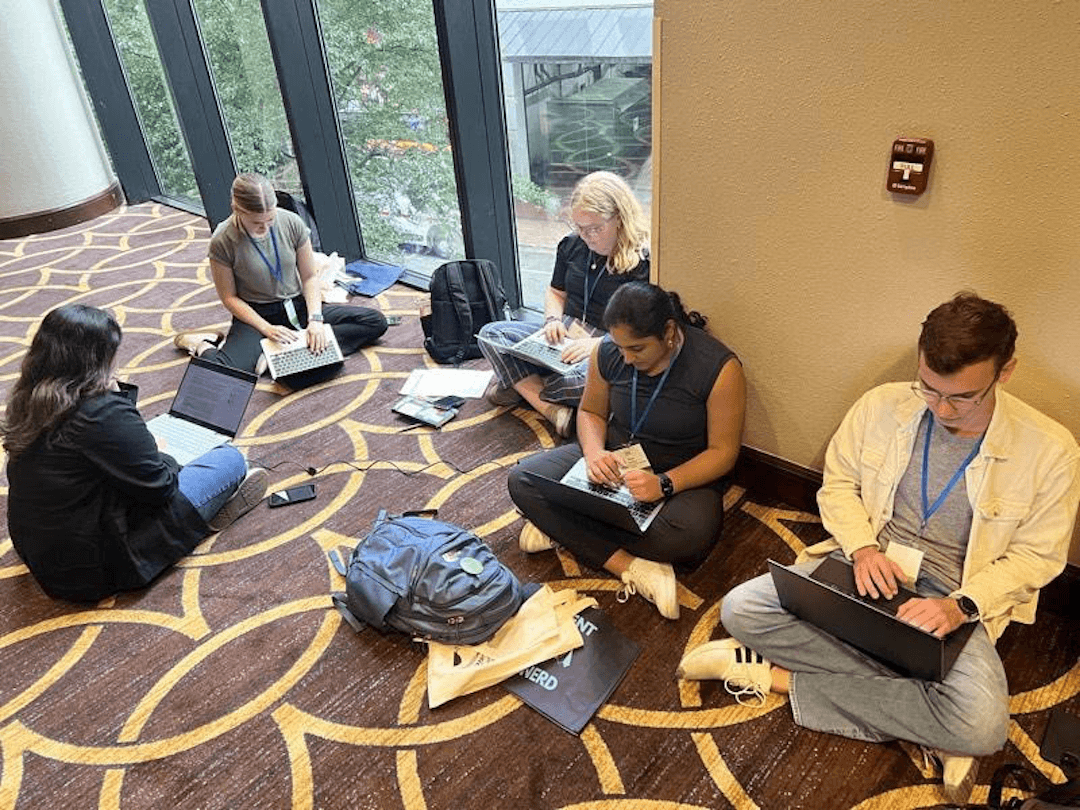
- Community Representation: A low barrier to entry attracts a broader, more diverse cross-section of academic disciplines. As Kemp emphasized, if a paper aims to reflect its campus community accurately, its staff should mirror that demographic and intellectual diversity rather than representing a single siloed major.
Official Statements
The realities of running an autonomous, self-taught student press are best articulated by the student editors who navigate its demands daily:
"With enough attention and self-motivation, you can teach yourself how to become a decent journalist."
— Elias Kemp, Co-Editor-in-Chief, The Colby Echo"I never really knew the answer [to why we did things a certain way]. Because someone had just told me that that’s how we do it, and then I was passing that along… It was just replication."
— Jorie Fawcett, 2024 Editor-in-Chief, The Vanderbilt Hustler"From the beginning, I had editors at the Maroon… who I think saw something in me that I did not see in myself. I had initially been kind of resistant to branching out… but I had really, really wonderful editors who pushed me to step out of my comfort zone."
— Nathaniel Rodwell-Simon, Managing Editor, The Chicago Maroon"People here have a lot of drive, civic drive. Journalism is a career that you can… see your results kind of immediately, and how they manifest in your community. Hearing people talk about your articles, seeing [the university] make decisions based off of something that you published… I think that really motivates people."
— Hailey Weiner, News Editor, The Vanderbilt Hustler
Future Outlook
As the media industry continues to face economic headwinds, the pipeline of talent flowing from independent college newspapers remains remarkably resilient. While editors like Elias Kemp and Jorie Fawcett may transition into philosophy, student affairs, or other professional domains upon graduation, the institutional memory they cultivate leaves a permanent mark on their campuses.
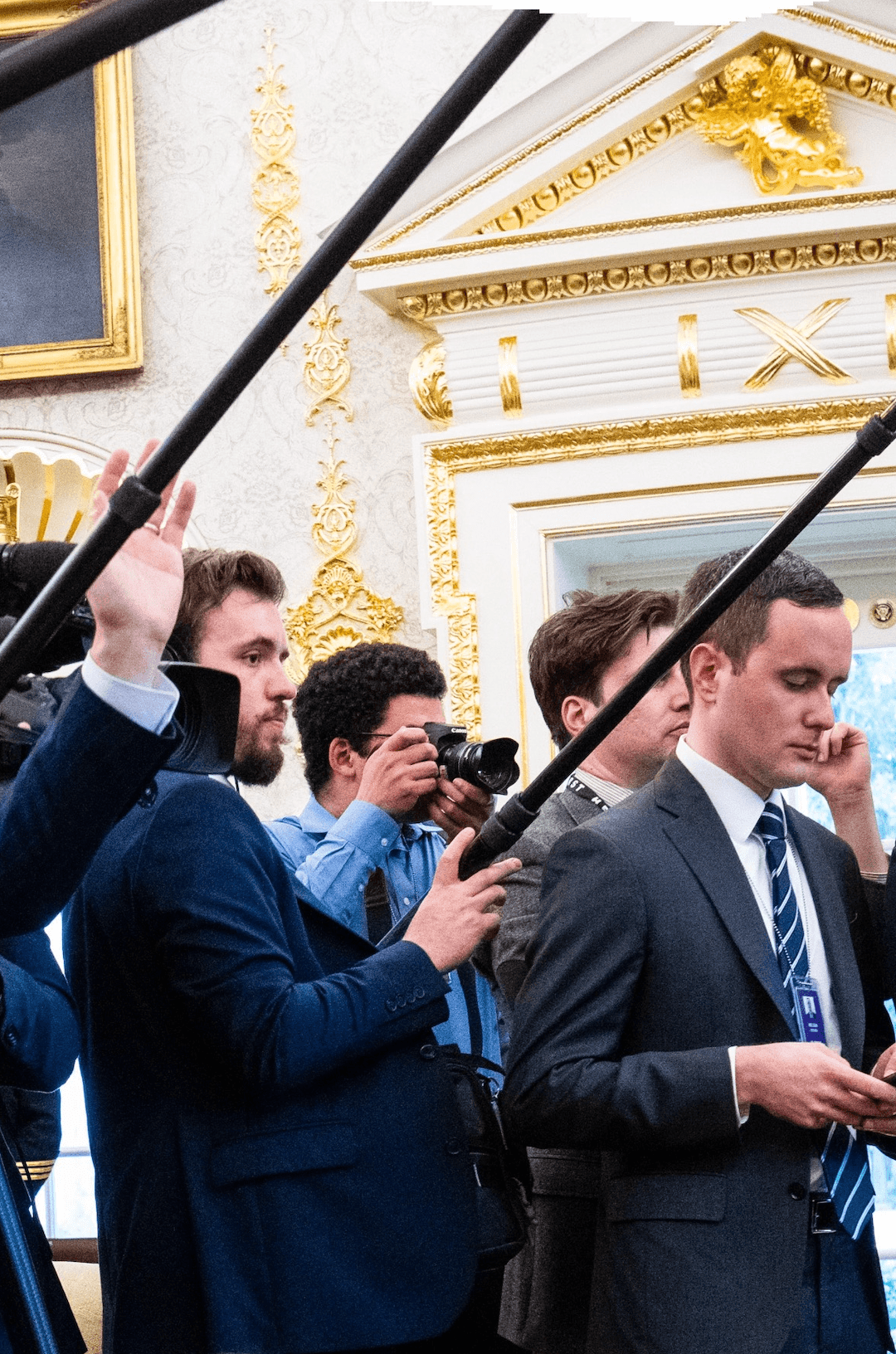
The future of non-journalism-school papers depends on their ability to preserve institutional knowledge through peer mentorship. With mentors kept "on speed dial" and incoming generations pushed out of their comfort zones by upperclassmen, these newsrooms prove that formal classrooms are not a strict prerequisite for journalistic excellence.
Ultimately, the driving force behind these independent newsrooms is not academic credit or lucrative stipends. It is born out of a relentless civic pulse—a desire to hold power accountable, inform peers, and witness the immediate, tangible impact of a story brought to light. Whether distributing papers in the bitter cold at 5:30 a.m. or covering historic campus protests under sleepless skies, these students demonstrate that the heart of American journalism beats just as fiercely in independent campus basements as it does in elite academic halls.