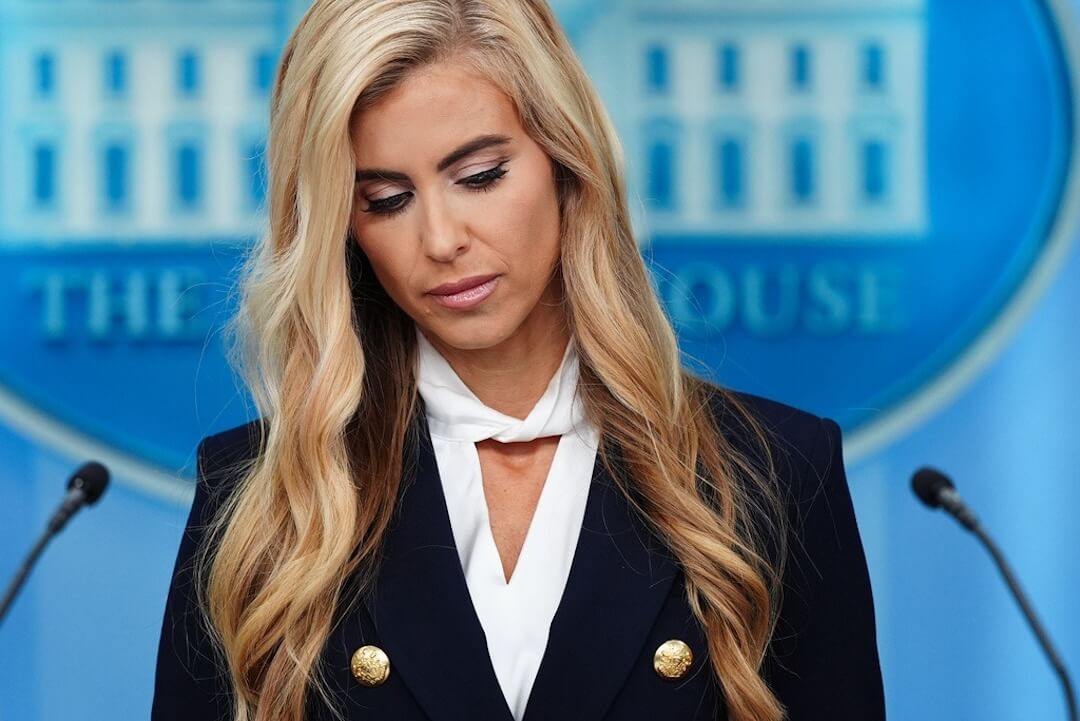
The intersection of political administration and modern media underwent a severe stress test this week, highlighted by a catastrophic introductory press briefing from newly minted White House Press Secretary Katie Zacharia. Taking the podium for a mere 14 minutes, Zacharia’s deeply shaky performance—characterized by heavy reliance on prepared notes, an avoidance of broad journalistic questioning, and fielding queries exclusively from conservative outlets—has ignited intense speculation regarding her long-term viability inside the West Wing. Insiders are already questioning whether she can survive a tenure that threatens to break historical records for brevity.
Simultaneously, the shockwaves of Zacharia’s debut extended far beyond her podium struggles. During her brief appearance, she broke the news that Kimberly Guilfoyle was stepping down as U.S. Ambassador to Greece, a resignation precipitated by investigative reporting detailing questionable financial solicitations. Compounding the political turbulence, investigative reporting revealed mounting scrutiny over Zacharia’s professional credentials, specifically concerning her public claims of being a licensed attorney.
Far from Washington, the media landscape itself faced institutional crises. At CBS News, a high-stakes internal explosion erupted following heavy-handed editorial interventions by newly installed leadership—sparking threats of resignation from veteran correspondents and triggering a fierce, closed-door clash over editorial independence, foreign reporting, and the boundaries of journalistic oversight.
Detailed Chronology: A Slow-Motion Train Wreck at the White House
The timeline of Katie Zacharia’s ascension and subsequent stumbling rollout underscores a hurried hiring process and a profound lack of operational preparation.
The Briefing That Shocked Washington
On Tuesday, October 13, 2026, Katie Zacharia stepped up to the James S. Brady Press Briefing Room podium for her inaugural outing as the 37th White House Press Secretary. Billed by the administration as a major milestone and widely previewed by President Donald Trump, the event instead unraveled into what veteran journalists and former communications officials universally decried as an unmitigated disaster.
Visibly nervous and visibly trembling, Zacharia spent the 14-minute ordeal staring downward, mechanically reciting prepared notes. In a stark departure from decades of White House precedent, she recognized only three reporters—all representing conservative outlets: Breitbart, Fox News, and the Daily Mail.
Reactions from the press corps and former administration officials were instantaneous and scathing:
Shawn McCreesh (The New York Times) dryly characterized the debut as "a bumpy one."
Kaitlan Collins (CNN) told anchor Wolf Blitzer that she had never witnessed a briefing restricted to a mere three questions, calling the event "bizarre" and noting its failure to meet the administration’s own high-pitched expectations.
Jen Psaki (MS NOW / former Biden White House Press Secretary) took to social media to observe, "Well that briefing was basically an SNL skit … except it wasn’t."
Joe Lockhart (former Clinton Press Secretary) criticized Zacharia’s professional background, noting that her resume as a far-right television commentator and "MAGA bomb thrower" did not translate into the traditional diplomatic competencies required to speak for the nation.
The Hiring Paradox and Wiles’ Exclusion
Questions immediately turned to how Zacharia secured the post. Reports from The Washington Post’s Michael Birnbaum revealed that President Trump bypassed conventional vetting structures, making the hire autonomously without consulting White House Chief of Staff Susie Wiles. Senior staff were reportedly informed of the decision mere hours before its public announcement on Truth Social.
Denuded of "murder boards" or mock questioning sessions that typically prepare incoming press secretaries for high-stakes jousting, Zacharia was thrust into the spotlight unprepared. Unnamed Trump advisers expressed astonishment to CNN, with one remarking, "She should have been doing murder boards for two weeks before going up there." Another official called the decision to put her out on her second day "brutal" and entirely without justification.
The Credibility Crisis: The "Lawyer" Controversy
As if a disastrous briefing weren’t enough, independent journalist Judd Legum of Popular Information published an explosive investigation questioning Zacharia’s public representations regarding her legal credentials.
While Zacharia had been introduced on numerous television programs, podcasts, and social media announcements by President Trump as an "attorney" or "lawyer"—and had claimed extensive legal experience on her resume, including a stint as General Counsel for the California nonprofit Fix California and international practice work in Beijing—Legum’s nationwide search across all 50 states and the District of Columbia found zero evidence that she had ever passed a bar exam or held active admission to practice law anywhere in the United States.
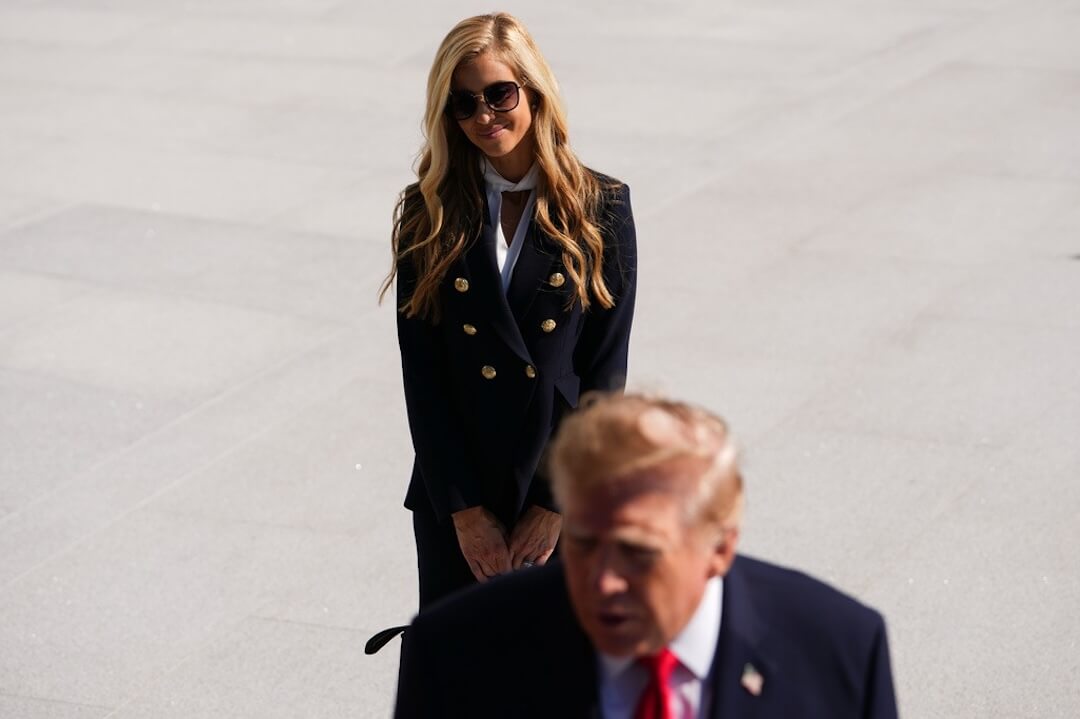
When confronted by reporters on the White House lawn as she accompanied President Trump toward Marine One, Zacharia offered vague defenses. When pressed on where she passed the bar, she appeared to mutter, "when I moved to China." Legal analysts quickly pointed out that foreign bar admittance does not permit U.S. practice, and that China maintains stringent restrictions explicitly forbidding noncitizens from practicing law or sitting for its bar examinations.
Supporting Context & Metrics: The Guilfoyle Exit and CBS News Turmoil
Kimberly Guilfoyle’s Abrupt Departure from Athens
Amid the domestic political drama, Zacharia’s briefing served as the vehicle for breaking news regarding U.S. Ambassador to Greece Kimberly Guilfoyle. Guilfoyle’s resignation arrived just days after a bombshell investigative report by The Wall Street Journal (authored by Dana Mattioli, Drew Hinshaw, Rebecca Ballhaus, and Joe Parkinson).
The investigation revealed that in the run-up to her Senate confirmation hearing, Guilfoyle solicited a $100,000 payment from Trump donor and former congressional candidate Eric Deters to settle an American Express credit card balance. Text messages reviewed by the Journal indicated that Guilfoyle promised to leverage her administration connections and lobby the IRS and Department of Justice on Deters’ behalf in exchange for the funds, pledging to be his "Trump ride or die, forever and ever." Deters ultimately declined, stating it would jeopardize his marriage.
Though President Trump offered tepid public remarks acknowledging that Guilfoyle "was doing a good job" but that he "didn’t like what I read," the rapid unraveling of her diplomatic tenure caps a turbulent trajectory from Fox News contributor to political fixture and diplomatic representative.
Timeline of Key Events:
─────────────────────────────────────────────────────────────────
October 2024  │ Donald Trump Jr. and Kimberly Guilfoyle break up.
January 2025  │ Trump returns to office; Guilfoyle confirmed as
              │ Ambassador to Greece.
October 2026  │ WSJ exposes Guilfoyle's $100,000 solicitation.
October 2026  │ Zacharia announces Guilfoyle's resignation at
              │ her inaugural White House press briefing.
─────────────────────────────────────────────────────────────────
The CBS News Internal Explosion
Simultaneously, the media industry itself became the epicenter of an extraordinary corporate and journalistic revolt. Reporting by Oliver Darcy (Status) and Todd Spangler (Variety) revealed deep internal unrest at CBS News following aggressive, hands-on editorial interventions by newly appointed editor-in-chief Bari Weiss.
The crisis intensified after veteran 60 Minutes correspondent Lesley Stahl privately weighed walking away from the program. The friction stemmed from heavy-handed editorial feedback imposed by Weiss on Stahl’s reported segment detailing the violence perpetrated by extremist Israeli settlers against Palestinians in the West Bank.
The tension boiled over during a virtual staff meeting hosted by the network’s foreign editor, Shayndi Raice (who was hand-picked by Weiss). According to obtained audio recordings, Raice launched into an uninterrupted 15-minute defense of her editorial oversight. She targeted recent reporting by foreign correspondent Holly Williams regarding Palestinian casualty figures on the anniversary of the October 7 attacks. Raice asserted that editorial pushback did not constitute "interference" and explicitly warned that "insubordination" would not be tolerated, declaring it "legal grounds for firing."
Raice stated during the call:
"This idea that somebody … comes up with a story idea, writes a script, and nobody above them is allowed to have any comment on it — that’s not journalism. I’m sorry, journalism is a process where you are challenged, you are pushed to dig deeper…"
The aggressive posture by leadership has left the newsroom polarized, illuminating deep philosophical divides over editorial control, institutional alignment, and the future of traditional investigative reporting within major broadcast networks.
Official Statements and Administration Spin
Sensing the public relations disaster of Zacharia’s podium debut, the White House communications apparatus moved swiftly to reframe the narrative, issuing an official email dispatch that praised the performance as "powerful" and "commanding."
The official administration release asserted:
"Today, Katie Zacharia delivered a commanding inaugural press briefing as the 37th White House Press Secretary. The briefing, which generated wall-to-wall coverage, served as a strong introduction to her tenure and highlighted the Trump Administration’s record of delivering historic successes for the American people."
President Trump similarly attempted to stabilize the narrative when speaking to reporters on the White House lawn, standing alongside his embattled press secretary:
"I thought she did very good. I thought she was very good."
Despite the administration’s concerted push to project confidence, internal communications leaked to independent media outlets suggest a vastly different internal reality. Insiders continue to draw comparisons to Anthony Scaramucci’s notoriously brief 10-day tenure as White House communications director during Trump’s first term. As one anonymous official starkly warned reporters: "Getting behind the podium is tough, but she got off on the wrong foot. She needs to get much better, fast, otherwise she’ll break Scaramucci’s record."
Future Outlook
The coming weeks will serve as an existential test for Katie Zacharia and the broader White House communications strategy. Operating under the glare of heightened media scrutiny, Zacharia faces a two-front battle: she must rapidly master the intricate mechanics of daily press engagement while simultaneously managing a burgeoning credibility crisis regarding her professional credentials.
Whether President Trump maintains his patience or decides to cut ties with an underprepared appointee remains one of Washington’s most pressing political questions. If Zacharia’s inaugural outing is any indication, the traditional dance between the executive branch and the White House press corps has entered a uniquely volatile and precarious era.