

Executive Overview
In the immediate aftermath of the September 11, 2001, terrorist attacks, the international gaze fixed upon the smoldering ruins of the World Trade Center with a mixture of horror, grief, and desperate hope. Among the first responders, firefighters, and police officers who rushed into the breach, a distinct contingent of specialized laborers arrived with cutting torches, gas tanks, and heavy rigging gear: the structural ironworkers of New York City.
For these men, the destruction of the Twin Towers was not merely a national tragedy or an abstract architectural failure; it was a deeply personal, visceral devastation. Their fathers, grandfathers, and mentors had raised those very steel beams skyward in the late 1960s. The towers represented the pinnacle of their trade, a monument to human engineering, and a permanent fixture of the Manhattan skyline.
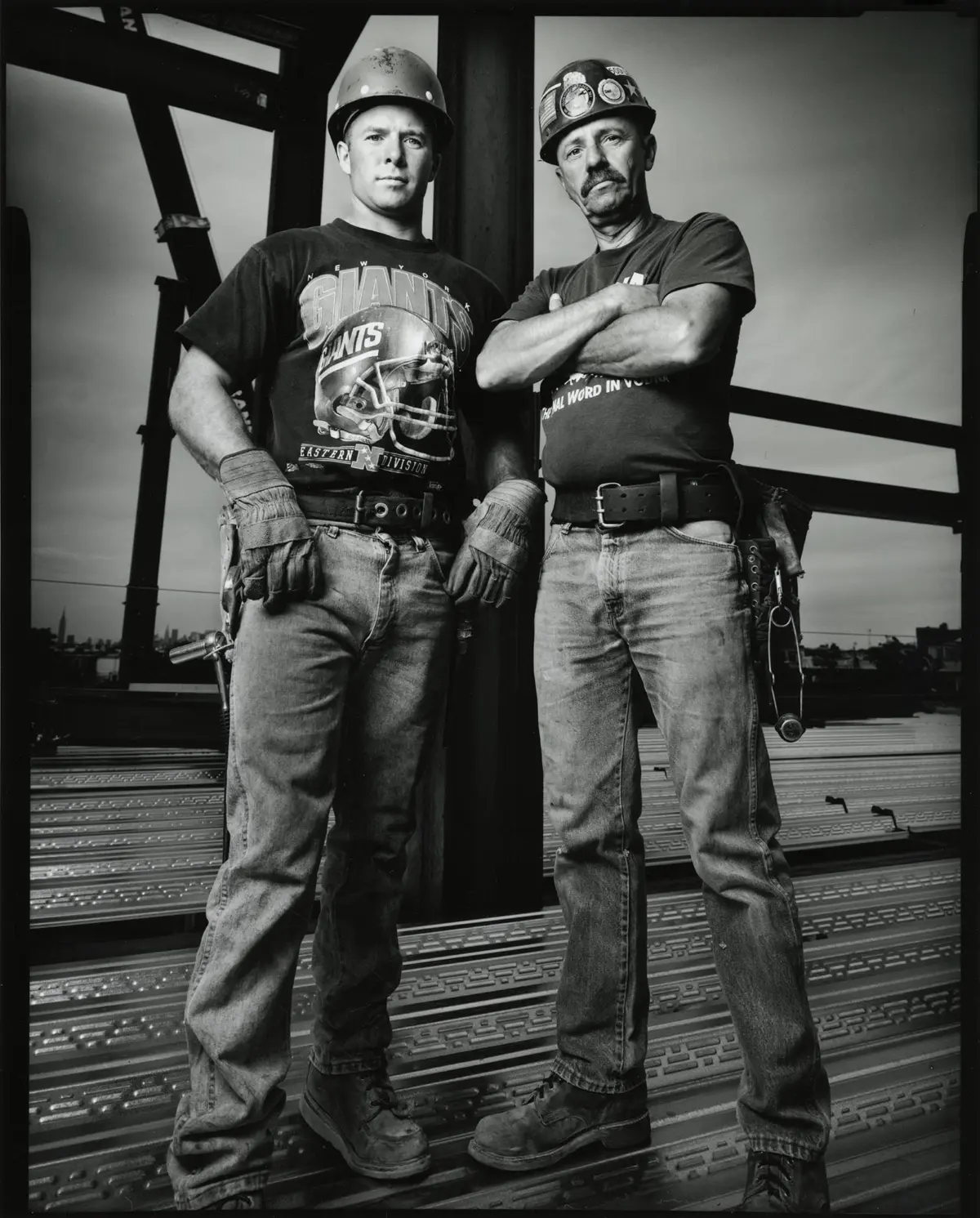
When the structures collapsed, ironworkers dropped their tools on active construction sites across the metropolitan area and converged on Lower Manhattan. Operating in a nightmarish landscape of twisted metal, toxic smoke, and harrowing human toll, they brought unmatched technical expertise to the recovery effort. This retrospective—adapted from historical reporting originally published in Rolling Stone in October 2001—examines the critical role structural ironworkers played during the initial days of the Ground Zero recovery, the generational legacy of the trade, and the psychological burden borne by men forced to dismantle the very sky-high monuments their families built.
Detailed Chronology: The First Days at Ground Zero
Tuesday, September 11, 2001: The Fall and the Rush to West Street
At the time the hijacked airliners struck the World Trade Center, structural ironworkers were scattered across New York City, hanging off high-rise skeletons and bridge spans. Larry Willett, a 34-year-old ironworker working on a school construction project off Myrtle Avenue in Queens, watched the second plane hit the South Tower. Like millions of Americans, he followed the frantic media reports on the radio, unable to fathom that structures of such immense scale and architectural integrity could ever collapse.
When the towers fell, however, realization quickly yielded to action. Willett and a crew of fellow ironworkers piled into a van, grabbing cutting torches, gas and air tanks, heavy gloves, and goggles. They sped toward West Street, arriving at a site that defied comprehension.
"It was like I’d stepped into hell," Willett recalled of stepping out onto the debris field.
The immediate environment was a sensory overload of destruction: iron beams twisted like drinking straws, rising plumes of black and white smoke, mountains of glinting steel, and the acrid, chemical smell of burning plastic mingling with the undeniable, gut-wrenching odor of decaying human remains. Beneath a surreal, cloudless blue sky, hundreds of rescue workers crawled across the mountain of rubble.
Cutting Through the Nightmare
After an initial moment of paralyzed shock, a shout regarding trapped individuals near the American Express building galvanized the ironworkers. Willett donned his mask and immediately went to work. His tasks shifted fluidly between technical precision and agonizing physical labor:

- Thermal Cutting: Using acetylene torches to slice through massive structural columns.
- Rigging and Lifting: Hooking heavy steel chains to iron beams so that heavy cranes could hoist away seventy-ton sections of debris.
- Bucket Brigades: Crawling on hands and knees through muck and water from broken mains, digging through tangled insulation and debris.
The work was defined by fleeting moments of hope rapidly eclipsed by grim realities. Responding to a shouted alert about a fireman pinned beneath a bridge beam on West Street, Willett arrived only to watch the victim zipped into a body bag. Moments later, lifting a section of chain-link fence in a particularly pungent pocket of the pile, he confronted the partial remains of a young girl—his first direct exposure to a dead body outside of a funeral parlor.
Driven by the desperate hope that someone might still be pulled alive from the wreckage, Willett worked with furious energy for sixteen successive hours. Every lifted beam, however, revealed fresh horrors—scalps, fragments, and severed limbs—which police officers and firefighters systematically shoveled into white plastic buckets for transport.
Wednesday to Saturday: Exhaustion, Chaos, and Transition
Willett labored through Wednesday night without sleep, finally yielding at 2:00 a.m. Thursday when his foreman, George Goodleaf, forced him to stop for safety reasons. After grabbing two hours of sleep at a nearby hotel, Willett reported to his regular job site in Queens, only to find himself entirely unable to concentrate. The metal beneath his feet felt irrelevant compared to the souls still entombed in the steel downtown.
By Friday, the logistical realities of the rescue operation had caught up with the spontaneous influx of volunteers. Hundreds of ironworkers from as far away as Maine and Kentucky had arrived in New York, sleeping in pickup trucks near the Jacob K. Javits Convention Center or lingering in local union halls.
Dick O’Kane, the business manager of Ironworkers Local 361, painted a stark picture of the situation when Willett and Goodleaf visited his office:
"It’s fucking chaos. They’re flooded with ironworkers down there; they don’t know what to do with them all. You guys should just keep away until they call for more help."
Frustrated and overwhelmed, Willett retreated to his home in Bayville, Long Island. Attempting to disconnect by spending time with his wife, Jennifer, and young children, Barrett and Emily, he found himself inexorably drawn back to the television coverage. Alone in his bedroom, the accumulated weight of the sights, sounds, and smells finally broke his stoic exterior, and he wept.
By Saturday morning—four days after the collapse—Willett returned to the site on his own. Flashing his union credentials at military checkpoints, he reconnected with Goodleaf and the crew. By this stage, the character of the site had shifted. The peripheral debris had been cleared, and operations moved into the vast, tangled core of the South Tower wreckage. The work had become more orderly, methodical, and profoundly somber. It was no longer a rescue operation; it was an exercise in systematic recovery and salvage. At 3:00 a.m. Sunday, exhausted and emotionally depleted, Willett packed up his gear, walked through deserted, floodlit streets to his truck, and drove home.

Supporting Context & Metrics: The Ironworkers’ Trade
To fully understand the emotional resonance of the ironworkers’ response to 9/11, one must understand the unique culture, history, and occupational hazards of structural ironworking in New York City.
Occupational Hazards and Demographics
Structural ironwork is consistently ranked by the U.S. Bureau of Labor Statistics as one of the most perilous professions in the United States, keeping company with commercial fishing and logging. Workers routinely contend with heights, heavy machinery, and the risk of catastrophic structural falls.
- Injury Rates: Veteran ironworkers like George Goodleaf—who spent over three decades in the trade—accumulate a lifetime of physical trauma, including herniated discs, chronic arthritis, bursitis, and numerous broken bones.
- Generational Lineage: The trade has historically relied on tight-knit familial and cultural lines, tracing roots back to nineteenth-century ship riggers from Ireland and Newfoundland, as well as generations of Native American ironworkers—notably from the Mohawk tribe in upstate New York—renowned for their fearlessness on high-altitude steel.
- Compensation: Reflecting the extreme danger and specialized skill required, union ironworkers earned approximately $34 per hour in 2001, supplemented by robust health and pension benefits. Their primary hand tool—the spud wrench used to align and bolt structural steel—had remained fundamentally unchanged for half a century.
The Construction of the World Trade Center
The construction of the Twin Towers remains one of the monumental engineering feats of the 20th century:
- Timeline: Completed over a 26-month period starting August 6, 1968.
- Workforce: Employed more than 500 structural ironworkers.
- Safety Record: Remarkably, during the entire construction phase, not a single structural ironworker died on the job (though one apprentice suffered a career-ending fall from a ladder).
- Engineering Pride: John Kelly, the union shop steward in charge of safety during the towers’ construction, famously noted: "It was the greatest human undertaking since the Pyramids. We all imagined they would be standing forever."
Official Statements and Institutional Perspectives
The response from labor leadership and municipal authorities underscored the profound ideological and emotional shock wave generated by the collapse of the towers.
- Dick O’Kane, Business Manager, Local 361: Representing the quintessential defiant New York trade union leader of the era, O’Kane captured the raw anger of the union halls following the attacks, declaring regarding the terrorist threat: "The Bill of Rights is for people who live here, not for terrorists who come here and fuck up! Put him in a cage and drag him around!"
- John Kelly, Union Shop Steward: Reflecting on the monumental effort required to erect the towers, Kelly emphasized the deep sense of betrayal and disorientation felt by the men who understood the sheer density and quality of the steelwork that had gone into the buildings.
- George Goodleaf, Ironworker Foreman: Summarizing the romantic, almost spiritual connection ironworkers maintain with their creations, Goodleaf observed: "It was something you could look up at and say, ‘We did that.’ You’re putting something up in the sky that has never been there before." His perspective was weighted by family history; his father had helped build the towers, and his grandfather had died on a job site when a load of metal split his head open.
Future Outlook & Historical Legacy
The events of September 11, 2001, permanently altered the psychological landscape of New York City’s construction trades. For the structural ironworkers who labored in the grey, toxic canyons of Ground Zero, the recovery effort was an act of profound closure and communal duty. They brought their specialized tools and intimate knowledge of steel to a site of unprecedented devastation, driven by a compulsion to honor the dead, support their fellow first responders, and reclaim the skyline.
In the decades following the tragedy, the legacy of the ironworkers who responded to 9/11 has become an integral part of the narrative of American resilience. The reconstruction of the World Trade Center site—culminating in the erection of One World Trade Center and the surrounding commercial towers—serves as a testament to the enduring viability and courage of the trade. The modern skyline stands not only as a monument to commercial renewal, but as a permanent tribute to the ironworkers who built the original towers, dismantled their ruins, and ultimately raised new steel from the ashes.