While high-profile legal battles involving national news organizations and the White House frequently dominate media headlines, a more pervasive, foundational threat to American democracy is quietly unfolding at the state and local levels. Across the United States, local journalists are increasingly locked out of government spaces, stonewalled by public officials, denied press credentials, and targeted by retaliatory policies designed to chill independent reporting.
From statehouses in Kansas and Utah to municipal offices in Miami and Fountain Hills, Arizona, the traditional watchdog relationship between the press and public officials has fractured significantly. Driven by intense political polarization, the erosion of local news ecosystems, and a copycat culture of hostility toward the media, public officials are seizing control of their own messaging. By bypassing independent reporters, politicians are limiting public accountability.
However, a resilient network of local watchdogs, nonprofit outlets, and independent journalists is pushing back. Armed with the First Amendment and a growing wave of federal lawsuits, these reporters are challenging unconstitutional media policies, fighting for open records, and asserting their legal right to hold power to account—proving that even when their jobs are made deliberately harder, they cannot be silenced.
Detailed Chronology: A Timeline of Escalating Access Restrictions
The current crisis in press access did not happen overnight. It represents the culmination of a systematic, years-long erosion of journalistic privileges across state and local governments. Below is a detailed chronology of key events, policy shifts, and legal battles that have shaped the modern landscape of state and local press obstruction.
2011 (Miami, Florida): The City of Miami implements a restrictive media policy requiring all municipal employees to secure prior approval from the communications department before speaking to the press. For years, the policy remains largely dormant.
2016–2019 (National and Regional Shifts): Following the inauguration of Donald Trump, a national culture of hostility toward the mainstream media begins trickling down to state and local political arenas, emboldening local executives and legislators to openly antagonize reporters.
2019 (Iowa Statehouse): Independent political reporter Laura Belin of Bleeding Heartland applies for press credentials to cover the Iowa House of Representatives for the first time. Her request is denied by the House clerk, who claims credentials "are not issued to members of the public," prompting the legislature to draft its first formal credentialing guidelines.
December 2021 (Des Moines, Iowa): Laura Belin and other journalists file a landmark lawsuit against Iowa Governor Kim Reynolds over egregious, prolonged open records violations, with some requests stalled for more than a year. The suit eventually ends in a settlement requiring the state to pay attorney fees.
January 2024 (Utah State Capitol): Longtime political journalist Bryan Schott, founder of Utah Political Watch and former reporter for The Salt Lake Tribune, applies for legislative press credentials for the upcoming session. Legislative media liaisons deny the application, explicitly stating that credentials are not issued to blogs, independent journalists, or freelancers.
January 2024 (Iowa Federal Court): After five years of iterative compliance—including rebranding commentary, adopting the Society of Professional Journalists’ Code of Ethics, and establishing paid contracts with local radio—Laura Belin files a federal lawsuit against Iowa House Clerk Meghan Nelson, successfully securing credentials for the remainder of the session.
June 2024 (Miami, Florida): Following the launch of the Coconut Grove Spotlight and aggressive local coverage, the City of Miami suddenly begins aggressively enforcing its dormant 2011 media policy, prompting widespread blackouts of municipal employees and interview denials.
June 2024 (Miami Federal Court): The Coconut Grove Spotlight and the Miami News Trust file a federal lawsuit against the City of Miami, arguing that its restrictive employee-gag policy violates both the First Amendment rights of workers and the newsgathering capabilities of the press.
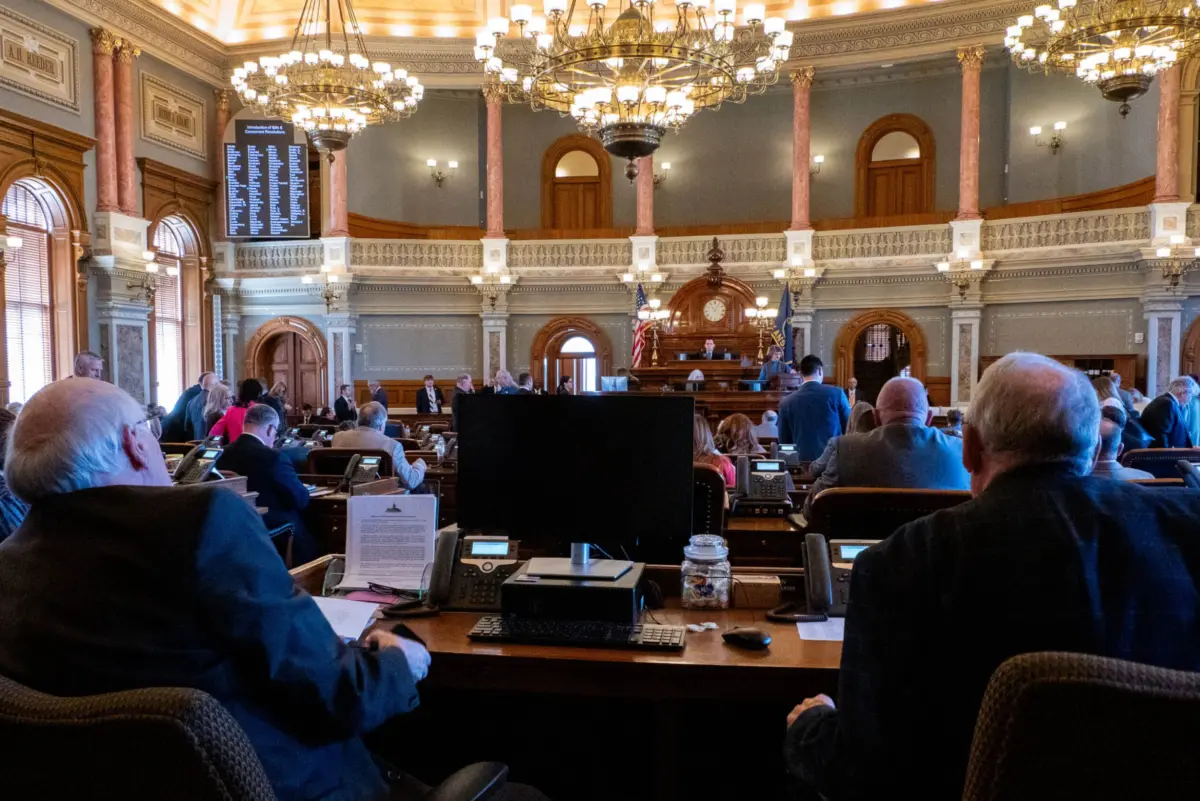
January 2025 (Kansas Statehouse): Following Kansas House Speaker Dan Hawkins’ directive, state legislators systematically restrict press access. Hawkins eliminates the House floor press workspace, banishing journalists to the back wall and stripping them of note-taking privileges and direct access to lawmakers.
January 2025 (Salt Lake City, Utah): Bryan Schott files a federal lawsuit against Utah legislative staff, alleging viewpoint-based discrimination under the First Amendment after being barred from press briefings, executive press conferences, and routine information distribution.
March 2025 (Topeka, Kansas): Kansas House Republicans vote to systematically close their caucus meetings to reporters, turning routine legislative discussions into dark-room operations. Simultaneously, state Senator Virgil Peck proposes an exorbitant rent hike targeting statehouse press offices—raising fees from a flat $100 per year to $1 per square foot per month—explicitly citing his frustration with inaccurate reporting.
June 2025 (Fountain Hills, Arizona): In a retaliatory measure directed at the Fountain Hills Times Independent, town council members physically remove the press table from the back of the council chambers to "send a message" regarding critical coverage.
Summer 2025 (10th Circuit Court of Appeals): A panel of federal judges revives Bryan Schott’s lawsuit against the Utah State Legislature, remanding the case to a lower court to determine if officials engaged in unconstitutional viewpoint discrimination.
March 2026 (Mediation Phase): Legal teams for the Coconut Grove Spotlight and the City of Miami prepare for a court-ordered mediation conference before a magistrate judge, aiming to establish proactive policy language protecting municipal employees’ constitutional right to speak freely with journalists.
Supporting Context & Metrics: The Shrinking Watchdog Ecosystem
The systematic restrictions imposed by public officials do not occur in a vacuum; they exploit an already fragile local news ecosystem crippled by severe downsizing, corporate consolidation, and dwindling newsroom workforces.
The Decimation of Local Newsrooms
According to a landmark 2026 study by Muck Rack and Rebuild Local News, the number of full-time local journalists in the United States has plummeted by an astonishing 75% since 2002. This drastic contraction has left vast "news deserts" where municipal and county governments operate with virtually zero independent daily oversight.
At the statehouse level, while aggregate numbers of reporters may fluctuate, the composition of the press corps has shifted dramatically away from full-time, experienced institutional watchdogs. Sherman Smith, editor-in-chief of the Kansas Reflector, notes that committee rooms that once hosted a half-dozen seasoned reporters now often feature only a single solo digital journalist.
Journalistic Metric
Historical Baseline
Current Reality
Impact on Public
Full-Time Local Journalists
Baseline in 2002
Down 75% (2026 Muck Rack Study)
Communities lack day-to-day municipal oversight
Statehouse Presence
Robust, multi-reporter bureaus
Isolated solo digital reporters & nonprofits
Easier for lawmakers to isolate and target watchdogs
As legacy newspapers experience continuous layoffs—such as the Miami Herald laying off its core city hall reporter—nonprofit digital start-ups and independent watchdogs like the Kansas Reflector, Utah Political Watch, Bleeding Heartland, and the Coconut Grove Spotlight have stepped in to fill the vacuum.
However, because these entities lack the institutional backing, legal war chests, and legacy protections of major metropolitan dailies, public officials frequently view them as easy targets. By weaponizing archaic credentialing definitions—such as classifying independent bloggers and solo investigative reporters as "members of the public" rather than accredited press—officials attempt to erect bureaucratic tollbooths around public information.
Official Statements and Institutional Perspectives
The clash over press freedom exposes a profound philosophical divide between public servants and the watchdogs mandated to monitor them. While government officials frequently hide behind administrative rationales, independent journalists are vocal about the underlying motivations driving these access restrictions.
The Push for Unfiltered Messaging
Reflecting on why politicians are increasingly hostile toward traditional intermediaries, Bryan Schott of Utah Political Watch notes the prevailing political calculus:
"I’m sure that they’re asking themselves, ‘Why do we need to have our message filtered through a reporter, a journalist, an outside organization when just as easily, we can decide what is said about our policies? Why should we give equal access to the media who might not report things the way that we want?’"
The Erosion of Institutional Memory
In Kansas, where lawmakers have systematically dismantled press access from multiple angles—ranging from floor bans and closed caucuses to punitive office rent increases—Sherman Smith highlights the loss of collaborative accountability:
"There were times when it’s like, we have to get an explanation out of this person. You could form a wall of reporters and make sure they weren’t going to leave this room until they answered everybody’s questions together. And we don’t have that really anymore."
Furthermore, Kansas lawmakers have made no secret of their contempt for critical coverage. Defending his proposed rent hikes on statehouse press bureaus, state Senator Virgil Peck openly complained to constituents:
"You are only charging $100 a year for the press to write stories about you—that frequently are inaccurate."
The Impact on Everyday Citizens
When local governments successfully stonewall reporters, elected officials ultimately inflict damage on their own constituents. Ryan Winslett of Independent Newsmedia, overseeing the Fountain Hills Times Independent, emphasizes the self-defeating nature of council members refusing to speak with local watchdogs:
"You’re basically choosing not to communicate to your constituents."
Similarly, David Villano of the Coconut Grove Spotlight underscores the human and financial toll of fighting obstructionist public records custodians:
"What we are insisting upon is some sort of proactive language within some policy document that advises and reminds employees of their rights under the Constitution to speak freely on matters of their expertise with the media without prior approval."
Future Outlook: The Legal Frontier of Press Freedom
As state and federal courts begin to weigh in on these systemic restrictions, the immediate future of local journalism hangs in the balance. The ongoing legal battles—spanning the Tenth Circuit review of Bryan Schott’s Utah lawsuit, the mediation proceedings in Miami, and ongoing federal challenges in Iowa and Kansas—are establishing critical legal precedents for the digital age.
Key Legal Precedents at Stake
Viewpoint-Based Discrimination: Courts are increasingly examining whether denying press credentials based on an outlet’s digital format or perceived editorial stance constitutes a direct violation of the First Amendment.
Employee Free Speech Rights: Municipal "gag policies," such as Miami’s rule requiring prior authorization for employee interviews, face intense judicial scrutiny regarding whether they infringe upon public workers’ constitutional rights while crippling public oversight.
Equitable Access to Physical Spaces: Cases challenging the removal of press tables, the banishment of reporters to back walls, and discriminatory rent hikes are testing the limits of government authority to manage public buildings in a viewpoint-neutral manner.
Despite the mounting financial costs, administrative stonewalling, and aggressive retaliation from local officials, the consensus among frontline journalists remains unwavering. Whether writing with one hand tied behind their backs, waiting months for overdue public records, or funding federal lawsuits out of pocket, local watchdogs remain committed to their core mission.
As Laura Belin aptly summarizes the prevailing spirit of the modern local press corps in the face of institutional obstruction:
"They can’t stop me from continuing to report on them."