

Executive Overview
The global media and broadcasting ecosystem is undergoing a profound structural evolution, characterized by high-stakes corporate acquisitions, prominent high-profile departures, strategic leadership appointments, and infrastructural investments. At the vanguard of this shifting paradigm is veteran technology journalist and commentator Kara Swisher, who has officially confirmed her departure from CNN. Her exit coincides with the imminent finalization of the blockbuster merger between Warner Bros. Discovery (WBD) and Paramount Skydance.
Swisher’s decision underscores a broader industry-wide sentiment regarding corporate governance, editorial autonomy, and the shifting dynamics of modern cable news networks under new ownership umbrellas. While CNN prepares to navigate this seismic corporate transition, the network is simultaneously doubling down on major cultural partnerships—such as its upcoming broadcast of Farm Aid 2026—and bolstering its international presence through cutting-edge production facilities in Doha, Qatar.
Concurrently, the broader television landscape is experiencing a wave of executive shuffling and talent reallocations. Fox News has integrated former entertainment and news personality Billy Bush into its multi-platform ecosystem, while veteran economic commentator Larry Kudlow steps into the breach as the interim anchor for Sunday Morning Futures following the September departure of Maria Bartiromo. Across town, NBC News is celebrating a monumental broadcast milestone, illuminating the Empire State Building in blue to mark the 35th-season premiere of its iconic true-crime franchise, Dateline. Financial media giant CNBC is likewise executing a strategic editorial expansion, onboarding seasoned journalists from Axios and Barron’s to reinforce its technology and investing desks.
This comprehensive report offers an exhaustive analysis of the current media landscape, dissecting the geopolitical, corporate, and editorial factors reshaping the future of journalism, broadcasting, and digital media production.
Detailed Chronology: Corporate Mergers, Talent Exits, and Network Realignment
1. The Kara Swisher Exodus and the Paramount Skydance Acquisition
The trajectory of Kara Swisher’s tenure at CNN has reached its definitive conclusion. Swisher, who initially came aboard as an on-air contributor in November 2023, has made it unequivocally clear that she will not remain with the network once Paramount Skydance assumes full operational and financial control of Warner Bros. Discovery (WBD).
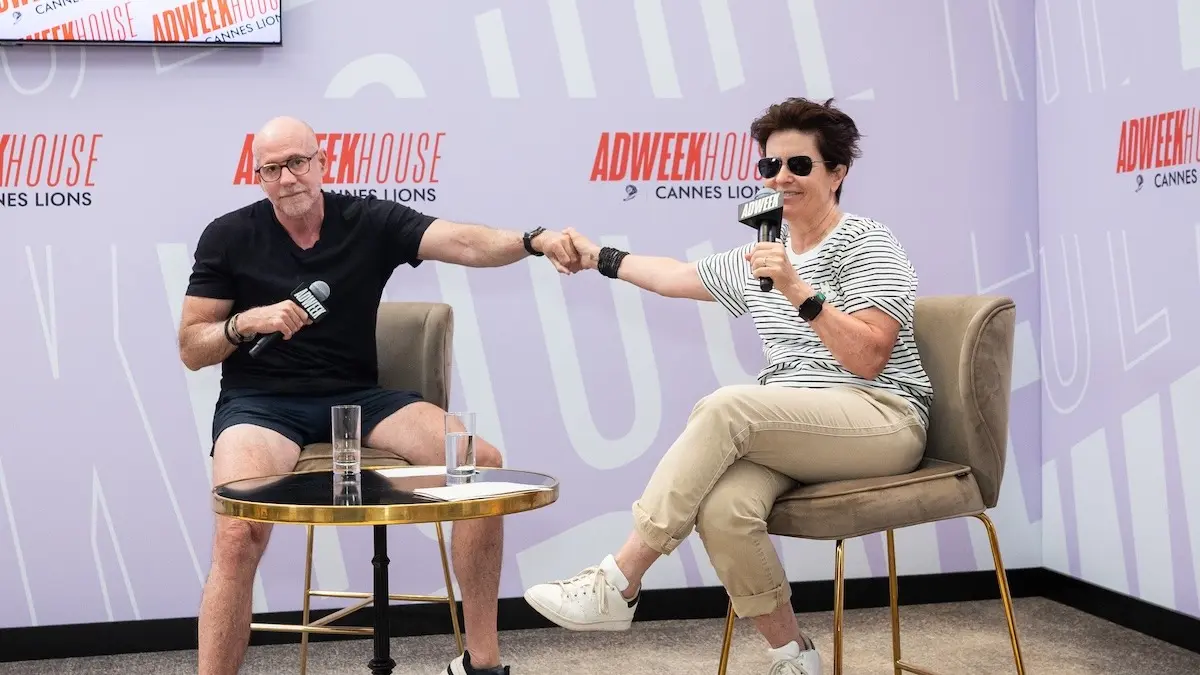
The catalyst for Swisher’s exit arrived following weeks of legal and corporate maneuvering. Earlier this week, Paramount Skydance successfully secured a vital regulatory victory by reaching a critical settlement with state attorneys general regarding the WBD acquisition. With the legal hurdles cleared and the merger hurtling toward completion, Swisher addressed her contractual obligations on a recent episode of her widely syndicated Pivot podcast, co-hosted with marketing professor and author Scott Galloway.
Swisher revealed that she actively petitioned network leadership to be released from her contract ahead of its formal December 31 expiration date. Initially, the journalist admitted she attempted to navigate a path forward under CNN’s prospective new ownership regime. However, her perspective shifted dramatically. Reflecting on the impending corporate takeover, Swisher stated bluntly on the podcast:
“But then I thought, ‘F— these guys! I don’t want to work for them. I just don’t.”
This uncompromising stance has been brewing for months; Swisher first signaled her profound reservations regarding her long-term future at the network back in June. Now that the Paramount Skydance transaction is transitioning from theory to reality, the veteran tech columnist is choosing integrity and independence over corporate alignment.
2. Fox News Adjusts Its Roster: Billy Bush and Larry Kudlow
While CNN grapples with high-profile attrition, rival cable giant Fox News is aggressively restructuring its talent lineup. In a move that surprised media watchers, the network announced that Billy Bush has officially joined its roster as a multi-platform contributor. Bush made his high-profile debut on the Tuesday night broadcast of Jesse Watters Primetime, signaling a new chapter for the veteran broadcaster as he integrates across Fox’s television and digital properties.
Further adjustments are underway at Fox News’ weekend programming block. Following the departure of Maria Bartiromo—announced publicly on September 3—the network has tapped economic analyst and former White House advisor Larry Kudlow to serve as the temporary anchor of Sunday Morning Futures. Kudlow’s interim assignment will run through November 8, giving Fox News a steady, familiar conservative voice during a critical transitional period for its morning line-up.
3. Institutional Expansion: CNN’s Global and Domestic Initiatives
Despite the impending ownership changes and high-profile talent departures, CNN continues to execute its operational roadmap on both cultural and infrastructural fronts.
Culturally, the network announced a renewal of its partnership with Farm Aid to broadcast Farm Aid 2026: Musical Festival Live. Scheduled for broadcast on September 26 at 7 p.m. ET, the live event will be anchored by John Berman and Laura Coates, broadcasting directly from the Veterans United Home Loans Amphitheater in Virginia Beach, Virginia. Complementing the anchor desk, CNN chief climate correspondent Bill Weir will deliver on-the-ground reporting, capturing the intersection of agricultural advocacy, family farming, and live musical celebration.
Internationally, CNN is aggressively modernizing its production capabilities. The network recently unveiled a state-of-the-art facility situated within Media City Qatar, located in Doha. Designed specifically to house its multiplatform programming initiative, CNN Creators, the facility represents a radical departure from traditional broadcasting architecture. According to network disclosures, the complex features an expansive open-plan layout that fuses a traditional television studio, an active newsroom, and an advanced production center into a singular, cohesive workspace. Notably, the entire operation is engineered to exist entirely "in-camera," offering the multiplatform production team endless visual and spatial permutations for live programming.
Supporting Context & Metrics
To fully understand the gravity of these concurrent industry developments, it is essential to examine the underlying metrics, institutional expansions, and historical contexts governing contemporary media enterprises.
The Financial and Economic Realities of Cable News and Digital Media
The media sector is currently navigating an unprecedented contraction in traditional linear television revenues, offset only partially by digital and streaming monetization. The impending absorption of Warner Bros. Discovery by Paramount Skydance represents a multi-billion-dollar consolidation effort designed to achieve massive operational synergies, reduce corporate debt, and create a unified streaming and linear powerhouse capable of competing with tech conglomerates.
However, these mega-mergers frequently trigger cultural and ideological friction within newsrooms. Journalists and commentators whose brands are built on fierce independence—such as Kara Swisher—often find themselves at odds with incoming corporate executives whose primary mandates are margin expansion, cost rationalization, and risk mitigation. Swisher’s abrupt rejection of the incoming Paramount Skydance leadership highlights a growing philosophical chasm between corporate media consolidation and independent journalistic identity.
NBC News’ Dateline Milestone and CNBC’s Strategic Upgrades
As linear networks fight for audience retention, landmark franchises continue to command cultural mindshare. NBC News celebrated the 35th-season premiere of its premier true-crime institution, Dateline, by turning the iconic Empire State Building radiant blue on Friday night. The lighting ceremony was attended by the program’s esteemed stable of journalists, including Lester Holt, Josh Mankiewicz, Blayne Alexander, and Andrea Canning. Holt summarized the cultural weight of the achievement, noting:
"It’s appropriate, I think, that a program that’s certainly become an icon of television broadcasting in this country is here celebrating at this iconic place here in NYC."
Simultaneously, financial news leader CNBC announced a sweeping series of editorial and analytical appointments designed to fortify its market-moving coverage.
- Megan Morrone joins the San Francisco bureau as a technology editor, transitioning from Axios and reporting directly to Christina Passariello.
- Daren Fonda steps into the role of senior investing editor, arriving from Barron’s to report to John Melloy.
- Sebastien Chasse joins the network as a senior equity analyst and reporter.
- Paulina Likos takes on the role of markets reporter, building upon her prior experience within the prestigious CNBC Investing Club.
These strategic hires demonstrate that while general-interest cable networks grapple with executive churn and ownership transitions, specialized business and financial networks continue to invest heavily in deep-domain reporting talent.
Official Statements & Industry Reactions
The cascade of announcements across CNN, Fox News, NBC, and CNBC has elicited sharp reactions from industry insiders, media analysts, and the public figures directly involved.
Kara Swisher on Corporate Governance
Swisher’s unvarnished remarks on the Pivot podcast have sparked a broader industry conversation regarding the mechanics of media contracts and the autonomy of high-profile contributors. By publicly airing her disdain for the incoming Paramount Skydance leadership, Swisher has effectively redefined the boundary between talent and corporate ownership. Media observers have noted that while legacy media outlets rely heavily on star power to drive digital engagement and podcast downloads, high-profile independent voices are increasingly willing to walk away rather than compromise their brand equity under new corporate mandates.
Network Leadership on Expansion and Restructuring
Executives at CNN, Fox News, and CNBC have framed their respective personnel and infrastructural moves as proactive steps toward modernizing their operations:
- CNN Leadership emphasized that the integration of the Doha production hub and the continuation of cultural partnerships like Farm Aid 2026 prove that the network’s journalistic and live-event engines remain fully operational, regardless of ownership transitions at the corporate apex.
- Fox News Management defended its talent additions—pointing to the seamless integration of Billy Bush across digital and television platforms, alongside Larry Kudlow’s steady hand at Sunday Morning Futures—as evidence of the network’s agility in managing high-profile departures and schedule adjustments.
- CNBC Editors underscored that the recruitment of top-tier talent from Axios and Barron’s reflects an uncompromising commitment to authoritative, real-time market intelligence at a time of intense macroeconomic volatility.
Future Outlook
As the media industry moves deeper into the fourth quarter, several critical storylines will dictate the trajectory of journalism, broadcasting, and corporate governance:
- The Finalization of the Paramount Skydance-WBD Merger: All eyes will remain fixed on the operational integration of Warner Bros. Discovery under Paramount Skydance. Industry analysts will closely monitor whether Swisher’s departure acts as a bellwether for a broader exodus of independent journalists, or if the new leadership successfully stabilizes the network’s editorial culture.
- The Evolution of Global Production Hubs: CNN’s investment in its Doha Media City Qatar facility will serve as an experimental testbed for multiplatform journalism. If successful, the fusion of newsroom, studio, and production floor into a single camera-ready space could become the architectural blueprint for future broadcast facilities worldwide.
- Ratings and Positioning at Fox News: With Larry Kudlow stabilizing the Sunday morning slot through early November and Billy Bush expanding his footprint across Fox’s platforms, the network’s ability to retain and grow its core audience amidst shifting political and cultural winds will remain a central fixture of television ratings analysis.
- The Ongoing Digital Transformation of Financial Media: CNBC’s aggressive talent acquisition strategy signals that specialized, subscription-backed, and market-driven reporting will remain resilient against the broader headwinds affecting general-interest linear cable.
In summary, the media landscape is experiencing a period of creative destruction. Institutional giants are consolidating their assets and modernizing their infrastructure, while independent-minded journalists are fiercely guarding their editorial autonomy. The coming months will determine whether these corporate realignments successfully secure a profitable future for television news, or if they will precipitate a fundamental decentralization of journalistic power.